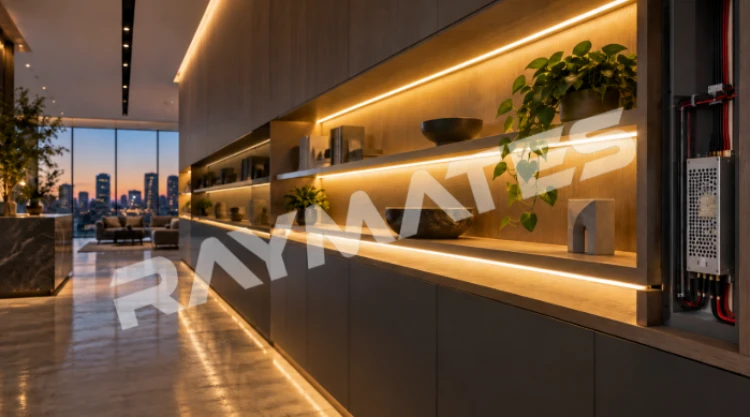
A reliable LED Wall Washer Spacing calculation starts with more than dividing the facade length by the number of fixtures. Beam angle, mounting distance, surface geometry, beam overlap, and the desired lighting effect all influence the final layout. If fixtures are placed too far apart, dark bands may appear between beams. If they are packed too closely, the project may use more luminaires and electrical capacity than necessary without producing a better result.
Raymates supplies LED lighting for architectural, commercial, and project applications. Its LED Wall Washer Category is intended for building exterior lighting where the goal is to emphasize facade structure and architectural details. Raymates also supports project-specific lighting solutions where standard fixture layouts do not fit the building geometry.
For facade projects, the practical approach is to calculate an initial spacing, check how adjacent beams overlap, and then adjust the layout around the real building.
Why Does LED Wall Washer Spacing Matter for Facade Lighting?
Spacing controls how individual luminaires work together across the wall. This is especially important in exterior wall wash lighting, where the target is usually a continuous architectural effect rather than a row of isolated bright patches.
Beam Overlap Controls Visual Uniformity
Each wall washer projects light over a defined area. As the beam reaches the facade, it covers a certain width. Adjacent fixtures need to be positioned so that their useful illuminated areas meet or overlap smoothly.
If center-to-center spacing is wider than the useful beam coverage, darker vertical zones may appear. Moving fixtures closer together can reduce these gaps, but excessive overlap may concentrate too much light in some areas and increase the number of fixtures without a clear visual benefit.
This is why commercial wall wash lighting should not use a fixed spacing copied from another project. The right fixture spacing depends on optical distribution, mounting position, wall shape, surface texture, and the intended appearance.
Mounting Geometry Changes the Final Lighting Effect
The LED wall washer mounting distance directly affects how widely the beam spreads before it reaches the facade. Moving the luminaire farther from the wall generally gives the beam more space to expand. Mounting it closer reduces the illuminated width and can make transitions between adjacent fixtures more visible.
Mounting geometry also changes how light reaches architectural details. Deep window reveals, projecting columns, stone textures, recesses, and facade edges may create shadows that a simple plan-view calculation will not show.
A useful facade lighting layout should therefore be checked against the elevation, not only against a numerical spacing value.
Facade Design Determines What “Good Spacing” Means
A long flat wall can often use a repeated spacing pattern. A facade with corners, pillars, entrances, recesses, curved surfaces, or changing mounting heights usually needs several different lighting zones.
That matters for building wall wash lighting because the design objective may change across the same elevation. One section may need uniform washing, another may need stronger vertical emphasis, while a smaller architectural feature may need a more localized treatment.
How Do Beam Angle and Mounting Distance Determine the Starting Spacing?
The calculation stage gives designers and buyers a practical starting point before quantities are finalized. Beam angle and mounting distance should be treated together because changing either one changes the amount of facade covered by each fixture.
Beam Spread Provides the First Layout Estimate
A simple geometric estimate is:
Beam Width ≈ 2 × Mounting Distance × tan (Beam Angle ÷ 2)
This is the most useful starting point in an LED Wall Washer Spacing calculation because it connects the selected LED wall washer beam angle with the proposed distance between the fixture and the wall.
The result is theoretical beam width, not final center-to-center spacing.
Actual light distribution does not end at a perfectly sharp edge. The outer region of a beam generally contributes less light than its center. Buyers should therefore use the optical information for the selected fixture before converting the preliminary spacing estimate into a construction layout.
Beam Overlap Converts Coverage into Practical Fixture Spacing
Theoretical beam width only tells you how far the beam can spread. Practical fixture spacing needs to account for how adjacent beams interact.
If two fixtures are positioned so their outer beam edges only touch, the wall may still show a visible transition between them. Reducing the center-to-center spacing creates more overlap and can produce a smoother wash.
There is no single overlap percentage that should be applied to every project. A smooth commercial facade, textured stone exterior, decorative column, or architectural wall wash lighting application can require different treatment.
The target visual effect should therefore determine how far the theoretical coverage is reduced when setting the final spacing.
A Three-Step Calculation Keeps Early Layouts Practical
A useful preliminary process is:
- Confirm the proposed LED wall washer mounting distance.
- Use the actual LED wall washer beam angle to estimate beam coverage.
- Adjust the spacing according to required overlap and facade geometry.
This approach is more reliable than choosing fixture quantity first and then forcing the spacing to fit.
For B2B buyers comparing led wall washer light suppliers, optical data should be requested before procurement quantities are locked. Without it, two fixtures that look similar in a catalog may require very different layouts.
How Should Spacing Change for Different Facade Shapes and Mounting Constraints?
A mathematically correct spacing may still be impractical if the building geometry does not allow the fixtures to follow the intended path.
At this stage of the layout, the designer should stop treating the elevation as one continuous straight line and identify sections that require different installation strategies.
Straight Facades Favor Repeatable Spacing Patterns
Straight commercial elevations are usually the easiest starting point for exterior wall wash lighting. If mounting distance, fixture orientation, and wall geometry remain consistent, the same center-to-center spacing can often be repeated across uninterrupted sections.
Windows, entrances, building corners, setbacks, and columns break that pattern.
A fixture positioned beside a large opening may contribute less useful light to the wall than one installed on a solid section. Similarly, keeping identical spacing through a corner can place a fixture where its beam no longer supports the intended wash.
For long runs, divide the elevation into usable lighting sections first. Then calculate fixture spacing within each section rather than across the full building width.
Flexible Wall Washer Fits Layouts That Need Greater Geometric Adaptability
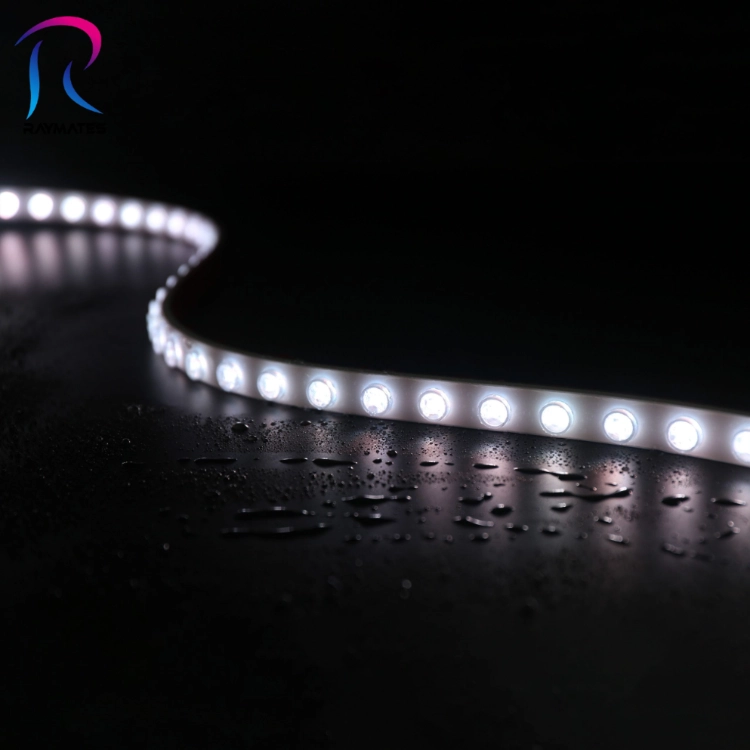
Curved facades and changing architectural lines can make a rigid linear layout difficult to maintain. In these situations, the Flexible Wall Washer can be considered where the lighting path needs to adapt more closely to the building shape.
The flexibility of the product does not replace optical calculation. It simply gives the designer another installation option where a straight luminaire path would require frequent breaks or awkward transitions.
A flexible wall washer is therefore more relevant for curved sections, decorative structures, and architectural transitions than for projects where every fixture is installed on the same straight mounting line.
Mini Wall Washer Suits Space-Constrained Lighting Zones
Not every section of a facade has the same mounting space.
Narrow ledges, entrance structures, window surrounds, and compact architectural details may not suit the same fixture format used across a broad wall. In these areas, a Mini Wall Washer can be evaluated where physical installation space is more restricted.
A smaller fixture format should not be selected only because it fits the available gap. Buyers still need to confirm whether its optical distribution can cover the intended surface from the available position.
For commercial wall wash lighting, this helps maintain a consistent design when broad facade areas and smaller architectural features appear within the same project.
How Many LED Wall Washers Does a Facade Need Before Procurement?
Once the wall washer layout has been divided into usable lighting sections, spacing can be converted into an initial fixture quantity. At this point, the calculation moves from lighting design into procurement planning.
Fixture Quantity Starts with Usable Facade Length and Target Spacing
A basic estimate is:
Approximate Fixture Quantity = Usable Lighting Length ÷ Planned Center-to-Center Spacing
This calculation should be applied to individual facade runs rather than to the full building width.
Corners, doors, windows, columns, setbacks, end margins, and mounting restrictions can all change the number of useful fixture positions.
For an exterior linear wall washer project, marking every proposed fixture center directly on the elevation is a simple but effective check. It makes irregular gaps, crowded areas, and unusable positions visible before the order is placed.
Electrical Requirements Must Follow the Selected Wall Washer Model
Fixture quantity also affects electrical planning.
Raymates’ broader LED portfolio includes low-voltage options from 3V to 48V and high-voltage options including 110V, 120V, 220V, and 230V. Power customization is also available for different lighting requirements. These are portfolio-level capabilities, so the actual electrical configuration still needs to be confirmed for the selected Wall Washer model.
The buyer should check operating voltage, power requirement, driver arrangement, controls, cable routing, and installation zones together.
A wall washer price comparison is incomplete if one proposal requires a different power architecture or significantly different installation method.
Product and Quality Checks Complete the RFQ
A useful RFQ should include facade dimensions, proposed mounting position, optical requirement, voltage, control needs, installation environment, expected quantity, and any available drawings.
Raymates applies an ISO9001 quality management system and conducts 100% inspection before shipment. Its listed certifications include UL, ETL, CE, RoHS, and TUV.
These checks are useful when buyers compare a linear led wall washer, wall wash led strip, or other facade-lighting formats. Product photographs alone do not show whether the fixture fits the actual mounting and electrical conditions.
How Can Raymates Help Finalize a Wall Washer Layout Before Ordering?
Some projects can use a regular repeated spacing pattern. Others require more coordination because mounting lines curve, fixture distances change, or several architectural zones need different treatments.
Customization Converts Project Conditions into a Specific Solution
Raymates provides Customize support for projects where standard product selection alone does not resolve the installation problem.
Project requirements can be discussed before production, and the service process can include project drawings and installation drawings.
This helps turn a preliminary spacing estimate into a layout that reflects actual facade dimensions and mounting conditions.
Project and Installation Drawings Reduce Layout Uncertainty
A useful installation drawing should show more than fixture quantity.
It should identify lighting runs, corners, mounting distance changes, facade interruptions, electrical zones, and sections where center-to-center spacing changes.
This makes the facade lighting layout easier for the purchaser, supplier, installer, and project team to review before production.
It is particularly useful for led strip wall wash lighting and an outdoor led linear wall washer installation where a small layout error may be repeated across a long elevation.
Installation Guidance and Direct Support Close the Procurement Loop
Raymates also provides installation guidance, customized support, and online service for product and installation questions.
For a productive supplier discussion, prepare the facade elevation, usable lighting lengths, proposed fixture-to-wall distance, mounting restrictions, desired visual effect, electrical requirements, and estimated quantity.
These details give the supplier enough information to evaluate the layout rather than simply recommend a product from a catalog.
Project Contact
If the facade includes curved surfaces, narrow mounting zones, changing fixture distances, or mixed architectural features, prepare marked-up elevations or drawings before procurement. Raymates can review product selection, mounting conditions, and project requirements. Use the project contact channel to share facade dimensions, electrical requirements, installation details, and the lighting effect you need.
A reliable wall washer layout combines beam geometry with the actual building. Beam angle provides the starting spread, mounting distance changes coverage, and facade geometry determines where the spacing must be adjusted. Fixture format, electrical design, installation access, and drawings should then be checked before quantities are finalized.
FAQ
What Information Is Needed for an LED Wall Washer Spacing Calculation?
Start with the usable facade dimensions, mounting position, distance from the fixture to the wall, selected beam angle, and desired lighting effect. Mark windows, columns, corners, recesses, and other interruptions as well. These details allow theoretical beam coverage to be converted into realistic center-to-center spacing.
Should LED Wall Washers Be Spaced the Same Distance Across the Entire Facade?
Not necessarily. Long flat sections may use repeatable fixture spacing, while corners, curved surfaces, columns, entrances, and restricted mounting areas may require different positions. Treat each architectural zone separately and then check whether the transition between zones remains visually continuous.
How Do I Choose between a Flexible Wall Washer and a Mini Wall Washer?
Start with the installation condition. A flexible wall washer is more relevant where the lighting path must follow curved or changing geometry. A Mini Wall Washer is worth evaluating where mounting space is restricted or the target is a smaller architectural feature. In both cases, confirm the optical coverage and mounting conditions before fixing the final wall washer layout.