Nothing ruins a premium interior design like the ‘polka-dot’ effect of visible LED hotspots. While traditional LED strips often struggle with patchy light distribution, COB (Chip on Board) technology offers a seamless, neon-like glow. If you are deciding between the classic SMD LED strip and the modern COB LED strip, this guide breaks down the technical specs you need to know.
Knowing these key differences lets buyers steer clear of wrong picks, spotty light, or extra spending. This overview explains how COB and SMD LED strips function, where each shines most, and how Raymates’ COB LED strip options play into actual lighting jobs.
What Are COB LED Strips?
COB LED strips stand out for their even, steady light flow. Before we stack them against other types, it’s useful to grasp how COB tech is put together and why it appears unique when switched on.
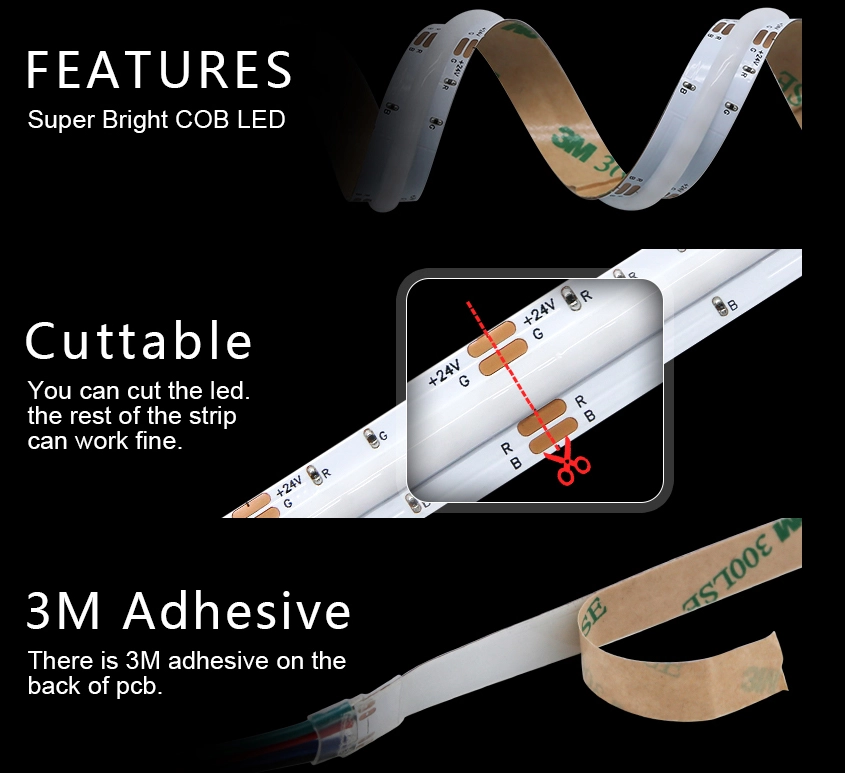
Unlike older LED strips that display clear light spots, COB strips rely on a tight chip-on-board setup where many small LED chips sit right on the circuit board, topped by a phosphor coat. And so, this approach yields a clear, spotless shine that suits spots where the light shows directly.
Definition And Core Features Of COB Strips
COB means “Chip on Board.” In COB LED strips, scores or even loads of tiny LED chips cluster near each other on a bendy PCB. Rather than separate LED bulbs, the whole strip glows as one solid face.
Such a setup lets COB strips provide broad light angles, often reaching 180 degrees, along with quite uniform brightness. Raymates’ COB LED strips come with dense chip arrangements, reliable power choices, and steady color temperature handling, so they fit well for ongoing business and building uses.
How COB Strips Deliver Uniform Light
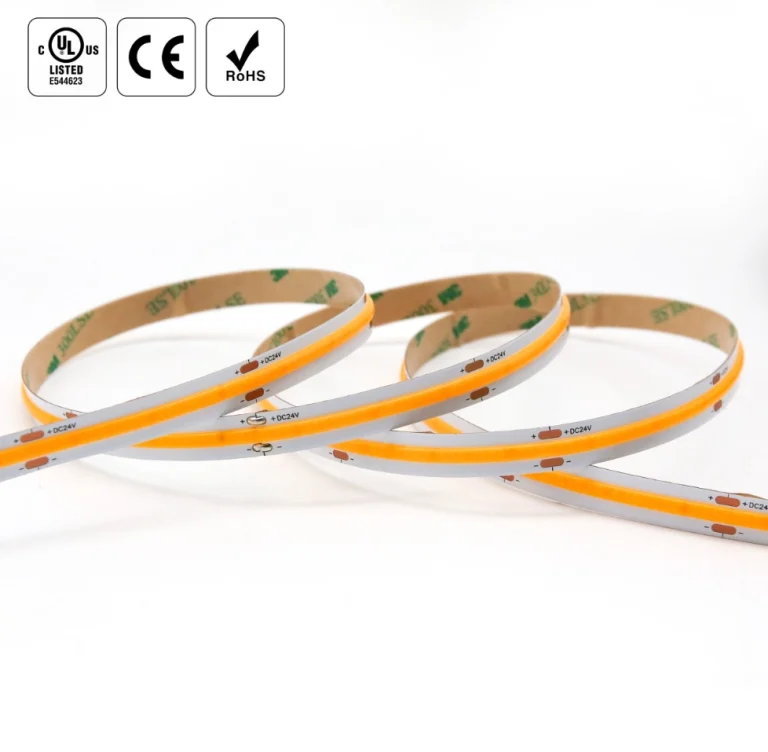
The biggest standout shows up when you power the strip. COB strips wipe out the spotted light pattern often found in SMD strips, and they do this even without metal channels or spreaders.
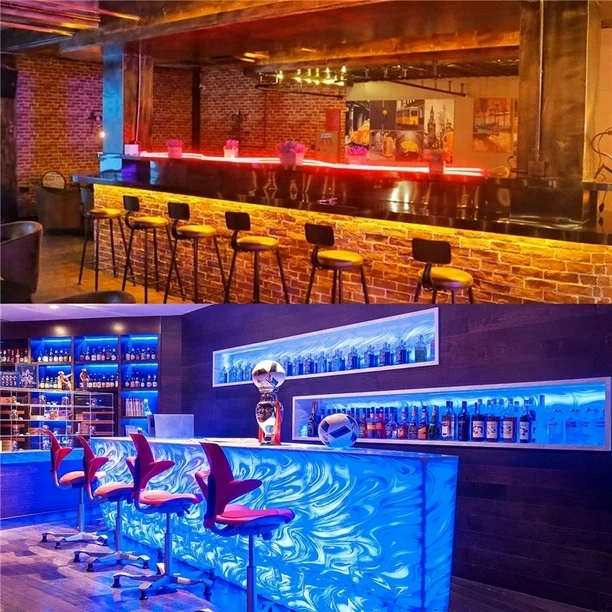
This steady shine makes COB strips a top pick for places where the light source sits in plain sight, like open racks, wall highlights, bar tops, and mirror setups. Raymates’ COB strip making sticks to firm quality checks, including full reviews and run-in tests, which keep steady brightness and color match across groups. In internal lab testing, Raymates’COB strips maintain a CRI of >90, ensuring colors remain true under the light. Furthermore, our heat-sync testing shows that the continuous phosphor layer reduces localized heat buildup by up to 15% compared to standard SMD layouts, preventing the ‘yellowing’ of the strip over time.
Typical Applications For COB LED Strips
COB LED strips see broad use in upscale indoor lighting tasks. Usual spots include shop case displays, hotel hallways, lit-up counters, trim wall paths, and furniture edges.
Due to their smooth style, COB strips also draw designers who seek light that feels gentle and blended, not mechanical or bare.
What Are SMD LED Strips?
SMD LED strips mark the classic and most common LED strip variety. They stay favored thanks to their range of uses, price variety, and many setup options. Getting how SMD strips operate clears up where they still work well and where their weak points show.
Definition And Core Features Of SMD Strips
SMD means “Surface Mounted Device.” In SMD LED strips, single LED bulbs like SMD2835, SMD5050, or SMD3528 attach one by one along the circuit board.
Each LED serves as a clear point light source. The gap between these LEDs shapes the brightness, energy draw, and sight effect. SMD strips come in plain color, RGB, RGBW, and controllable types, giving more handling choices in some arrangements.
How SMD Strips Compare In Light Distribution
Since SMD LEDs stand apart, the light spread isn’t steady from the start. When fitted without spreaders, clear dots often appear, mainly at near views.
For off-view lighting, tucked setups, or jobs that always use metal channels, this dotted look usually works fine. Yet, in open designs, it can lower the total polish level.
Typical Applications For SMD LED Strips
SMD LED strips often go into cove lighting, signs, backlighting, ad light boxes, and trim RGB shows. They also fit projects needing shifting color handling or controllable lighting. Their long track record in the field means SMD strips are simple to find and known to fitters everywhere.
How Do COB And SMD LED Strips Differ?
Both COB and SMD LED strips fill key roles, but their contrasts stretch past looks. Output, fitting, and lasting outcomes all shift based on the tech picked.
Light Quality And Seamless Emission
COB LED strips create a smooth, level line of light without clear hot spots. Thus, they suit top-tier indoor lighting where sight ease counts.
SMD LED strips, on the other hand, make point-style lighting. Spreaders can ease the look, but full evenness proves tougher to get, especially in shallow fits.
Installation Flexibility And Form Factors
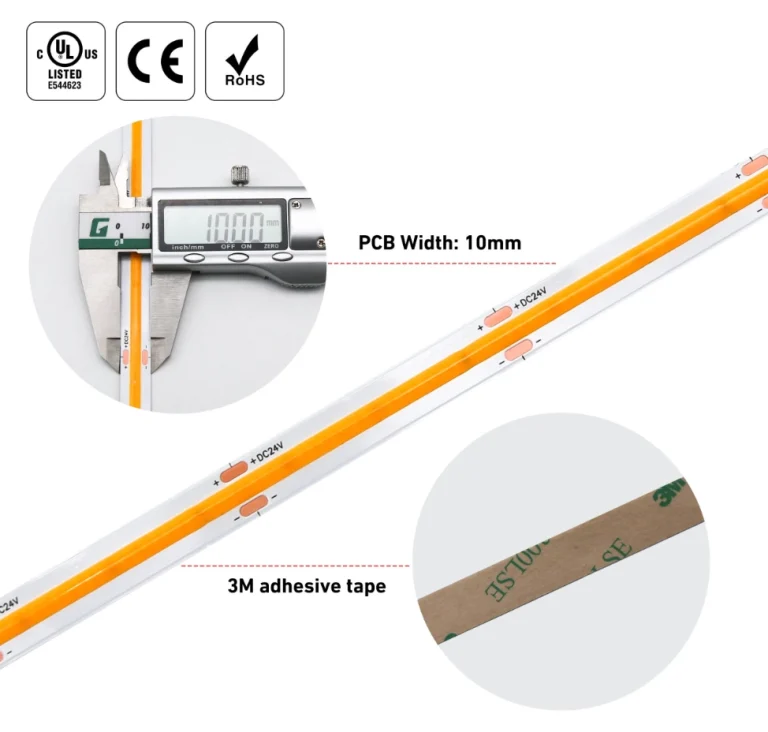
COB strips tend to be thinner and bendier, so they fit easier into slim channels, bent faces, or close building details. Raymates provides COB strips in different widths, including small-scale designs for exact lighting.
SMD strips offer more setup types, like controllable and RGB ones, but they frequently need deeper channels or lids to gain a neat style.
Efficiency, Lifespan And Heat Management
COB tech spreads warmth more evenly over the board, cutting down on local hot areas. As a result, this boosts lifespan and holds steady brightness as time goes on.
SMD strips can work solid too, but warmth control relies more on fit quality and metal shapes, particularly at high power settings.
| Feature | COB LED Strip | SMD LED Strip |
|---|---|---|
| Light Uniformity | 100% Seamless (No spots) | Visible dots (requires diffuser) |
| Flexibility | High (Small bend radius) | Moderate |
| Beam Angle | 180º | 120º |
| Best For | Direct view, slim profiles | Indirect lighting, cove lighting |
Why Choose COB LED Strips For Your Project?
COB LED strips don’t swap out every lighting case, but they bring solid perks in plenty of current designs. Picking COB usually ties to sight quality and job hopes.
Superior Continuous Light With Fewer Hotspots
For planners chasing smooth, unbroken light lines, COB strips yield stronger outcomes right from the package. And this cuts the need for added spreaders while easing the fit process.
Raymates’ COB LED strips get built for reliable color flow and no-flicker work, so they match both home and business settings.
Slim And Flexible Designs For Tight Spaces
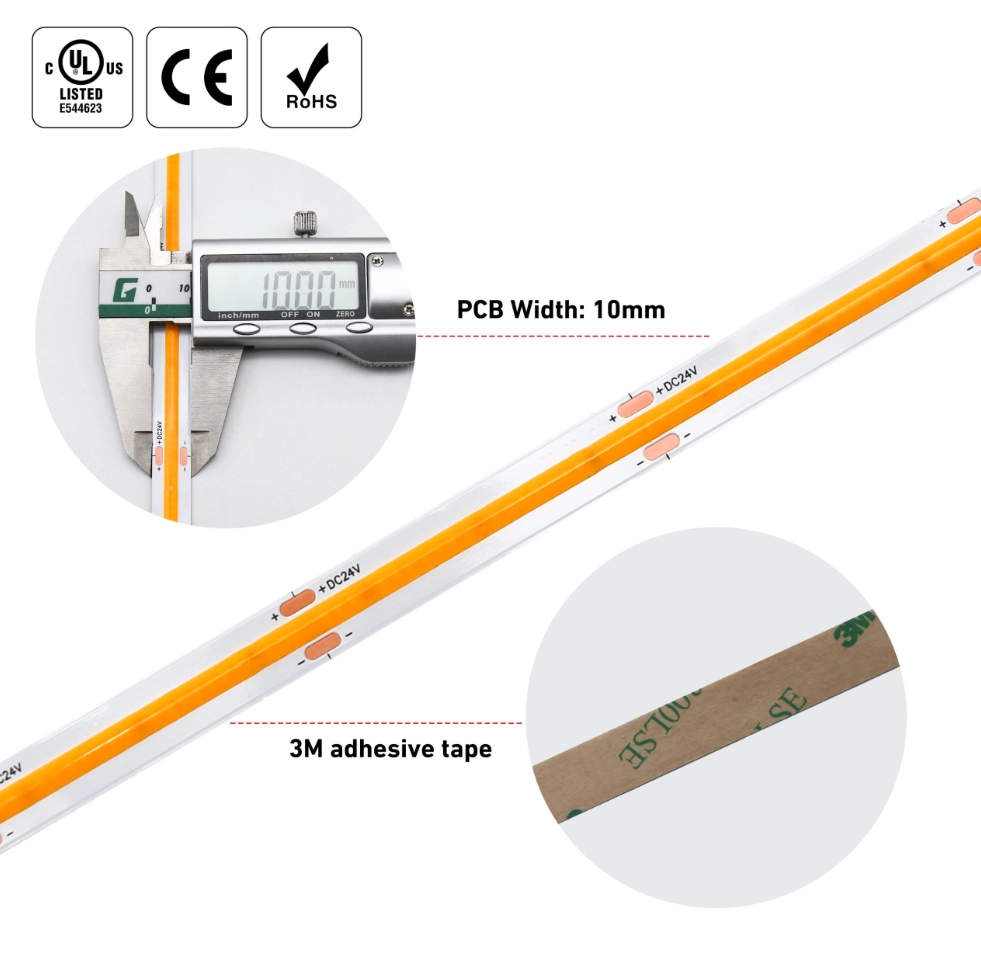
Small-scale COB strips let lighting blend into areas where standard strips falter, such as slim racks, glass rims, and narrow slots. Their bendiness also backs curved and custom plans.
Pro Tip: When installing the Mini Size COB Strip in tight furniture gaps, the 180º beam angle means you can mount it closer to the surface (as shallow as 5mm) without seeing individual light points—something impossible with SMD 5050 strips.
Better Aesthetic Effect In High-End Lighting
In hotels, shops, and fine home jobs, light quality shapes how a room feels. COB LED strips offer a gentler, sharper style that fits well with upscale indoor trends.
Which COB LED Strip From Raymates Should You Consider?
Raymates has crafted a few COB LED strip choices to suit varied job demands, from big setups to small trim lighting.
Super Long COB Strip For Large Continuous Runs
The Super Long COB Strip gets made for long lighting paths with little power loss. Therefore, it fits business areas, hallways, and building edges that call for extended, unbroken light lines. Fewer join spots also lead to neater fits and less upkeep worry over years.
Mini Size COB Strip For Compact And Precision Lighting
For tasks with tight room, the Mini Size COB Strip brings a thin shape without losing light strength. It suits case displays, racks, mirrors, and furniture lighting. Designers often pick this for setups where light stays low-key yet gives even shine.
Colorful COB Strip For Dynamic And Decorative Effects
The Colorful COB Strip merges the even glow of COB tech with full color range. It works for bars, fun spots, accent walls, and fresh business insides. Next to usual RGB SMD strips, this brings smoother color mix and a tidier sight line.
How To Choose Between COB And SMD LED Strips?
Picking the fit LED strip hinges less on which tech tops the other, and more on what matches the job.
Match Lighting Goals With Strip Performance
If the aim is even, seen lighting with a fine style, COB LED strips often prove the smarter pick. For tucked lighting or shifting RGB handling, SMD strips might still make sense.
Consider Installation Environment And Constraints
Room limits, bend needs, and view range all shape the end outcome. COB strips handle better in shallow channels and open fits.
Evaluate Aesthetic Vs Functional Needs
Certain jobs stress sight ease, while others eye use or price. Grasping this mix aids in dodging overbuild or short light quality.
FAQ
Q1: Are COB LED strips brighter than SMD LED strips?
A: Light strength ties to power and chip count, not just the tech. COB strips often seem stronger since the light spreads more evenly and feels kinder to the eyes.
Q2: Do COB LED strips need aluminum channels?
A: COB strips can run without channels in lots of cases, mainly where room runs short. Metal profiles still help with heat release in strong-power fits.
Q3: Are COB LED strips suitable for long-term commercial use?
A: Yes. Top COB LED strips, such as those from Raymates, get made for long life, steady color flow, and reliable work in business settings.