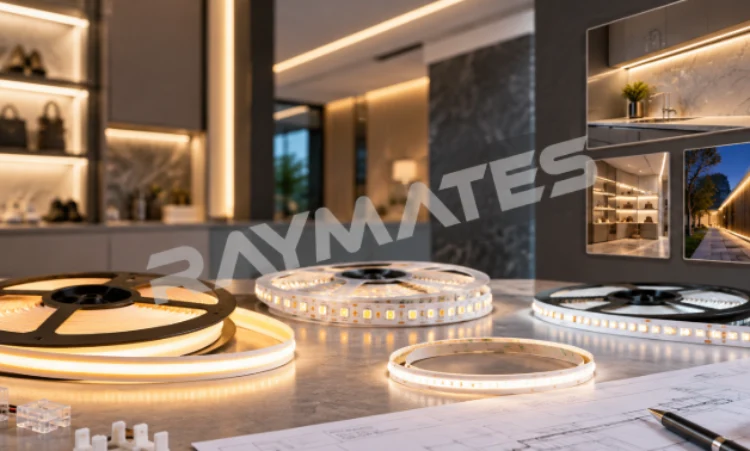
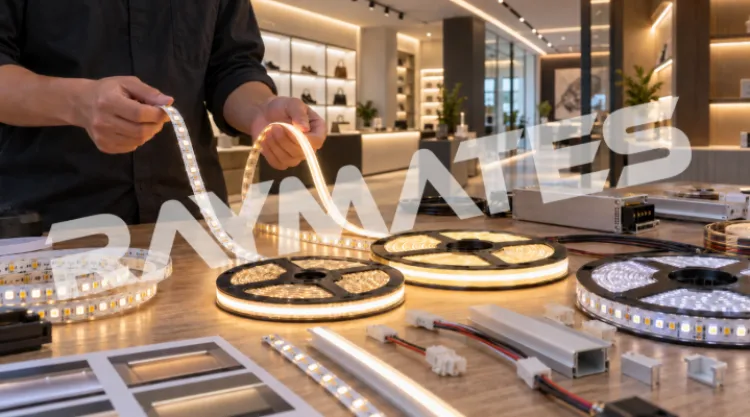
Planning a business setup with 50 meter led lights demands care. Precision ranks as more than a choice. It stands as a must. A frequent error in big setups involves using old tools that ignore the special ray patterns of current diodes. For solid outcomes, a teammate who prizes exact skills matches the need. Raymates fills that role. From 2009, the group has aimed at the top LED band field. They built a name as a steady B2B making specialist. Through modern SONY SMT tools and a tight 6S control setup, each item fits strict world rules like UL, CE, and RoHS. They go beyond sending pieces. They offer design fixes for projects around the globe in over 30 lands, such as the US, Germany, and France. Teaming with them brings years of know-how in heat handling and steady glow. Thus, the mark gains notice in a full market.
Why Is Spectral Mismatch a Critical Issue for Lighting Contractors?
Notice how two “same” white rays seem a bit off to the eye? That points to ray variation. For builders, this turns into a law and work danger when site checks fail to line up with stated details. Ray mismatch happens when a ray tool’s part does not match the eye’s feel for varied wave lengths.
Inaccurate Readings on Traditional Lux Meters
Many cheap lux tools adjust for bulb rays with wide, even patterns. Yet, new LEDs hold a pointed “blue rise” that mixes up those parts. Unless the tool suits LED tech, readings might sit 10% above or below true ray flow. Such gaps can cause check fails or upset buyers who find the area too dark.
Discrepancies in Luminous Flux Calculations
Figuring total ray flow for a space leans on maker data. Testing those with an unadjusted tool yields off numbers. This hampers checks on if gear runs at full power. Solid ray info keeps power-save math true for B2B buyers.
Visual Inconsistency Across Large Commercial Installations
In a vast path or storage building, small changes in shade or strength show clear when bands sit next to each other. Ray mismatch in check steps can mask these until the full setup stands. Spotting flaws soon cuts the steep price of swapping yards of rays after covers close.
How Do You Maintain Brightness Uniformity in 50 Meter LED Lights Projects?
Handling a task with 50 meter led lights calls for special gear to fight power loss. These building lines of 50 meter led lights need focused design to make the start meter match the end. Without proper items, the line’s finish always seems fainter and softer than the start.
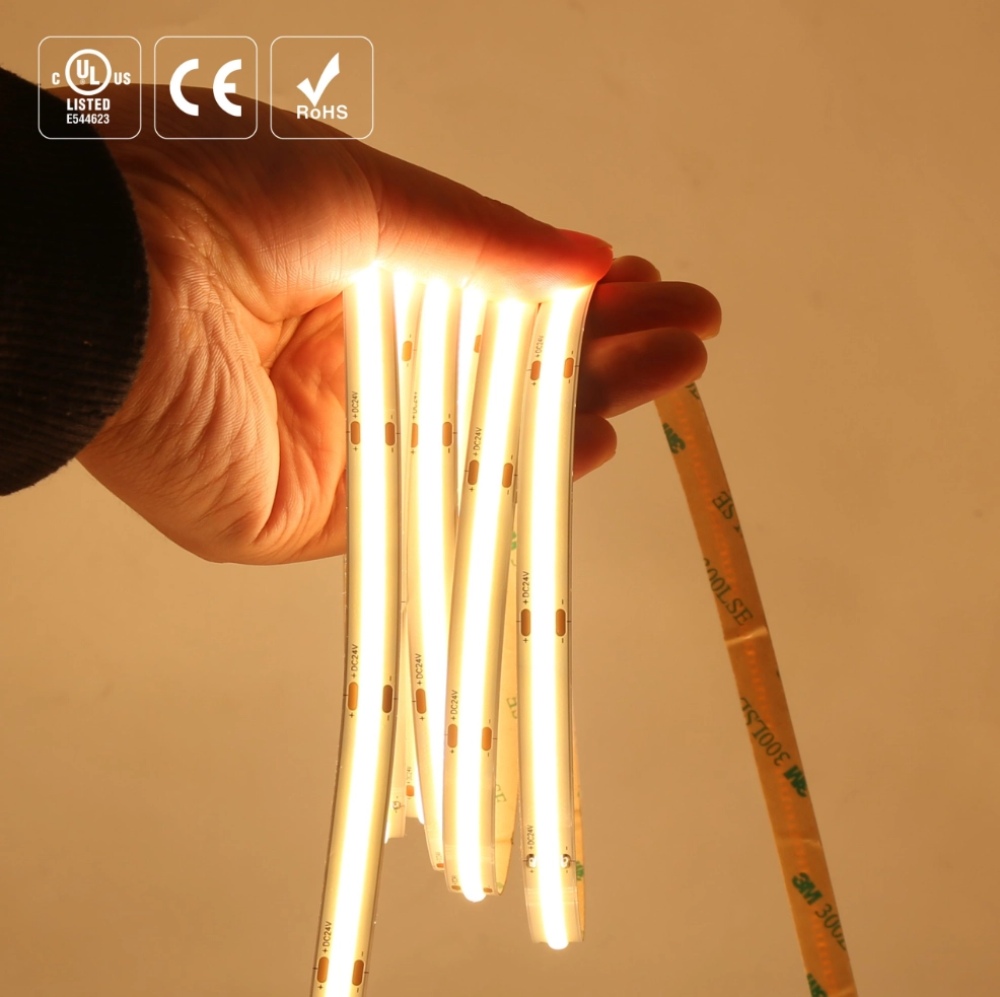
Advanced Super Long COB Strips
To fix evenness issues, turn to a fix built for length. The Super Long COB Strips has extra-long band build supports steady paths up to 50 meters. Power comes from one side alone. It ends the “fade” by applying a wider copper board. That board moves flow better over the full setup length.
Constant Current Control for Consistent Lumen Output
The main way to skip strength changes lies in steady flow tech. Bands hold small built chips that guide power to each diode. Thus, every part gets the same energy share. Distance from the source holds no sway.
Minimal Voltage Drop Over Extreme Linear Distances
Checking 50 meter led lights with a basic lux tool often brings wrong info. This stems from the tight ray power spread in new LEDs. Still, a fine board with low inner block keeps steady power levels through the path. Such a choice holds shade heat even. It stops the “pink” or “yellow” tint that hits low-cost LED bands over far reaches.
Does Spectral Accuracy Matter for Your Next Dynamic RGB Project?
Designs needing shade-shift effects raise ray match needs. Each hue—red, green, and blue—holds a clear top wave length. Wrong tool or band checks lead to dull or spotty “white” from RGB blend.
Vibrant Color Consistency via Colorful COB Strips
The Colorful COB Strip offers a better path for active spots. Chips mount right on the board. A even phosphor or rubber cover hides them. Hues mix well before eyes catch them. This yields a full, sign-like shine. It stays even over the whole hue range.
Seamless Light Distribution Without Visible Dark Spots
Standard RGB bands display “dots” in red, green, and blue. In fine welcome or shop areas, those dots bounce off bright faces. They seem unskilled. COB build forms a nonstop ray line. Such smooth spread eases exact checks. No “warm points” twist tool data.
Precise Spectral Control for High-end Interior Designs
For top room makers, the true tone of “Teal” or “Amber” must fit. High-pack COB tech gives sharper hold on ray flow. It lets one reach work-level ray views that tie to screen plans shown to buyers. The real room then fits the art idea.
Can High Voltage Solutions Simplify Site Testing and Installation?
At big build sites, handling many low-power units proves tough. Strong-power fixes let longer paths use basic lines. This also makes checks easier.
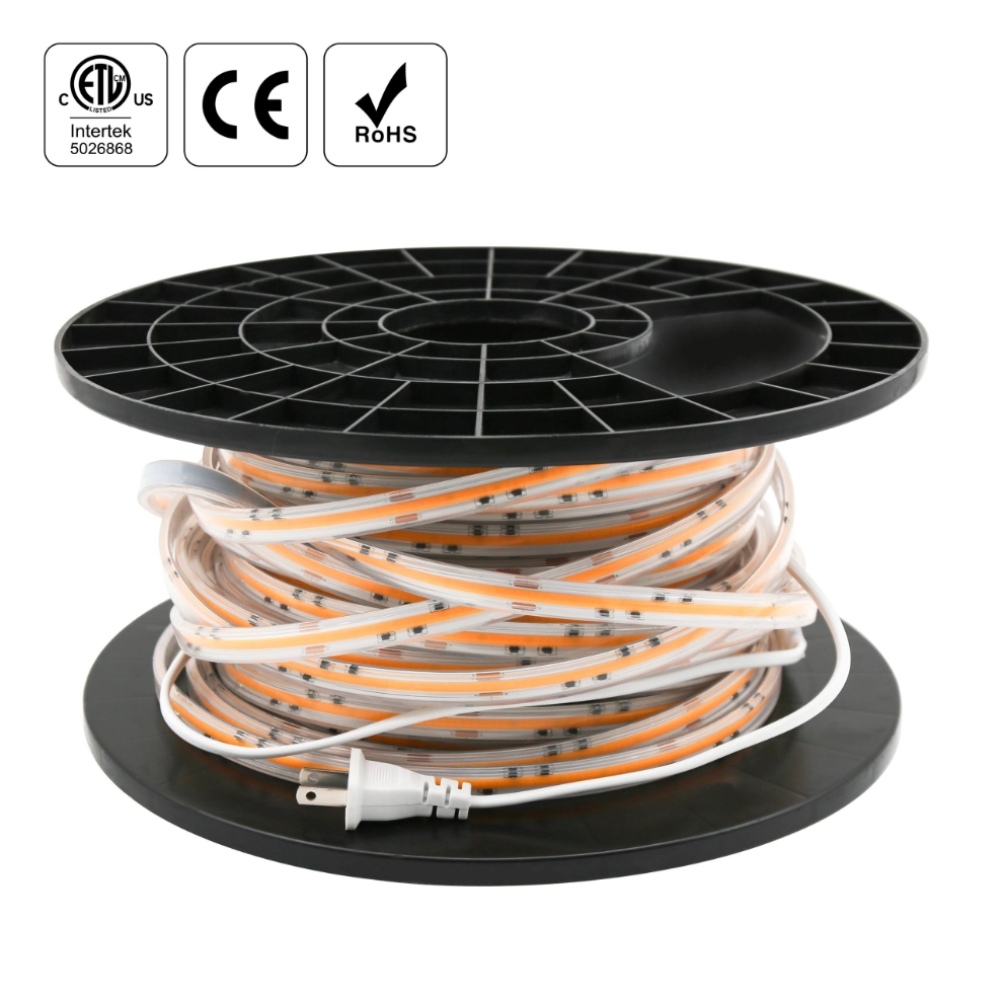
High Efficiency COB High Voltage Strips
A COB High Voltage Strip links straight to main power (via easy changer). No thick shifters sit every short way. It fits outer edge rays or big factory rooms. There, steady, strong rays span many yards.
Simplified Wiring Requirements for Industrial Site Surveys
Less lines cut risks of poor joins that harm ray tool data. Site checks call for testing rays in end form. Strong-power setups yield a clear build. One can then eye ray tone over fixing power fades in a tangled low-power net.
Direct Power Connection Reducing Electronic Interference
At times, “hum” from many low-power shifters jams fine check gear. Strong-power bands give a firmer electric setting. This firmness makes sure pro LED ray tools pull “pure” info. It stays free from flickers or jams from low-end switch units.
Why Partner with a Manufacturer for Your Global Lighting Business?
In B2B circles, the item forms just part of the mix. The rest comes from skill aid and custom work that a focused maker supplies.
Comprehensive OEM and ODM Support for Professional Brands
Tasks needing set shade heat or custom board size require a plant that shifts fast. From “one light one cut” builds for exact shape fits to marked pack fixes, direct line to the design group meets tech needs. Nothing gets lost in pass-along.
Certified Quality Assurance with UL and CE Standards
Guard and rule fit stand firm for business tasks. Each ray batch faces full run tests and check reviews. Items with UL, TUV, and ETL marks shield the work from fault risks. Ray work checked now holds the same in five years.
Expert Technical Consultation and Global Contact Channels
A pro check plan for 50 meter led lights boosts life and buyer joy. Questions on ray mismatch or lux math for a 50-meter path? Reach for web talks or full tech plans. Such aid turns a basic provider tie into a lasting plan link.
FAQ
Q: Do I need a special light meter for 50 meter led lights?
A: Yes. Basic lux tools adjust for bulb rays. They often miss the blue-rich spread of LEDs. For a task with 50 meter led lights, pick a tool with “CIE V(λ) color correction filter” or a wave checker. This skips 3% to 10% check gaps.
Q: Why does the color look different at the end of a long LED strip?
A: Power loss usually causes it. As power falls over length, flow through diodes drops. This moves shade heat to warm (yellow/red) sides. Steady flow builds or strong-power bands stop such ray moves.
Q: How can I verify that my LED strips meet the advertised CRI?
A: True Color Rendering Index (CRI) checks need more than a basic lux tool. A wave checker must scan full ray power spread. The right gear for 50 meter led lights cuts setup flaws. It meets needed sight rules.