Many LED lights users ask one thing first: do LED strip lights emit UV rays or harmful radiation? In normal indoor use, the answer is usually no. Regular LED strip lights are made for visible light, not ultraviolet output. But that does not mean buyers can ignore the product details. Glare, heat, driver matching, fixing method, and product quality still need to be checked before a project starts.
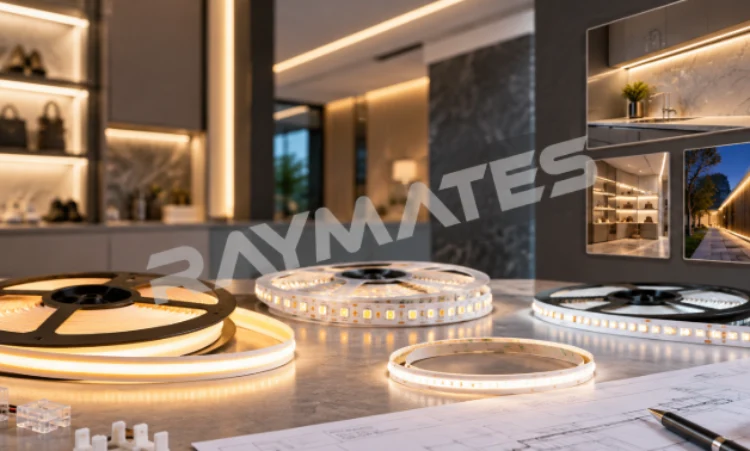
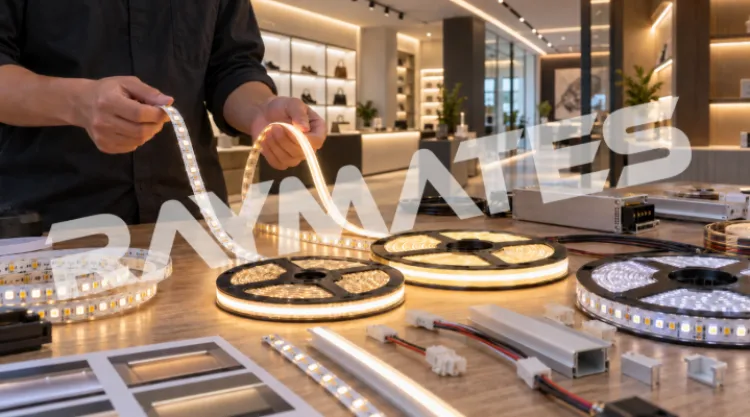
Raymates supplies LED strip, COB strip, LED Sheet, and related accessories for commercial and decorative lighting projects. For this topic, COB strip products are a good fit to mention because they are often used in display cabinets, hotel spaces, and indoor decorative lighting. These places need clean visible light, not UV output.
Do LED Strip Lights Emit UV Rays in Normal Use?
Many people search this question because they group all LED products together. In real projects, product type matters. A normal LED strip for cabinet or shelf lighting is not the same as a UV LED strip used for curing or sterilization.
Most Standard LED Strip Lights Produce Little to No UV
Standard LED strip lights for indoor decoration and commercial lighting are made to give visible light, not UV output.
For display cabinets, hotel corridors, retail shelves, or furniture lighting, buyers usually need to pay more attention to power stability, heat control, glare, color consistency, and installation quality. These details affect the final lighting effect more directly.
UV LED Products Are a Different Category
UV LED products use ultraviolet wavelengths for special tasks. They need different safety rules, shielding, labels, and working instructions. Buyers should not use UV LED information to judge every LED strip. Before ordering, ask clearly whether the product is a regular visible LED strip or a UV-emitting product.
COB Strips for Clean Visible Lighting
For regular visible lighting, hot selling cob strip is a useful option to review. It is made for continuous, smooth light rather than a dotted effect. This helps in display shelves, cabinet edges, ceiling grooves, office lines, and commercial decoration.
Buyers choose it for the smooth light line, flexible fitting, and cleaner look in indoor spaces, not for UV output.
Do LED Lights Give Off Harmful Radiation?
When people ask, do LED lights give off harmful radiation, the answer depends on product type, brightness, distance, and usage.
For standard indoor lighting, practical safety is more about glare, heat, poor drivers, wrong wiring, or using the strip in the wrong environment.
Radiation Does Not Always Mean Dangerous
A regular warm white strip, neutral white strip, or colorful decorative strip gives off visible light. This is different from a UV lamp. For normal indoor use, the light should be judged by whether it fits the project, not by the word “radiation” alone.
Buyers should avoid treating all LED products as the same. A strip for shelf lighting, a strip for color decoration, and a UV strip for technical use have different purposes.
Heat and Glare Need More Attention
If a strip feels uncomfortable, the cause is often glare or poor placement. In glass cabinets, light can reflect from shelves, acrylic panels, metal edges, and glossy packaging. Even safe light can look harsh if it is too bright or installed too close to the eye.
Heat also matters. A strip placed in a narrow groove or sealed area may need a better mounting surface or aluminum profile.
Product Quality Reduces Risk
For B2B buyers, safety comes from more than one product claim. Check voltage, power, driver matching, waterproof grade, wiring plan, installation surface, and product documents.
This step is useful for contractors, shopfitters, lighting designers, and distributors. A sample may look fine on a desk, but a full project needs stable performance after installation.
For Raymates projects, buyers can also ask for product documents before mass ordering, such as voltage information, power details, waterproof grade, certification files, and installation accessory suggestions. This is useful when the same LED strip will be used across several cabinets, shelves, or hotel lines. It helps the buyer check not only whether the light is safe, but also whether it can be installed and maintained without extra trouble.
How Are LED Lights vs Fluorescent Lights Different for UV Radiation?
The search phrase LED lights vs fluorescent lights UV radiation often appears when buyers are replacing older lighting. They want to know whether LED is safer, easier to install, and better for indoor display.
Lower UV Concern in Regular LED Lighting
Regular LED strip lighting usually brings less concern around UV exposure than older lighting types used in some indoor spaces. It is also easier to hide, shape, and fit into slim areas.
For cabinets, shelves, signs, furniture, and ceiling lines, LED strip lighting gives more layout freedom. It can sit behind panels, inside profiles, under shelves, or around curved edges.
Easier Handling in Commercial Interiors
Commercial projects care about maintenance. A lighting system in a hotel corridor or retail shelf should not only look good on the first day. It should be easy to install, check, and replace when needed.
Flexible LED strips can reduce bulky fixture design. They help keep the light source hidden while making the product, wall, shelf, or counter stand out.
Better Visual Control
COB strip lighting is useful where buyers want a continuous light line. It reduces the dotted look that may appear with low-density strips. For clean white display lighting, hot selling cob strip suits shelves, cabinets, office lines, and architectural details.
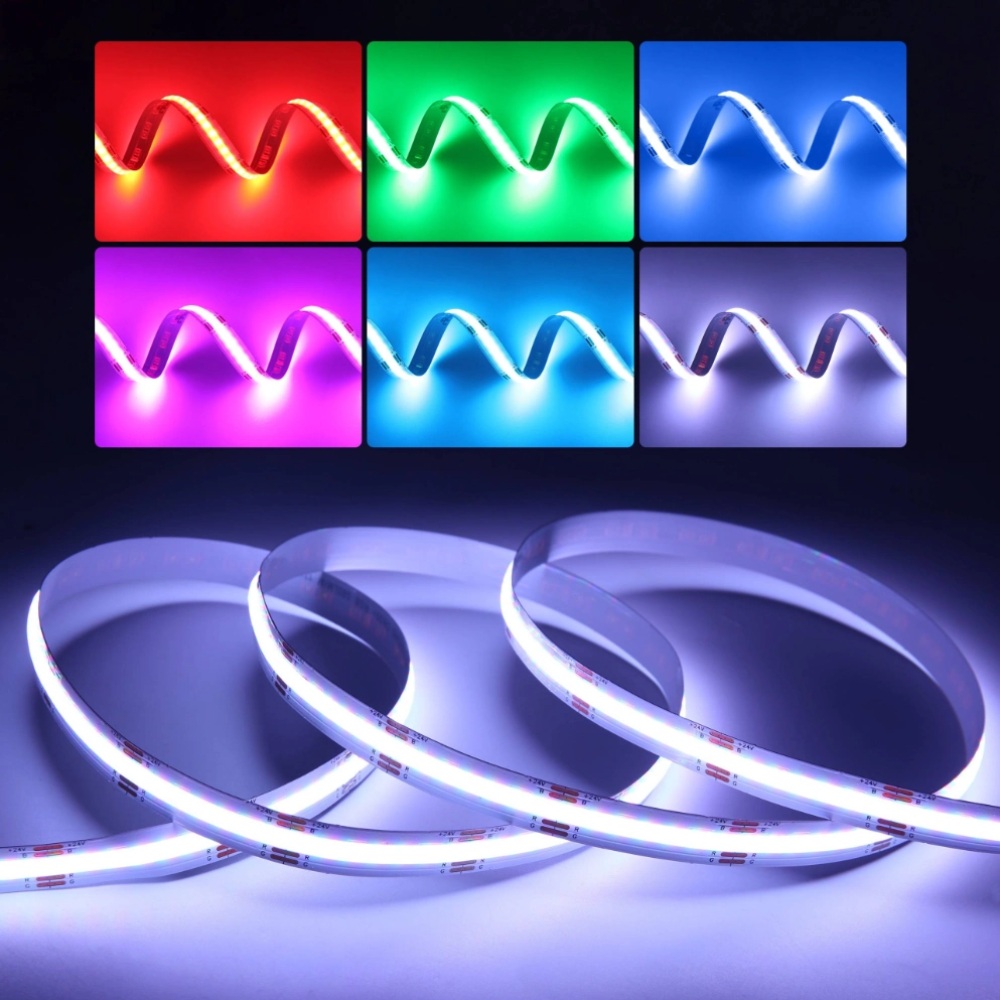
For mood lighting, colorful cob strip is better suited to bars, entertainment spaces, brand walls, and holiday scenes.
Which LED Strip Lights Are Better for Display Cabinets and Indoor Projects?
Safe LED lighting for display cabinets is not only about UV. It is also about how products look under the light.
Smooth Light for Product Display
Display cabinets need even light, suitable brightness, good color rendering, and controlled heat. If the strip is visible through glass, dotted light points can make the cabinet look cheap. A smoother COB light line often gives a cleaner result.
For cosmetics, jewelry, retail samples, and packaging displays, test the light before bulk order. Check color temperature, brightness, and reflection from the real cabinet material.
White COB Strip for Clean Display
hot selling cob strip fits display cabinets, retail shelves, hotel lines, office spaces, and indoor commercial decoration. Its continuous light effect helps create a neat visual line. This is useful where the light should support the product display instead of distracting from it.
Before ordering, confirm strip width, voltage, color temperature, waterproof requirement, driver plan, and mounting method.
Colorful COB Strip for Mood Scenes
Some spaces do not need neutral white light. Bars, clubs, display walls, and entertainment areas often need color. colorful cob strip fits these projects because it supports a stronger visual mood.
For this type of project, buyers should confirm the control method, wiring layout, installation length, and power plan before production.
How to Choose Safe LED Strip Lights for Indoor Use?
If you are checking how to choose safe LED strip lights for indoor use, do not focus only on UV. A safer purchase comes from matching the product with the site, driver, surface, and lighting goal.
Match Voltage, Power, and Driver
Start with voltage and power. The driver should match the strip and leave proper safety margin. Long runs need careful wiring to reduce voltage drop. If the project needs dimming or color control, confirm the controller and connection method early.
Check CRI, Beam Angle, and Surface
For display lighting, CRI affects how products look. Beam angle affects how light spreads. The mounting surface affects heat control. A narrow groove, sealed shelf, or backlit panel may need extra planning.
A small sample test is useful. Test it with the same profile, diffuser, cabinet, or surface planned for the final project.
Use Supplier Support Before Bulk Order
Share project details before ordering: length, voltage, color temperature, waterproof grade, surface material, control method, quantity, and drawings if available. This helps the supplier match the strip, driver, connector, and accessories.
For a display cabinet, retail shelf, hotel line, or office groove, regular COB strip lighting is usually the right direction if the goal is smooth visible light and low UV concern. For bars, brand walls, and decorative scenes, colorful cob strip makes more sense because the color effect is part of the design. If the project involves curing, sterilization, inspection, or any technical UV work, do not choose a normal decorative strip by mistake. Ask the supplier to confirm the light type first.
| Project Type | Main Concern | Better Product Direction |
|---|---|---|
| Display cabinets | Smooth light, low glare, good color display | hot selling cob strip |
| Hotel ceiling lines | Continuous light, easy fitting, stable driver plan | hot selling cob strip |
| Bar counters | Mood lighting, color effect, wiring layout | colorful cob strip |
| Brand display walls | Color impact, control method, installation length | colorful cob strip |
| Narrow shelves | Heat control, profile matching, reflection check | COB strip with proper mounting plan |
Contact Raymates for Project Matching
For cabinets, shelves, bar counters, display walls, hotel lines, or custom indoor lighting, prepare the basic project details before purchase. Length, voltage, color temperature, waterproof grade, surface material, control method, and drawings can all change the final selection. For product matching, installation documents, customization details, or purchasing communication, you can contact Raymates with your project information.
FAQ
Q: Do LED strip lights emit UV rays?
A: In most indoor projects, regular LED strip lights do not work like UV lamps. They are mainly made to give visible light for shelves, cabinets, display areas, and decoration. UV LED products are a separate type, usually used for curing, inspection, sterilization, or other special jobs.
Q: Do LED lights give off harmful radiation?
A: LED lights give off visible light, and that alone does not mean they are harmful. For normal indoor lighting, buyers should pay more attention to real project details, such as brightness, glare, heat control, driver quality, wiring, and whether the strip is installed in the right way.
Q: Are COB LED strips suitable for display cabinets?
A: Yes. COB LED strips can work well in display cabinets because they create a smoother light line than many dotted strips. Check CRI, brightness, color temperature, heat control, and driver matching before bulk purchase.