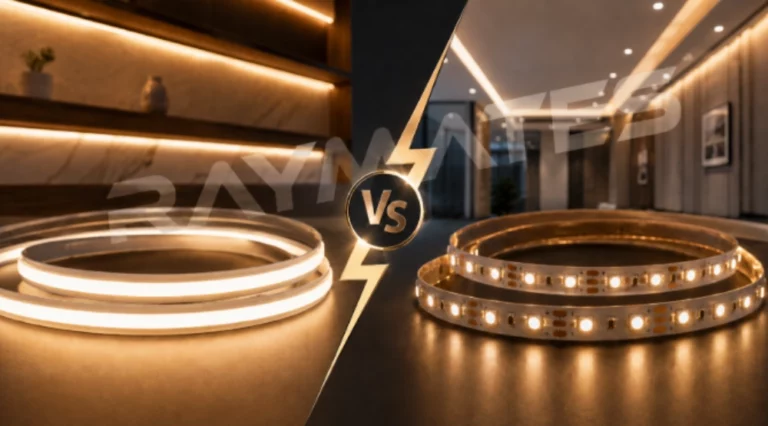
Commercial LED Strip Lighting for a bar has to balance atmosphere with practical installation. It must fit counters, shelves, and recesses without creating hard-to-service electrical points. Define the visual goal first, then select the strip, voltage, driver, wiring, profile, and control system around it.
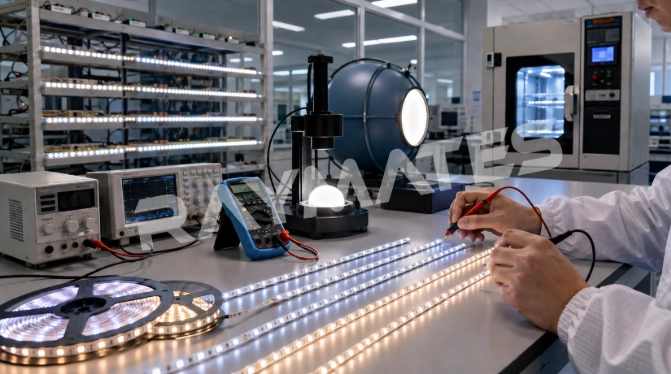
Raymates supplies LED strips, drivers, controllers, aluminum profiles, and customized project support for lighting work. Its range includes low-voltage and high-voltage strips for different run lengths. It also supports drawings, installation guidance, OEM/ODM work, and pre-shipment inspection, which helps buyers coordinate the complete lighting system rather than only the strip. See Raymates for the company overview.
What Did the Bar Need from Commercial LED Strip Lighting?
Before product selection, define what each zone must achieve. A bar often needs ambient light, task visibility, and accent lighting, so placement and control matter as much as brightness.
A Warmer and More Inviting Bar Atmosphere
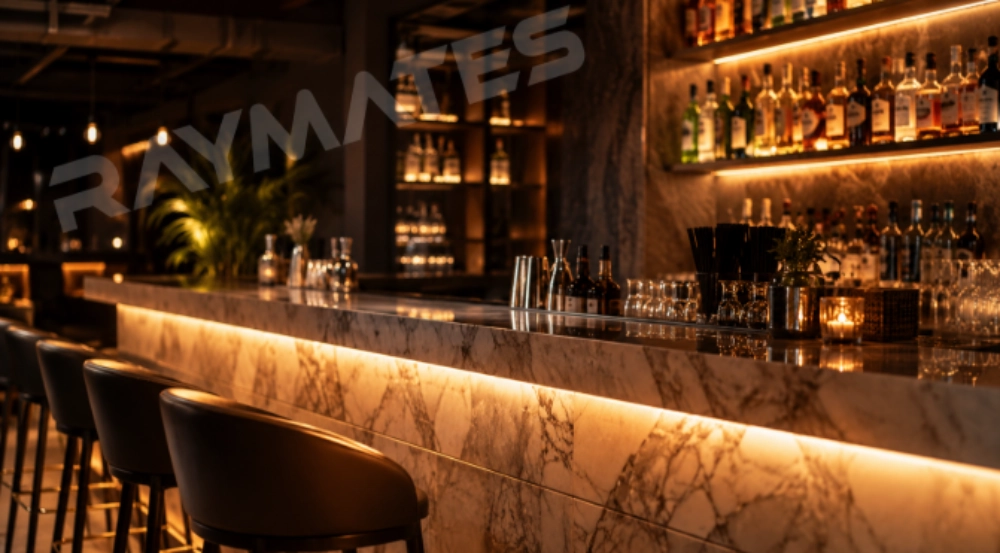
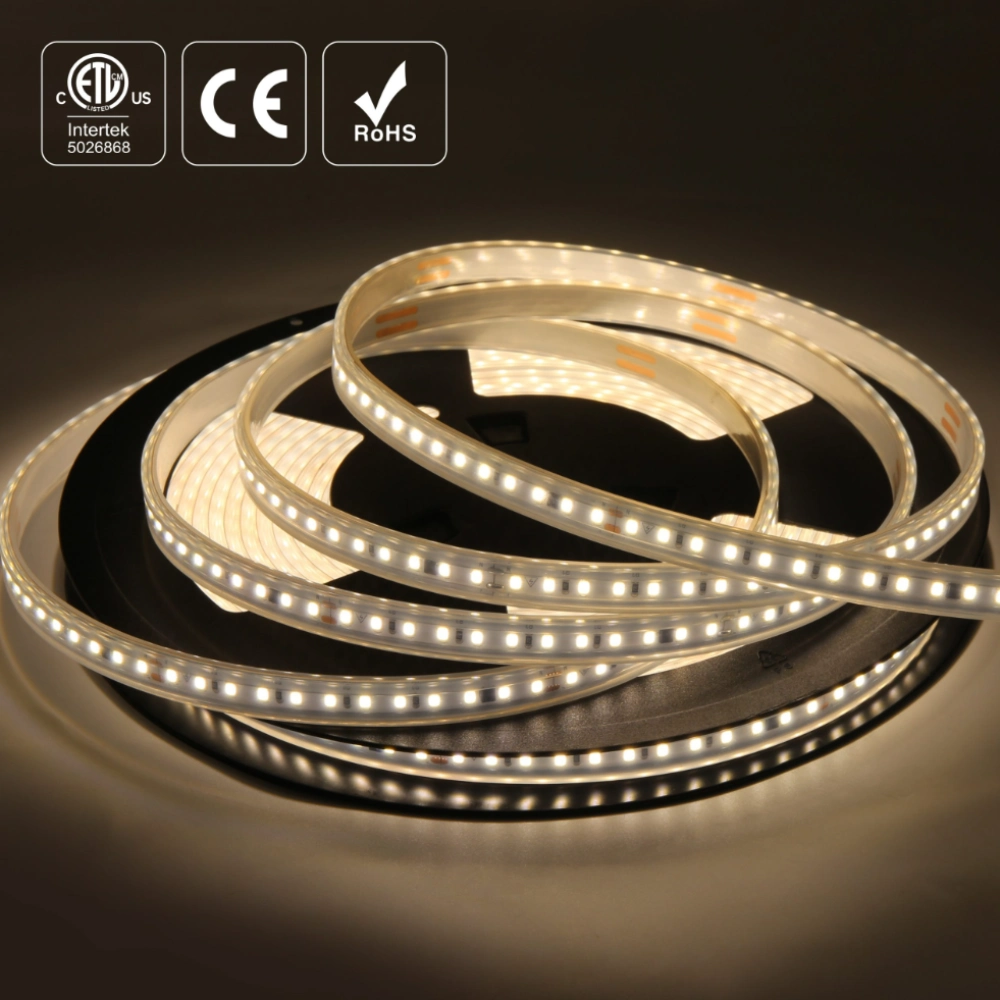
Warm strip light works well around counters, shelves, seating edges, and recessed details because it can soften stone, wood, and metal surfaces without flooding the room with general light.
For a warm bar atmosphere, 3000K is a practical warm-white reference point, while a lower CCT can create a more amber-toned effect where the interior concept calls for it. Raymates’ high-voltage strip range, for example, covers approximately 2200K to 6500K, so the specification can be matched to the materials and mood of the space rather than treating “warm white” as one fixed color.
Protection also needs to follow the mounting position. A strip installed inside a dry recessed shelf does not face the same conditions as lighting near a drinks-preparation area, floor edge, entrance, or other location exposed to moisture and cleaning. Raymates offers IP65 and IP67 configurations in its high-voltage range, with IP67 products using additional protection against moisture and dust. The ends and wiring points still need separate protection because the strip’s IP rating does not automatically make an unfinished connection waterproof.
One Raymates bar-counter project used a flexible warm-white LED sheet beneath marble to create a warm, inviting effect. It was a different lighting format, but the same principle applies: conceal the source and let the surface carry the effect.
Lighting That Fits Counters, Corners, and Architectural Details
Bar interiors often include narrow shelves, corners, and recessed channels. Buyers comparing cutting led strip lights should check where the strip can be cut, how cut sections are reconnected, and whether those joints remain accessible after installation.
Commercial Reliability Beyond Visual Effect
A bar may run lighting for many hours each day. Reliability depends on led strip voltage, connected load, heat movement, driver access, and control zones. Buyers sourcing from an led strip manufacturer should assess the strip, driver, profile, and controller as one system.
How Was the Commercial LED Strip Lighting Solution Designed?
The correct product depends on the layout. Short counters, long ceiling runs, shelves, and exterior accents may need different electrical approaches.
Low-Voltage LED Strips for Detailed Interior Zones
Raymates offers Low Voltage LED Strip products covering 3V, 5V, 12V, 24V, 36V, and 48V, with board widths from 3 mm to 30 mm. For a low voltage LED strip for commercial projects, these options let the specification follow profile size, driver location, and run length.
Low-voltage strips suit counters, shelves, furniture outlines, and recessed details.
High-Voltage LED Strips for Longer Commercial Runs
Raymates also provides High Voltage LED Strip options in 110V, 120V, 220V, and 230V. A high voltage LED strip for long runs can reduce repeated low-voltage power points on extended coves, perimeter lines, or architectural accents.
Searches for 110v led strip lights, 120v led strip lights, or 240v led strip lights reflect the same issue: useful voltage depends on run length, site wiring, and service access.
LED Driver Selection as Part of the Lighting Design
The LED Driver should be selected with the strip. It must match strip voltage, connected wattage, dimming method, and zoning. Drivers should remain accessible; sealing one permanently inside a counter makes future replacement harder.
How Should the LED Strips Be Wired and Installed?
At this stage, commercial led strip lighting becomes an electrical system rather than a decorative product. Feed points, cable lengths, connectors, and mounting surfaces all affect the result.
Parallel Wiring for Stable Commercial Lighting
For multiple commercial branches, parallel wiring is generally more practical than feeding one section through the next. Each branch can receive power from a common distribution point, reducing uneven loading between zones.
Long low-voltage runs may still need additional feeds or power injection. There is no single maximum run length that applies to every low-voltage strip. The limit changes with strip wattage, PCB copper capacity, cable size, supply voltage, and the acceptable voltage drop at the far end. Product-specific data is therefore more useful than a generic distance rule. For example, Raymates’ 24V Super Long COB Strip RM-COBW480-24V10-20M is specified for a single-ended 15 m run without voltage drop, while other low-voltage constructions may require earlier power injection. That 15 m figure should not be applied automatically to every 24V strip.
For substantially longer continuous runs, the electrical architecture may need to change rather than simply increasing cable length. Raymates’ SMD High Voltage Strip is specified for a maximum 50 m run, which illustrates why high-voltage products are considered for extended commercial outlines where repeated low-voltage feed points would make installation unnecessarily complex.
The decision should follow strip load, cable length, conductor size, and far-end voltage. For wholesale LED strip for projects, a run-length drawing is more useful than a total-meter quantity alone.
Aluminum Profiles Protect the Strip and Support Heat Control
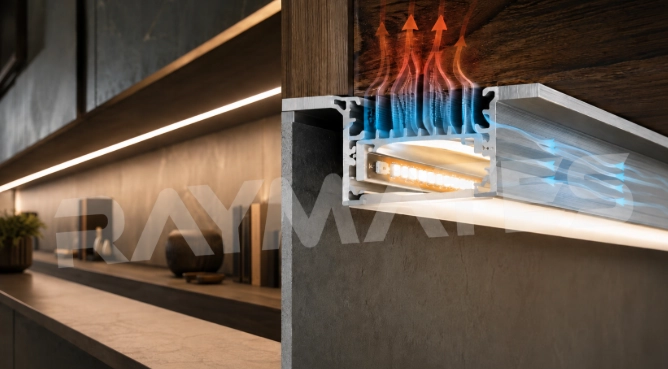
Raymates lists aluminum channels as accessories for mounting and protecting strips while helping heat move away from the flexible circuit. Around counters, shelves, and recesses, profiles reduce direct contact and can create a more controlled light line with a diffuser.
The same logic applies to industrial led strip lights and hospitality installations with long operating hours: the profile is part of mounting and thermal management, not only trim.
Installation Planning Around Cuts, Connections, and Service Access
Mark cut positions, branch points, driver access, and controller locations before permanent fixing. Raymates’ accessory system includes connectors, extension cables, mounting clips, splitters, end caps, power supplies, and aluminum channels.
Power and check every section before profiles, cabinetry, or stonework are closed. For outdoor strip lighting or a buyer evaluating a waterproof LED strip manufacturer, sealing at cut ends and electrical connections also needs to be planned from the start.
How Can the Bar Lighting Be Controlled for Different Scenes?
A bar may need different output during cleaning, service, events, and late-night operation. Control should be specified with the electrical design rather than added after installation.
Dimming for Different Operating Periods
Raymates supports PWM and 0–10V dimming depending on the system configuration. The strip, driver, and dimming method need to be compatible. Choosing the strip first and asking about dimming after the driver is ordered can create avoidable rework.
Controllers for Color and Dynamic Effects
Controllers can manage brightness, color, and dynamic effects. Raymates can support WiFi, Bluetooth, DMX, SPI, and PWM control depending on the system.
Color-changing zones may suit event spaces, while a warm hospitality concept may need only simple dimming. Controls should match the scenes staff actually use.
Control Zones Improve Operation and Maintenance
Separating counters, shelves, ceiling accents, and feature areas into zones makes operation easier and limits a local fault. Zoning also works naturally with parallel distribution because one driver or connection can be serviced without necessarily disabling every decorative light.
What Did the Project Deliver, and What Can Commercial Buyers Learn from It?
The result should be judged against the original goal. Good bar LED strip lighting gives surfaces definition and remains practical to operate and maintain.
The Final Result: Light as Part of the Bar Design
Light hidden below a counter or inside a shelf can make the architecture appear to glow rather than look like an exposed strip added later.
Raymates’ marble bar-counter project followed this principle with a flexible warm-white LED sheet beneath the stone. The client was satisfied with the result, showing why source, surface material, and color tone should be planned together.
Client Feedback and Project Outcome
The completed lighting effect met the client’s expectations for a warmer and more inviting bar environment. In Raymates’ documented marble bar-counter project, the client was very satisfied with the final result after the warm-white flexible lighting was installed beneath the stone surface. The feedback also reinforces an important point for similar hospitality projects: the final appearance depends not only on the light source, but also on how the light interacts with the counter material, mounting depth, color temperature, and concealed installation method.
Three Lessons for Commercial LED Strip Lighting Projects
Use low-voltage strip for detailed routing and shorter controlled interior zones. Consider high-voltage strip where long runs make repeated low-voltage feed points impractical. Specify the driver, profile, wiring, controller, and access points with the strip.
Buyers comparing led strip lumens should also consider mounting depth, diffuser, surface material, run length, and operating conditions. A lumen figure alone cannot tell you how a finished bar counter will look.
From Project Specification to Raymates Service and Support
Raymates can confirm project details by email or online meeting and provide customized solutions, project drawings, installation drawings, installation guidance, and OEM/ODM support. Products are inspected before shipment.
For Commercial LED Strip Lighting, prepare installation lengths, voltage conditions, lighting zones, desired CCT or color behavior, mounting surfaces, control requirements, and drawings before purchasing. This gives the supplier enough information to match strip, driver, accessories, and wiring logic.
If your bar, restaurant, hotel, retail, or entertainment project has long runs, tight profiles, difficult driver locations, or mixed control zones, share them through the Raymates contact page. The discussion can focus on product matching, drawings, accessories, installation conditions, and service requirements before the order is finalized.
FAQ
Is Low-Voltage or High-Voltage LED Strip Better for a Bar?
Low-voltage strip is usually easier to divide into shorter, independently controlled interior zones. High-voltage strip becomes more relevant for long continuous runs where repeated low-voltage power points would complicate installation. A Commercial LED Strip Lighting project can use different voltage approaches in separate zones when the layout requires it.
Why Are Aluminum Profiles Recommended for Commercial LED Strip Lighting?
Aluminum profiles support mounting, protect the flexible strip from direct contact, and help move heat away from the circuit. They are useful around counters, shelves, recessed lines, and other areas exposed to cleaning or long operating periods.
Should Commercial LED Strips Be Wired in Series or Parallel?
For multiple branches, parallel wiring is generally preferred because each branch receives power from a common distribution point rather than through the previous strip section. Long low-voltage runs may still need extra feeds. In Commercial LED Strip Lighting, the final wiring method should follow strip load, run length, cable size, and measured voltage.