A long LED strip can look bright near the power input but noticeably dimmer at the far end. Effective LED Strip Voltage Drop Solutions start by checking the complete electrical path rather than assuming the strip itself is faulty. Run length, cable resistance, driver position, operating voltage, connector quality, and connected load can all affect the final result.
Raymates supplies LED strips, COB strips, drivers, connectors, and related installation accessories for commercial and project lighting. Its low-voltage product range covers 3V, 5V, 12V, 24V, 36V, and 48V, with power customization available for different project requirements.
Why Do Long LED Strip Runs Become Dim at the Far End?
LED strip voltage drop in long runs usually develops across several parts of the power path. A short test sample may work normally, while the same strip installed across a longer distance can lose brightness because the power has to travel through more cable, PCB copper, and connection points.
Voltage Loss Builds Along the Power Path
Every conductor has resistance. Supply wires, PCB traces, terminals, solder joints, and connectors all contribute to the total electrical path.
As the run becomes longer or current increases, the voltage available at the far end can fall. A 24V LED strip for long runs can reduce current compared with a lower-voltage system at the same power level, but voltage alone does not remove the need for correct wiring and power distribution.
Wire Length, Load, and Connections Determine the Severity
There is no single maximum length that applies to every LED strip installation.
The correct wire gauge for LED strip lights, power per meter, operating voltage, feed distance, and number of connection points all affect voltage loss. One strip may perform well over a certain distance while another design requires additional feeds much earlier.
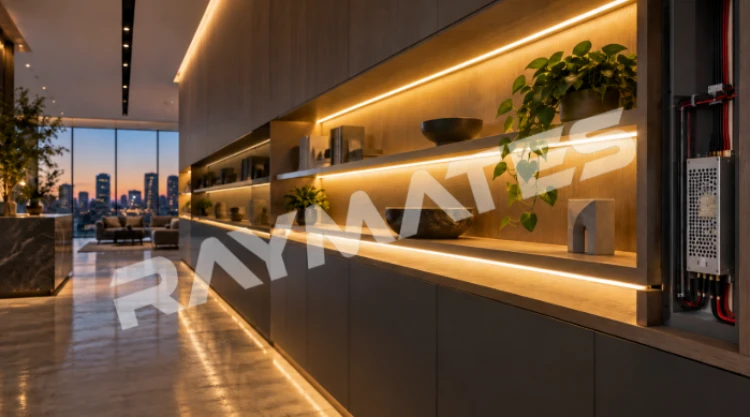
This becomes more important when wiring is hidden inside ceilings, cabinets, display structures, aluminum channels, or finished architectural surfaces.
Simple Measurements Confirm the Real Cause
Measure voltage at the driver output, strip input, and far end while the lighting is operating. If there is a large difference between two adjacent test points, inspect the cable section or connection between them.
Multimeters are among the test instruments used for checking the electrical properties of LED strips.
These measurements keep troubleshooting focused on the actual fault rather than replacing components at random.
Which 7 Fixes Solve Most LED Strip Voltage Drop Problems?
Most LED Strip Voltage Drop Solutions fall into three practical groups: reduce resistance in the power path, supply power from better locations, or select a strip-and-driver combination that is more suitable for the intended run length.
Fixes 1–3: Reduce Resistance in the Power Path
Fix 1: Move the driver closer to the strip.
A long cable between the driver and the strip can introduce voltage loss before power even reaches the LED PCB. Moving the Raymates LED Driver closer to the load can shorten this section of the circuit.
The driver should still be selected according to strip voltage, connected wattage, dimming method, and circuit arrangement. Simply increasing wattage does not correct resistance elsewhere in the installation.
Fix 2: Use a suitable conductor size.
The correct wire gauge for LED strip lights depends on both current and cable distance. A wire size that works for a short cabinet light may be unsuitable for a long commercial run carrying several branches.
For longer feeds, calculate the conductor requirement from the actual project layout rather than copying the wire size used in a sample installation.
Fix 3: Check every connection point.
Loose terminals, poorly aligned pads, oxidized contacts, or unnecessary joints can add resistance.
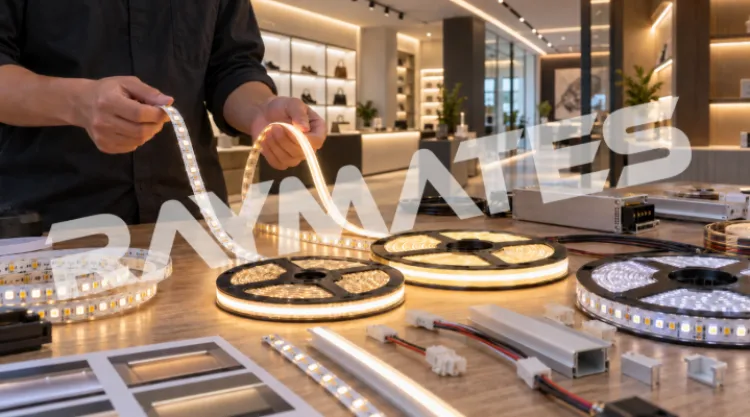
A Raymates LED Connector can be used for strip-to-strip or strip-to-wire connections where the product type and circuit layout allow it. This is useful for under cabinet strip lighting, display fixtures, shelving, and modular installations where individual sections may later need replacement.
Raymates also supplies extension cables and splitters as part of its LED strip accessory system.
Fixes 4–5: Add Power at Strategic Points
Fix 4: Add power at the middle or far end.
Power injection for LED strips is useful when one feed point cannot maintain suitable voltage across the full run. Depending on the layout, additional power can be introduced at the middle, far end, or at several planned zones.
Each feed must maintain correct polarity and system voltage, and the connected load must remain within the driver design.
Fix 5: Divide the installation into parallel-fed sections.
Instead of allowing power to travel through one long continuous electrical path, divide the installation into shorter sections supplied from a common distribution point.
This approach works well for long corridors, commercial shelving, display cases, and repeated lighting zones.
A good long-run design uses enough feed points for electrical stability without creating unnecessary joints. Every additional joint also creates another location that may need inspection later.
Fixes 6–7: Match the Driver and Strip to the Run
Fix 6: Match the driver to the actual load.
Driver voltage must match strip voltage, while capacity should suit the connected load and wiring arrangement.
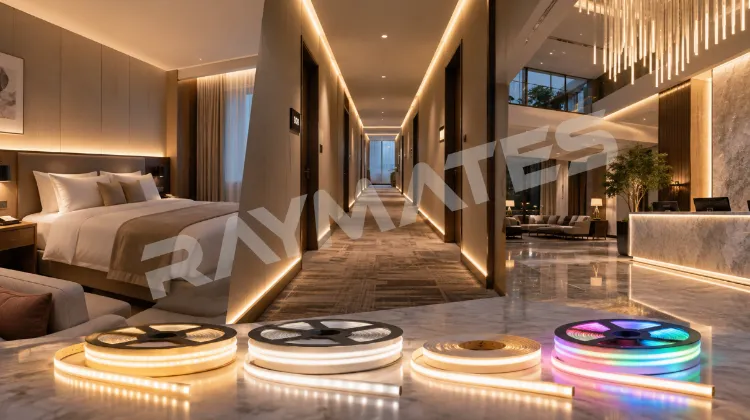
In one Raymates hotel decorative lighting application, 24V COB LED strips were paired with a 24V power supply, showing the importance of treating the strip and driver as one electrical system rather than separate purchases.
Fix 7: Choose a strip designed for longer continuous runs.
For projects where repeated injection points would make wiring difficult, a long-run product may simplify the design.
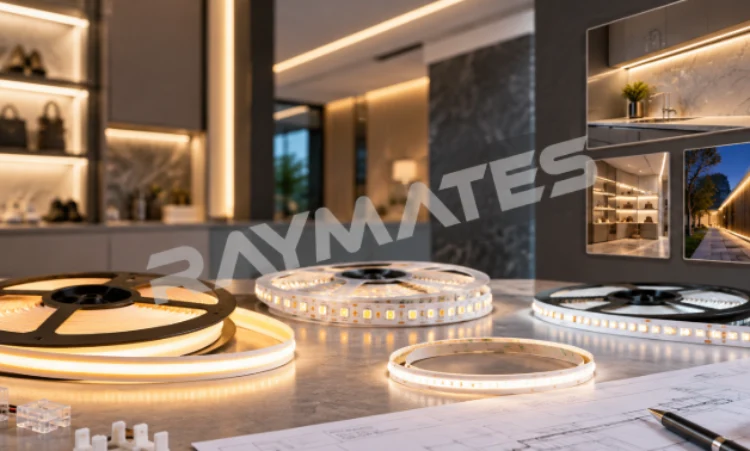
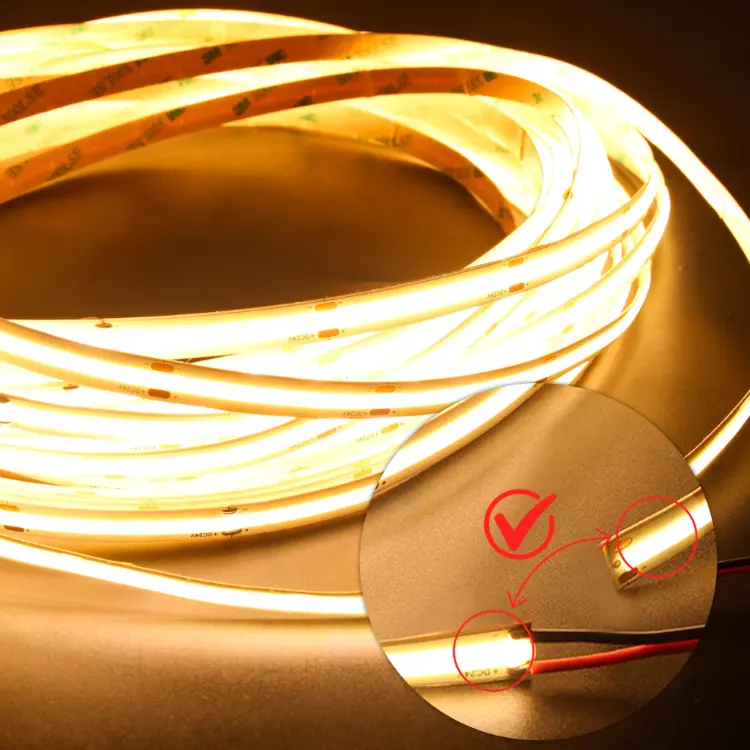
Raymates Super Long COB Strip uses 24V input, 480 LEDs/m, 10W/m, a 50 mm cutting unit, and a standard 20 m roll. It is suitable for applications where installers want to reduce the number of intermediate feeds while maintaining a continuous linear light effect.
When Should You Choose a Long-Run LED Strip Instead of Adding More Feed Points?
Power injection works, but every additional feed introduces extra cable, another connection point, and another future service location.
For commercial installations, the decision should therefore consider not only whether the strip can be made to work, but also how complicated the finished system will be to install and maintain.
Super Long COB Strip for Extended Continuous Runs
The Super Long COB Strip is suited to corridors, coves, hotel lighting, commercial shelving, architectural outlines, and other long led light strips applications where multiple intermediate feeds would complicate the installation.
Its COB layout also creates a continuous light line, which can be useful where the strip remains visible through a diffuser or shallow profile.
A 24V LED strip for long runs should still be checked against actual cable length, driver location, load, and power-entry position. A long-run strip reduces wiring complexity, but it does not replace proper electrical planning.
Higher-Voltage Options for Longer Distances
Raymates supports low-voltage options including 12V, 24V, 36V, and 48V, in addition to separate high-voltage product ranges.
For a comparable power demand, a higher system voltage can reduce circuit current. This may make power distribution easier in some longer installations.
For outdoor strip lighting, voltage selection should also consider connection sealing, driver location, service access, and the electrical requirements of the installation environment.
Fewer Feed Points Can Simplify Commercial Installation
For companies sourcing wholesale LED strip lights, strip price is only one part of the installed cost.
Extra feeds require additional wire, connectors, routing, installation labor, access points, and testing. A design with fewer planned connections may be easier to commission and maintain.
This matters particularly for industrial LED strip lights, hospitality lighting, retail fixtures, and architectural installations where reopening finished surfaces can be difficult.
How Should B2B Buyers Match Drivers and Connectors to the Installation?
Procurement should begin with the circuit layout rather than the total number of meters required.
Two projects using the same strip length can need very different driver and connector arrangements if one is a continuous line and the other is divided into several short branches.
LED Driver Selection by Voltage and Total Load
Before selecting the LED Driver, confirm operating voltage, power per meter, installed length, branch count, dimming method, driver location, and feed arrangement.
Raymates treats voltage and power as core product parameters and supports power customization for different lighting requirements.
For B2B buyers, increasing driver wattage alone will not correct voltage lost in a long cable or poor connection. Driver capacity and distribution losses need to be checked separately.
LED Connector Planning for Injection and Parallel Feeds
The LED Connector should match the strip type, PCB width, contact arrangement, and planned current path.
This becomes especially important for power injection for LED strips, parallel branches, field-cut sections, and modular lighting systems.
For projects that require cutting and reconnecting strips, How to Properly Reconnect LED Strips Without Compromising Performance also explains practical connection considerations. Uneven output after reconnection may come from the joint rather than the LED strip itself.
Testing and Service Access Before Handover
Power every section before aluminum profiles, cabinetry, ceilings, stonework, or decorative panels are permanently closed.
Check beginning and end voltage, visual brightness consistency, connector stability, and driver operation under load.
For under cabinet strip lighting and concealed commercial installations, leaving practical access to drivers and major connection points can make later maintenance much easier.
What Should You Send Raymates Before Requesting a Long-Run Solution?
A useful RFQ should show how the lighting will actually be installed.
Providing only the total number of meters makes it difficult to judge whether the project needs one driver, several branches, additional injection points, or a different strip architecture.
Project Length, Voltage, Power, and Layout Details
Provide total run length, individual section lengths, preferred voltage if already determined, target brightness or power, driver positions, feed-point restrictions, indoor or outdoor conditions, and available drawings.
For a buyer working with an led strip manufacturer, these details are more useful than asking for one universal maximum run length.
Customized Drawings and Installation Planning
Raymates can confirm project details and provide customized solutions, project drawings, and installation drawings.
This is useful when one installation combines long continuous lines with shorter branches or when access behind finished surfaces is limited.
The same drawing can also help procurement teams calculate quantities of strips, drivers, connectors, extension cables, and related accessories before ordering.
Technical Support, Service, and Contact
A long-run installation may combine Super Long COB Strip, LED Driver, LED Connector, extension cables, and planned feed locations. Raymates also provides installation guidance and customized project support.
If a project has dim tail ends, limited driver space, difficult cable routing, or uncertain feed positions, send the run-length drawing, operating voltage, and application details through the contact page. A practical long-run power plan should reduce hidden electrical risks before the order is finalized.
FAQ
Which LED Strip Voltage Drop Solutions Should I Try First?
Start by measuring voltage at the driver, strip input, and far end. Then inspect cable length, connector quality, and the wire gauge for LED strip lights. If the electrical path is sound but LED strip voltage drop in long runs is still visible, consider additional power feeds, parallel branches, or a strip designed for longer continuous runs.
Does a 24V LED Strip Always Prevent Voltage Drop?
No. A 24V system can reduce current compared with a lower-voltage system at the same power level, but cable resistance, strip load, connection quality, and run length still affect performance.
For a 24V LED strip for long runs, check the actual circuit layout and measure far-end voltage under operating load.
Do Voltage Drop Fixes Change for Outdoor or Commercial Projects?
The electrical principles stay the same, but installation conditions change the design.
Outdoor strip lighting needs attention to sealing, cable routing, and driver placement. Commercial and industrial LED strip lights also need practical service access, clearly planned power zones, and connection points that installers can inspect later.