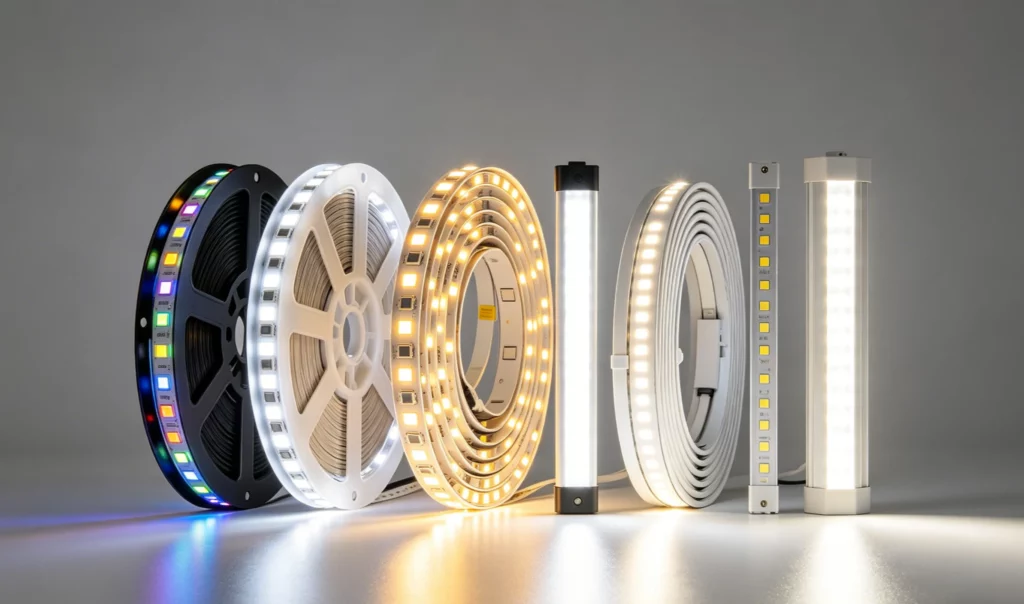
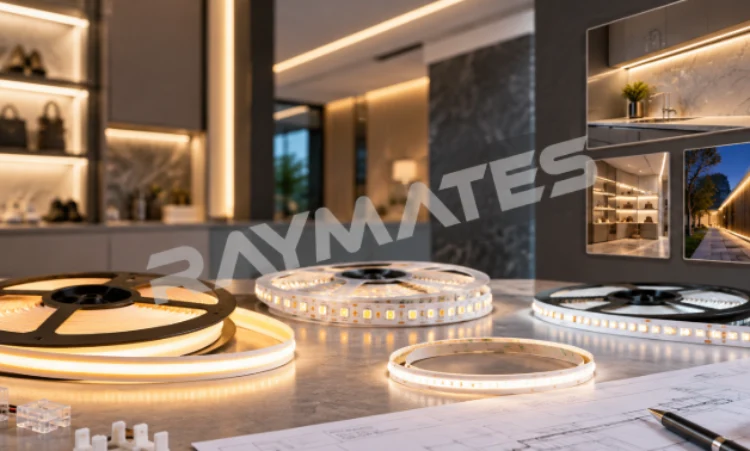
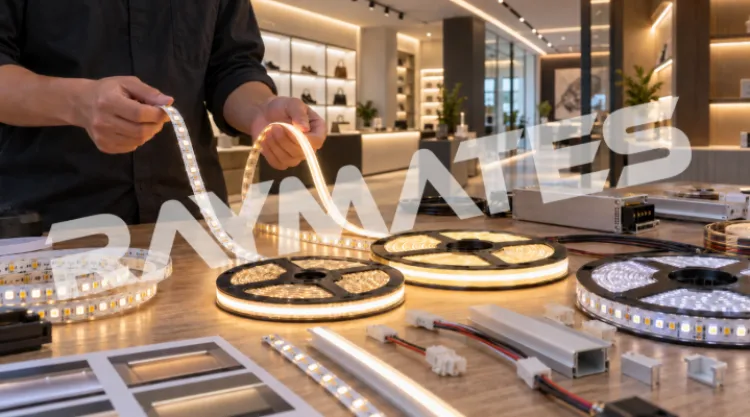
Starting a business lighting setup can seem confusing due to the wide range of types of led strip lights. People seek more than basic shine. They require clear color and lasting strength to highlight their area. For instance, setting up a fancy hotel entrance or a neat shop setup calls for the correct tech. This choice separates average work from impressive outcomes.
Before getting into details, it helps to learn about the company driving these advances. For a reliable source focused on LED quality, RAYMATES stands out. Since 2009, the firm grew from a small eager group into a worldwide leader. They ship solid products to more than 30 nations. They produce items in their own ISO9001-approved plant. Every part follows 6S rules closely. From gaining UL and TUV approvals to earning patents for new strip methods, the group aims to boost project results. They rely on fresh ideas and strict checks.
Which LED Strip Technology Offers the Highest Brightness
Picking among various types of led strip lights usually depends on light placement on the board.
Seamless Glow of COB Technology
Those who dislike the spotty appearance of regular LEDs will find Chip on Board (COB) tech useful. It places raw chips straight on the bendable base. As a result, this setup forms a steady, even stream of light. The beam covers 180 degrees or wider. Light spreads smoothly without shaded areas. Such a packed setup delivers a clean, even shine in current building styles.
Luminous Efficacy and Power Density
Light strength involves more than power use. It concerns how well a strip turns power into visible rays. Good strips apply solid heat handling, like clay bases or thick copper sheets, to release warmth. This lets chips operate at stronger levels without losing power over periods. Focusing on light output per watt (lm/W) keeps setups bright through their full 50,000-hour life.
Impact of Voltage on Light Output
Voltage options, from 12V to 230V, affect steady light over distances. Low-voltage choices suit exact, brief paths such as shelf lights. However, for big outside jobs like bridge or edge setups, higher-voltage strips cover up to 50 meters on one power line. Brightness holds even at the end.
Why Choose Specialized COB Series for Your Project
To get the best light, match certain types of led strip lights to the site’s particular needs.
Superior Performance of Hot Selling COB Strip
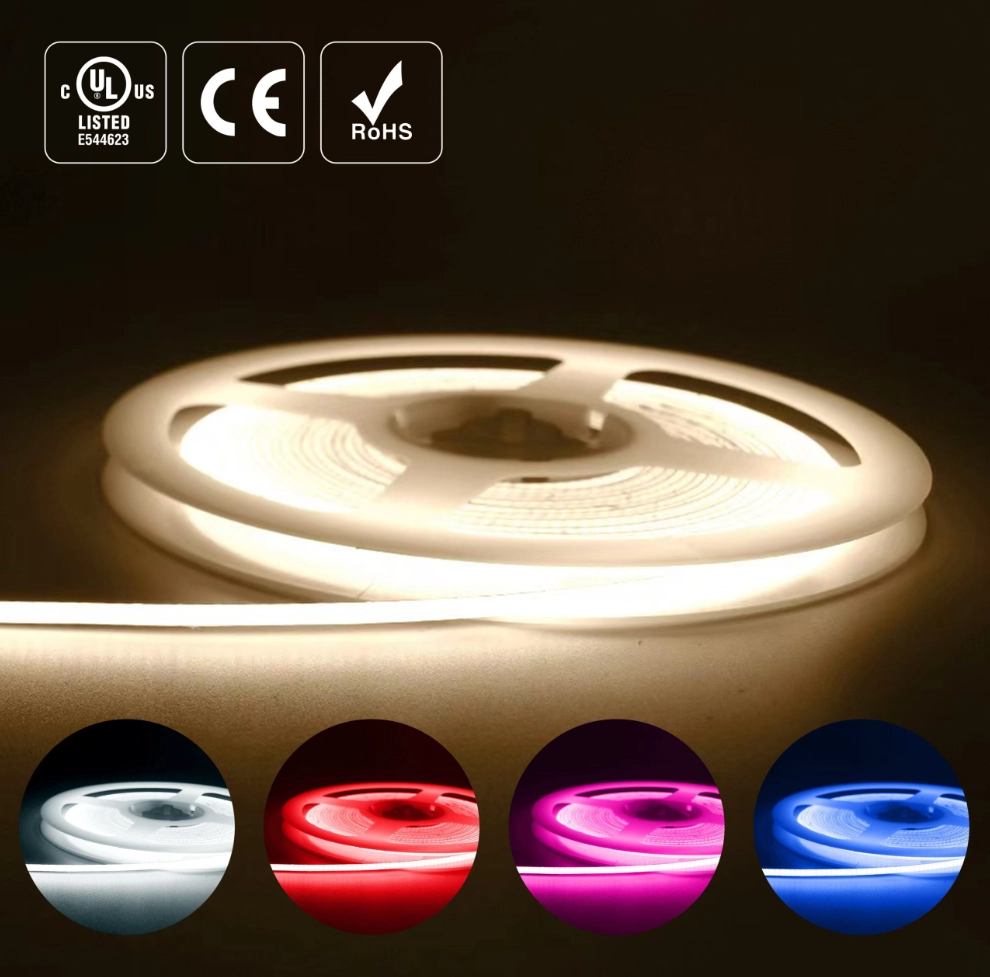
In cases where sharp sight matters most, the Hot Selling COB Strip ranks high. It reaches a Color Rendering Index (CRI) of 90 or higher. Colors appear bright and real in its glow. This fits well for upscale hotel areas or shop spots. There, items need to show at their finest. Its strong build carries UL listing. It offers safety along with steady, strong light.
Dynamic Effects of Colorful COB Strip
To change the mood of a place, the Colorful COB Strip gives great options. Regular RGB strips display separate red, green, and blue points. In contrast, this COB type blends shades right at the chip. Transitions flow smoothly. Hues shine across the whole RGB range. It suits fun spots like pubs or game centers. High-effect light creates striking displays.
Seamless Integration with Mini Size COB Strip
Room limits can pose challenges. The Mini Size COB Strip addresses this with very slim board sizes, down to 3mm wide. Such design fits strong light into furniture edges, case displays, or detailed building gaps. Standard strips cannot go there. Despite its compact size, it keeps dense, spotless light typical of top COB methods.
How Quality and Support Facilitate Your Success
Top types of led strip lights depend on solid backing, from production lines to setup areas.
Rigorous ISO9001 Quality Control Standards
Products should perform right from the start. Skilled makers use a Quality Control unit for full checks before shipping. Tests cover electrical steadiness and light function. This confirms each roll matches global rules like CE, RoHS, and TUV. Such focus cuts defect chances. It safeguards spending.
Comprehensive Professional Service and Solutions
Good projects need plans beyond parts. Custom options include project sketches, wire plans, and setup tips. For OEM work to add a brand or power tweaks for saving energy, an engineering group aids balance. They target light strength and smart use.
Direct Contact for Expert Consultation
Upgrading lights calls for ready guidance. Tech info, sample requests, or custom quotes come via chat or mail. Connecting with https://www.ledlighting-supplier.com/ brings a committed ally. They stress tech skill and ongoing business progress.
Conclusion
Handling different types of LED strip lights can be simplified with the right guidance and product choices. COB technology stands out as a game-changer, delivering seamless, spot-free shine that eliminates the unsightly dot effect of traditional strips, creating a polished, professional glow. Selecting the appropriate voltage—low for short, precise applications and high for long-distance outdoor or large-scale setups—ensures consistent brightness across the entire length. Opting for high-CRI LED strips guarantees true-to-life color rendering, making spaces and products look their best. By combining these key elements, you can achieve professional-grade lighting finishes that not only enhance the aesthetic appeal of any area but also boost its functionality and overall user experience.
FAQ
Q: What are the main benefits of COB types of led strip lights compared to SMD?
A: COB (Chip on Board) strips deliver even, steady light free of “dots” or bright patches seen in usual SMD strips. They provide broader beam spread and improved heat release. This results in longer-lasting and nicer-looking setups.
Q: How do I know which voltage to choose for my project?
A: Pick low voltage (12V or 24V) for brief, careful tasks like cabinets or shows. Safety and easy cuts matter there. Choose high voltage (110V or 220V) for extended edge paths or outside building work. It prevents light fade over lengths.
Q: Can I get a customized length or width for my LED strips?
A: Yes, expert makers allow changes for power, strength, and board widths from 3mm to 30mm. These fit exact setup demands.