Current straight lighting systems have advanced to the stage where tools that generate intense heat no longer serve as a must for solid upkeep. This holds true whether handling a torn link or just cutting led strip lights to match a specific building nook. The move to options without solder cuts down notable time and effort expenses for business users. When facing a dim part in your setup, hold off on grabbing the soldering tool. Instead, apply standard steps and pick dense equipment. In this way, a lasting, steady fix becomes possible using only basic items and suitable links.
Common Causes of LED Strip Light Damage
Before applying any solution, pinpoint the reason behind the problem. Most troubles stem from the setup stage, not from power spikes.
Improper Cutting Led Strip Lights Techniques
A leading factor for a failed strip comes from ignoring the marked cut spots. Cutting across the inner wiring rather than the metal areas severs the steady power path. Such errors occur when workers employ worn cutters or hurry in a tricky arrangement without checking the “scissors” mark on the board. As a result, the entire segment goes dark, demanding quick attention to restore function.
Excessive Mechanical Stress and Bending
Basic light bands bend easily, yet they face boundaries. Forcing a sharp 90-degree fold or stretching it firmly near an edge may split or tear the inner metal lines. That wear leads to uneven flashing or a full blackout at the strained location. Over repeated use, these strains build up, shortening the overall lifespan of the installation.
Low-Quality Structural Design
Basic items typically rely on slim, one-layer boards that easily crack inside. These weak structures endure little rubbing from shifts or tweaks in a task, leaving them open to splits. Consequently, failures appear sooner, raising maintenance needs for users in demanding settings.
How to Fix Broken LED Strip Without Soldering
Many assume a damaged wire calls for an expert with a soldering set, but times have changed. How to fix broken LED strip without soldering boils down to linking parts physically to renew the electric flow. This method proves straightforward and effective for most cases.
Professional Solderless Connectors for LED Strip Lights
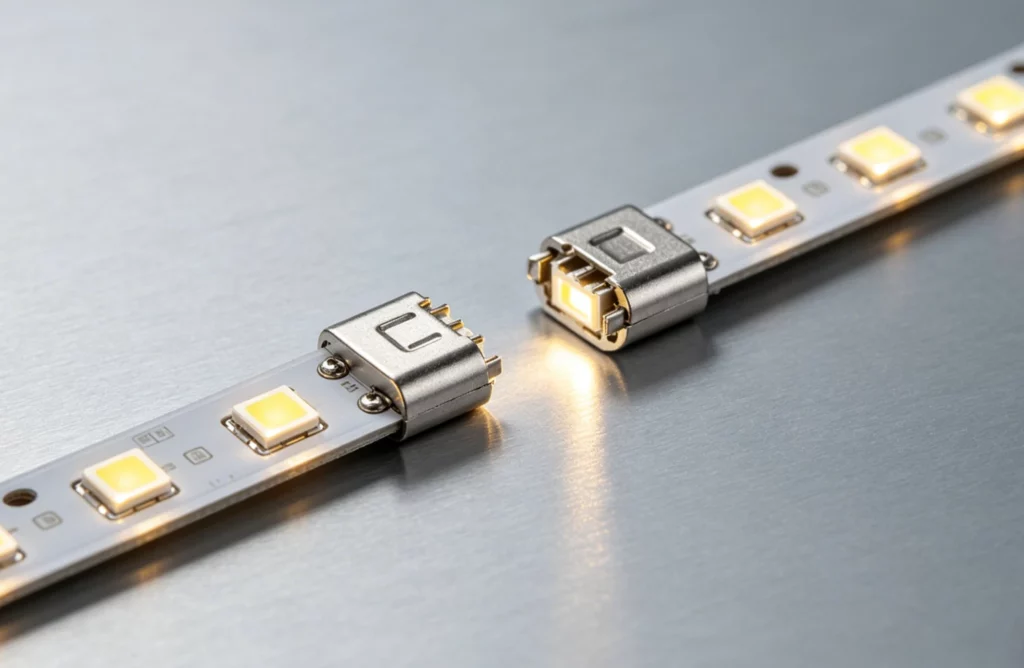
The surest way uses the best solderless connectors for LED strip lights, which rely on a “piercing” or “clamping” setup. Such holders match the metal pads closely, forming a firm join that holds against shakes and shifts. Just insert the trimmed ends of the band into the holder and lock it to bring the path back online. This approach saves effort while delivering reliable results over time.
Bridging Gaps with Extension Jumpers
For a part that tears fully or goes missing, flexible wire extensions with built-in holders at each side work well. They enable skipping the faulty zone without heating the delicate LED parts, keeping the main setup active and safe. Users find this option practical for quick fixes in busy environments.
High-Density Structural Integrity
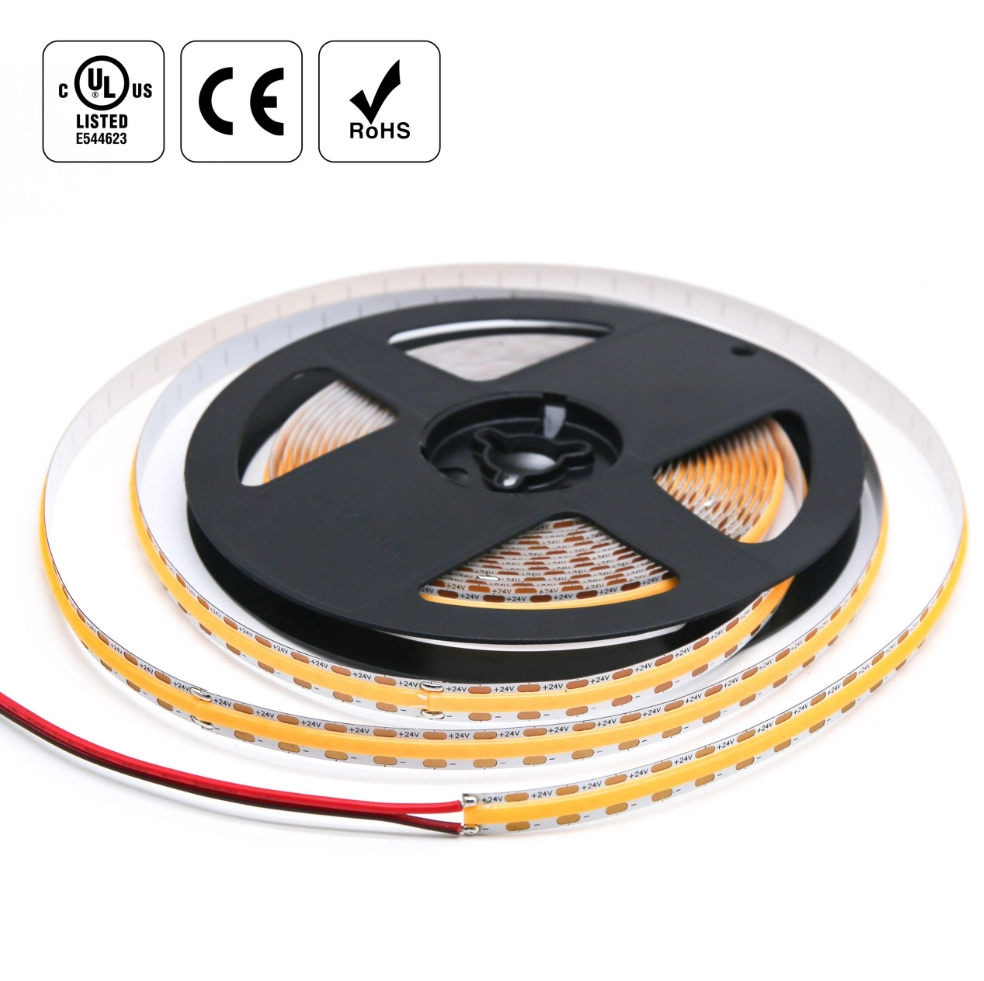
Switching to solid-grade gear avoids these problems from the start. Take the hot selling cob strip, which has a thicker board and a built-in glow layer tougher than old chip-based types. Such robustness lowers the chance of breaks during handling. Therefore, setups last longer with fewer interruptions.
Benefits of COB LED Strip for Easy Repairs
Opting for Chip-on-Board (COB) tech goes beyond smooth glow; it focuses on simple upkeep. This choice supports ongoing reliability in various applications.
Superior Durability and Flexibility
The benefits of COB LED strip for easy repairs begin with its build. In contrast to older bands where parts detach easily, COB applies a steady coating that shields the lights. That protection boosts resistance to pulls and strains common in cutting led strip lights. As such, the material holds up better under daily wear.
Precision Mini Cut COB Strip Options
In detailed layouts, the mini cut cob strip provides very close gaps between trim spots. That accuracy lets adjustments fit the area just right, cutting the odds of slicing active wires or losing excess length. Projects benefit from this precision, leading to cleaner outcomes.
Enhanced Copper Pad Surface Area
Top COB versions include bigger, stronger metal pads. The added space simplifies gripping by no-solder holders, securing a firm link even amid light jolts. This design choice enhances overall stability in practical use.
Solderless LED Strip Repair for Commercial Projects
Business settings value speed above all. Sticking to old soldering for fixes creates real delays. Modern alternatives change that dynamic effectively.
Rapid On-Site Maintenance
Solderless LED strip repair for commercial projects lets teams handle light problems in moments, not full sessions. Since snap holders demand no special wiring skills, expenses drop, and risks from hot tools vanish in store or factory areas. Operations run smoother as a result.
Lower Failure Rates in High-Traffic Areas
Pairing tough COB bands with firm no-solder grips builds a setup meant to endure. These joins stay tight longer than fragile soldered spots, which split from heat changes or handling. Busy spots see fewer breakdowns, easing ongoing care.
Professional Technical Support and Guidance
For smooth projects, tapping technical support from the maker proves key. Specialists supply layout plans, guide on fitting holder sizes, and spot link troubles early to avoid big costs. Access to such help ensures setups perform as planned.
How to Cut LED Strip Lights Correctly
Avoiding damage beats fixing it. Knowing how to cut LED strip lights correctly prevents most issues upfront. Simple habits make a big difference here.
Identifying the Designated Cut Points
Scan for the metal pads and scissor symbol along the band. Trim right in the middle of those pads to leave sufficient metal on either end for a holder to connect firmly. Missing this step often leads to connection failures later.
Using the Right Cutting Tools
Skip dull household cutters. Choose keen, sturdy shears or a board-specific trimmer for a neat, even slice. Rough edges invite shorts or weak grips with no-solder parts. Proper tools ensure the job goes smoothly from the outset.
Verifying Polarity After the Cut
Prior to locking the fix, confirm the “+” and “-” signs on the band match those on the holder. Swapping sides ranks as a typical new-user slip, yet a no-solder span corrects it right away. Double-checking saves time and prevents power issues down the line.
Why Partner with a Professional Supplier?
In the busy LED production field, Raymates emerges as a top choice for buyers seeking solid value without cutting corners on standards. With more than 10 years as a dedicated shipper, they connect large-scale output to skilled advice. Bulk sellers after 6,000+ custom pieces or builders wanting fast three-day stock shipments find their Weihai site delivers exact matches for needs. A full-service model covers internal design work and ISO-checked oversight. Thus, lighting choices shine steadily and hold strong for 16 years or more, supporting diverse business goals.
Final Thoughts on Stealthy Maintenance
Gaining skill in no-solder fixes keeps light arrays neat and expert-looking, skipping costly gear sets. Favoring dense COB items and exact trim methods guarantees LED networks blend seamlessly into spaces. For coming tasks, note that smart choices render fixes unnecessary, promoting lasting performance across installations.
Contact Us Today
Set to refresh your light stock? Check www.ledlighting-supplier.com for our complete COB lineup. Bulk questions and tailored OEM labels? Our skilled sales group offers personal talks.
FAQ
Q: Will a solderless connector work if I accidentally rip the copper pad?
A: When the pad vanishes entirely, trim to the following metal set. Bands with tight trim gaps, such as mini-cut types, help here; they limit discarded sections to reach a clean join. This keeps material use efficient and repairs viable.
Q: Can I use solderless connectors for outdoor or waterproof strips?
A: Absolutely, provided specialized IP65 or IP68 holders with rubber seals come into play. Gently remove the water shield to reveal the metal pads prior to fitting the holder. Careful handling maintains the protective features intact.
Q: Is there a limit to how many times I can use connectors when cutting led strip lights?
A: In theory, none exists, though each holder introduces slight circuit drag. In extended business lines, longer unbroken bands with fewer spans preserve even glow throughout. Planning ahead optimizes performance and cuts potential dim spots.