A backlit sign, stone counter, display shelf, or light box can fail visually even when the LED source itself works well. The common problem is not always brightness. It is uneven light, visible dots, dark edges, or a product layout that does not match the installation depth. That is why many buyers ask about the difference between LED and backlight sheets before placing an order. LED is the light source. Backlight sheets are LED-based modules made to spread light across a wider surface with a cleaner backlit effect.
For a contractor, display builder, lighting distributor, or furniture manufacturer, this difference affects cost, installation time, and final appearance. A strip may work for a narrow edge. A sheet is often easier for a broad surface, shallow light box, display shelf, or translucent countertop where the buyer wants soft and even illumination.
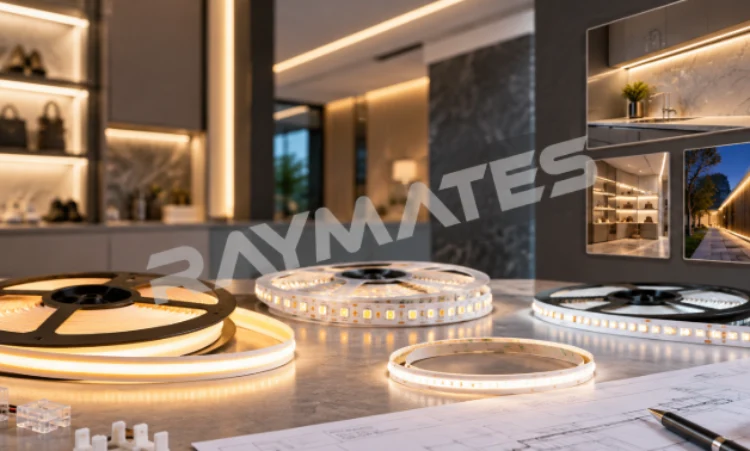
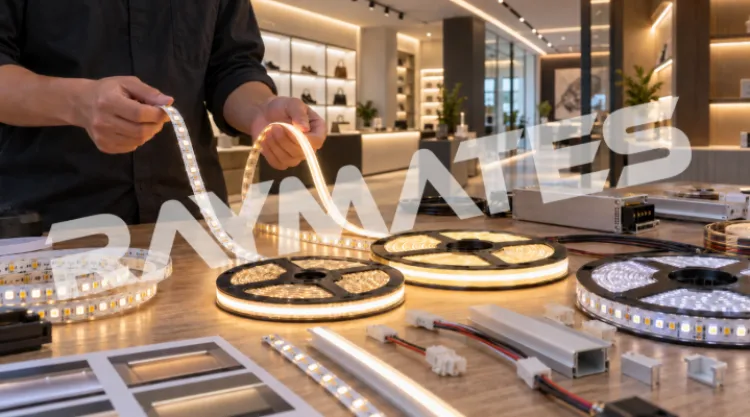
Raymates supplies LED lighting products for commercial, decorative, and project-based applications. Its product range covers LED strips, LED neon lights, LED wall washers, high voltage LED strips, and LED sheet products used in display lighting, bar counters, stone backlighting, shelf lighting, and light boxes. For this topic, two products are especially relevant: the lensed led sheet and the matrix led sheet.
What Are Backlight Sheets and Why Do Buyers Use Them
Before choosing a product, you need to know what are backlight sheets in actual project use. They are flat LED sheet modules placed behind a visible surface to create backlighting. Instead of placing LEDs in one long line, the sheet layout covers a wider area and helps reduce uneven brightness.
Flat Modules for Wide Backlit Surfaces
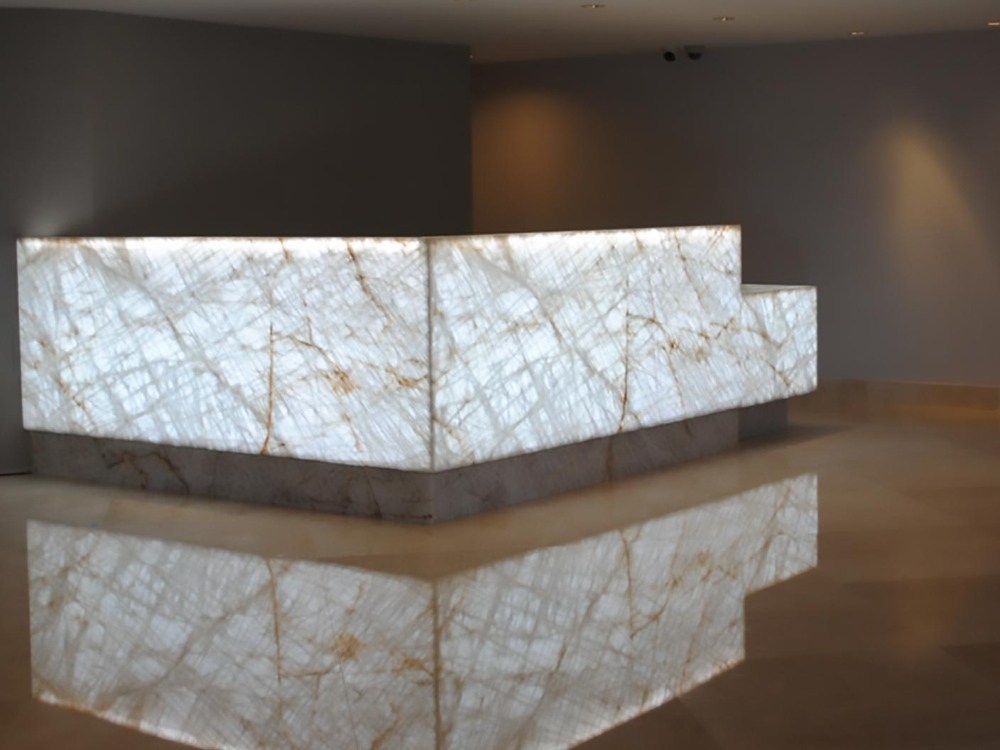
A backlight sheet is useful when the illuminated area is broad, shallow, or visually sensitive. Common applications include display light boxes, cosmetics counters, cabinet shelves, hotel bar counters, onyx stone, marble countertops, and decorative wall features. These projects usually need a soft surface glow instead of a visible line of light.
Better Coverage Than a Single LED Line
A standard LED strip gives light from a narrow path. That is useful for cabinet edges, stair lighting, and linear decoration. But if the lit surface is wide, the installer may need several strips, careful spacing, and a good diffuser. A sheet layout is easier to plan across a larger surface.
A Practical Option for Slim Structures
Many commercial displays and furniture structures leave very little depth behind the front panel. If the space is too shallow, the light may not blend well. In this type of project, backlight sheets can reduce visible dots and make the structure easier to assemble.
How Are Backlight Sheets Different From Standard LEDs
LED describes the light-emitting component. A backlight sheet describes how LEDs are arranged and used in a finished lighting module. This difference sounds simple, but it changes how the product is installed, wired, and matched to the visible material.
LED Light Sheet vs LED Strip
The LED light sheet vs LED strip comparison is common in B2B projects. An LED strip is narrow and flexible, so it works well for lines, edges, and profiles. A light sheet is better for flat illuminated surfaces where the viewer sees the whole glowing area.
| Project Need | LED Strip | LED Sheet |
| Long edge lighting | Suitable | Often unnecessary |
| Wide backlit surface | Needs careful spacing | More suitable |
| Shallow light box | May show bright points | Easier to control |
| Stone or countertop glow | Possible with design work | Often more practical |
| Large display surface | More wiring and alignment | Cleaner layout planning |
Different Structure, Different Result
The difference between LED and backlight sheets is not only a wording issue. LED is the source. The sheet is the layout. In a real project, the layout affects light uniformity, wiring distance, mounting method, cutting plan, and how much space is needed behind the front material.
A Simple Selection Rule
Use LED strips for lines, edges, and narrow profiles. Consider backlight sheets for wide, shallow, or visible backlit surfaces where uneven light will affect the final appearance. The safer choice is the product format that matches the surface size, installation depth, diffuser material, and wiring layout.
How to Choose Backlight Sheets for Commercial Projects
The product name alone is not enough for a good purchase decision. You need to start with the surface, the available depth, and the expected visual result. This is where how to choose backlight sheets becomes a real project question, not just a keyword.
Match the Sheet Type to the Visual Result
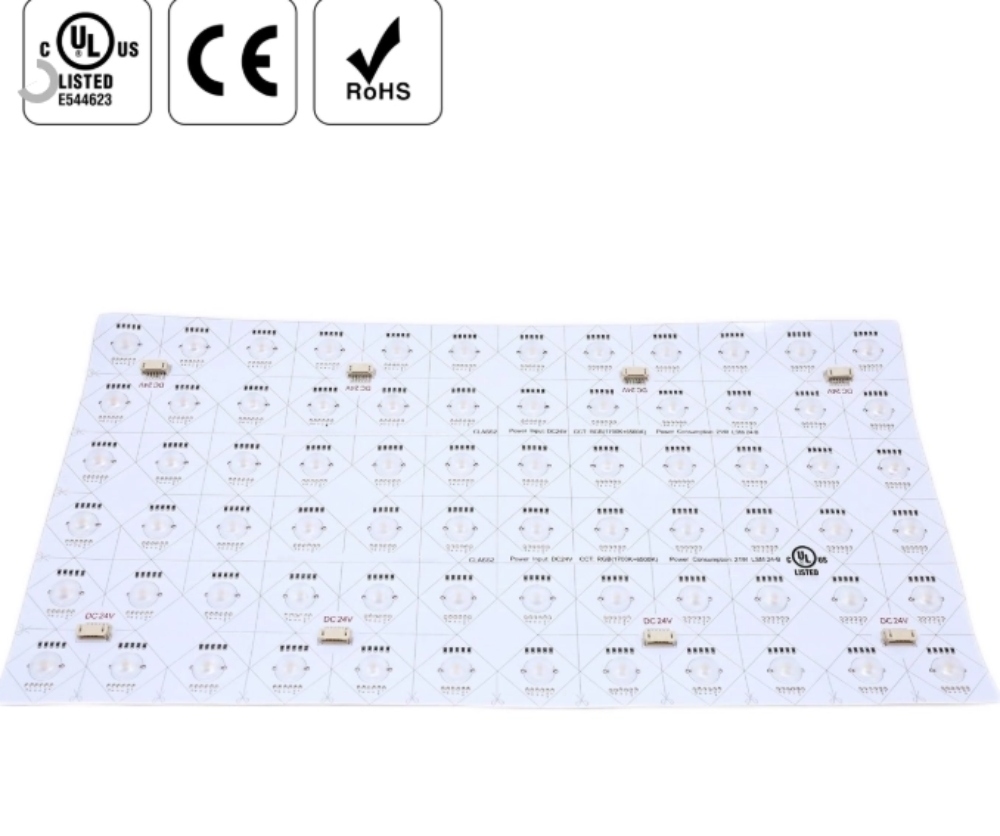
If the project has limited depth and needs better control over how light spreads inside the backlit space, Raymates’ lensed led sheet can be considered first. It is more suitable for display structures where the buyer wants the light to work efficiently within a controlled area rather than scatter loosely inside the box.
If the project covers a wider visible area, such as a shelf back panel, countertop, or larger display surface, Raymates’ matrix led sheet is easier to discuss during layout planning. Its value is not only brightness, but also simpler coverage planning across a broad surface.
| Project Situation | More Suitable Direction | Reason |
| Shallow display box | lensed led sheet | Helps control light direction in limited space |
| Wide shelf or counter surface | matrix led sheet | Easier to plan broad coverage |
| Stone or marble backlighting | Sample test first | Natural material may transmit light unevenly |
| Irregular shape or corner area | Confirm cutting layout | Reduces waste and installation risk |
Check Power, Driver, and Mounting Conditions
Backlit projects often fail because of mismatched drivers, unstable wiring, weak mounting, or poor space planning. Before placing an order, check the voltage, power supply position, wiring method, installation surface, and whether the sheet needs to be cut or shaped. These details matter more than a general product description.
Prepare Project Details Before Purchasing
Before purchasing backlight sheets, prepare a simple project brief. It should include the visible lighting size, installation depth, front material, indoor or outdoor use, expected color tone, power supply location, cutting needs, and whether the surface has curves or corners. If the project involves stone, acrylic, fabric, or a very shallow light box, sample testing is worth doing before bulk production. These details help avoid wrong sheet selection, weak brightness, dark spots, and unnecessary rewiring during installation.
How to Avoid Dark Spots in Backlight Sheets
Uneven light is one of the most common complaints in backlighting work. Buyers often ask how to avoid dark spots in backlight sheets because hot spots and dark edges can make a display, counter, or light box look poorly made. The problem is usually linked to spacing, depth, diffuser quality, mounting, or power consistency.
LED Spacing and Front Material
If LEDs are too far apart for the available depth, the viewer may see bright points or uneven patches. The front material also matters. Translucent stone, acrylic, fabric, and display panels all transmit light differently. A good layout for one material may not work the same way for another.
Correct Depth and Stable Mounting
A shallow space makes dark spots more visible. If the structure cannot be changed, the lighting format becomes more important. Loose adhesive, uneven surfaces, or bent sections can also change the distance between the light and the front panel. That small difference may show up as uneven brightness.
Stable Power and Batch Planning
A weak or mismatched power supply can cause brightness drop, flicker, or uneven zones. For larger visible areas, it is also better to keep the same product batch where possible. This helps reduce the chance of small brightness or color differences across one completed project.
Where Do Raymates Backlight Products Fit Best
The right backlighting product depends on the visible surface, the available depth, and how much uneven light the project can tolerate. A small cabinet, hotel bar, cosmetics counter, and large light box do not need the same layout. Raymates products are easier to match when the buyer treats the sheet as part of a full lighting structure, not just a loose component.
Display, Shelf, and Counter Lighting
For retail counters and shelves, clean backlighting can help products stand out without harsh glare. The matrix led sheet fits projects where the visible surface needs broader coverage, such as display panels, shelf backs, and counter areas.
Stone, Bar, and Decorative Surfaces
For onyx, marble, and bar counter projects, the lighting must work with the material itself. A sheet product can reduce the amount of strip spacing work behind the stone, but the stone sample still needs to be checked because natural texture can change the final light effect.
Service Support for Project Buyers
If your project has a shallow space, irregular size, visible dark spots, or uncertain driver matching, prepare the drawing, surface size, installation depth, front material, and expected light effect before discussing the product. These details make product selection faster and reduce avoidable installation changes. For project drawings, product selection questions, or purchasing communication, use the Raymates contact page and send the project information clearly.
FAQ
Q: Are backlight sheets the same as LED lights?
A: No. LED is the light source. Backlight sheets are LED-based sheet lighting products made for backlighting wider surfaces. They are used behind panels, signs, shelves, stones, and other translucent or semi-translucent materials.
Q: Can I use LED strips instead of backlight sheets?
A: Yes, but it depends on the project. LED strips are good for linear lighting and edge lighting. For large, flat, shallow, or high-visibility surfaces, backlight sheets are often easier to control because they provide broader light coverage.
Q: What should I check before buying backlight sheets?
A: Check the lit area size, installation depth, front material, voltage, power supply, cutting needs, mounting method, and expected light effect. If the project cannot tolerate dark spots, test a sample or confirm the layout before bulk ordering.