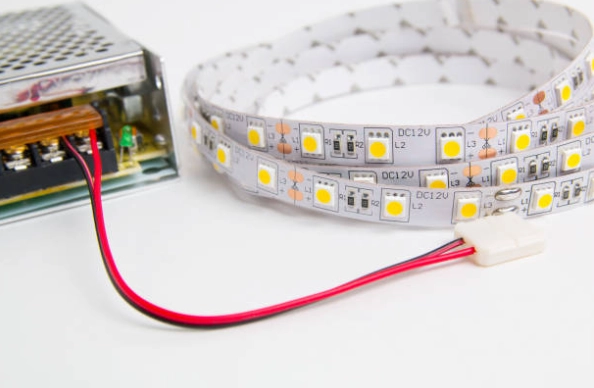
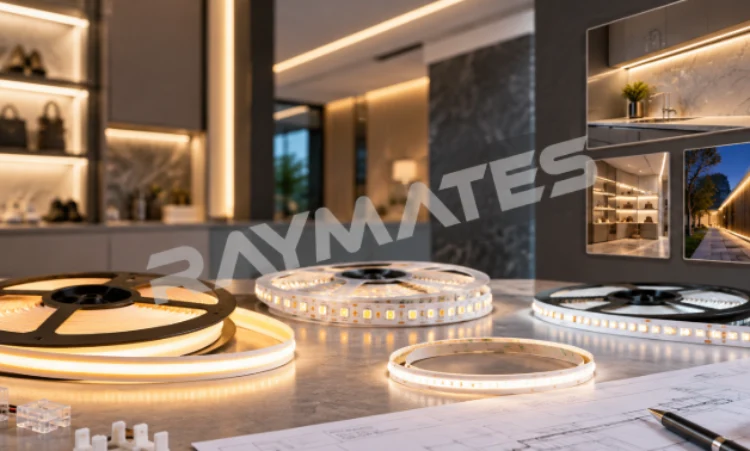
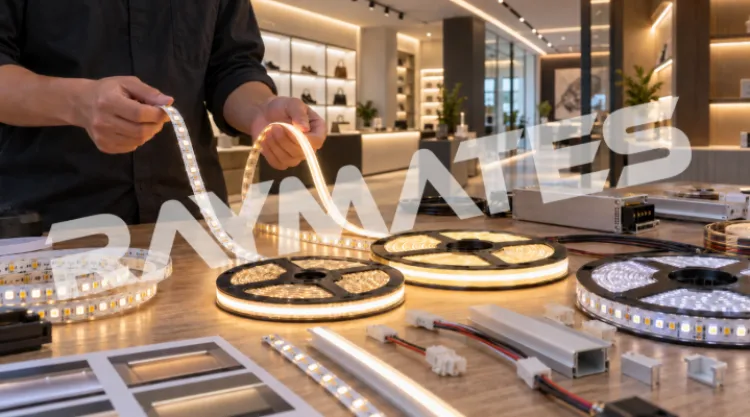
A Hardwired LED Strip gives a cleaner finish than a plug-in setup, especially for cabinets, shelves, display cases, hotel lighting, bar counters, and long architectural runs. But the wiring only works well when the strip, power supply, controller, connectors, and installation environment are matched from the start. The main question is not just “can it be hardwired?” It is “what power supply and strip type should you use so the lighting stays stable after installation?”
Raymates is an LED lighting manufacturer focused on LED strips, COB strips, high voltage strips, neon flex, LED sheets, drivers, controllers, connectors, and installation accessories. The company’s product range covers both low-voltage and high-voltage lighting needs, which matters for hardwired projects because cabinet lighting and long outdoor runs should not be treated the same way. You can review the wider product system on the Raymates website before comparing voltage, wattage, waterproofing, and control requirements.
Can a Hardwired LED Strip Be Connected Directly to Mains Power?
A hardwired setup means the lighting is connected into a fixed electrical circuit instead of using a visible plug. That does not mean every strip can be wired straight into wall power. The first check is always voltage. Raymates’ knowledge base lists low-voltage options such as 3V, 5V, 12V, 24V, 36V, and 48V, as well as high-voltage options such as 110V, 120V, 220V, and 230V. That range already shows why one wiring answer does not fit every project.
Low-Voltage Strips Need a Matching LED Driver
Most low-voltage strips need an LED driver. For example, a 12V or 24V strip should not be connected directly to mains power. The driver converts incoming AC power into the correct low-voltage DC output. For hardwired LED strip power supply planning, this is the first real decision.
If the driver is too small, the strip may flicker, dim at the far end, or fail early because the components are always running under stress. If the driver voltage is wrong, the strip may not work at all or may be damaged. For buyers, this is why LED strip driver selection should be confirmed before bulk ordering, not after installation starts.
For commercial millwork, retail shelving, hotel interiors, and display lighting, the driver also needs to be reviewed from a compliance angle, not only from a wattage angle. In many North American low-voltage lighting projects, buyers may request Class 2-rated isolated power supplies because the output is designed as a limited-power circuit. This helps reduce electrical risk at the strip side and makes the wiring design easier to review during project approval.
Raymates usually treats this as part of the system design, especially for OEM/ODM orders where the same Hardwired LED Strip may be installed across many cabinets, counters, or display modules. If one continuous run exceeds the practical load range of a Class 2 driver, the safer method is not to force one oversized power supply. The layout should be split into several driver circuits, with clear feed points, accessible driver positions, matched connectors, and marked cable routes. This kind of planning gives installers a cleaner wiring path and helps purchasing teams avoid compliance questions after the products arrive on site.
High-Voltage Strips Use a Different Wiring Logic
High-voltage strips are designed for another type of project. Raymates’ cob high voltage strip is made for longer runs and direct high-voltage use. Its product information mentions no drivers or transformers required, IP67 waterproof design, and long-run use with fewer power points.
This does not mean every buyer should choose high voltage. It means the wiring logic is different. Low-voltage COB strips suit short to medium indoor runs where detail, control, and visual softness matter. High-voltage COB strips suit long run LED strip lighting where the buyer wants fewer feed points and simpler layout planning.
Local Electrical Codes and Installer Safety
Hardwiring belongs inside a real electrical system. Junction boxes, switches, grounding, waterproofing, cable routing, and local codes all affect the final installation. A commercial project should be handled by a qualified installer. A supplier can help match the strip and accessories, but site wiring still needs professional checking.
What Power Supply Size Should You Choose for Hardwired LED Strip?
Before choosing the power supply, measure the total run length and confirm the strip wattage per meter. Raymates supports power customization, so buyers can balance brightness and energy use according to the project. This is useful for hotels, retail shelves, display cabinets, and decorative commercial spaces where brightness cannot be guessed from photos.
Strip Voltage as the First Filter
Voltage comes first. For 12V 24V LED strip wiring, the power supply must match the strip voltage exactly. A 24V strip needs a 24V driver. A 12V strip needs a 12V driver. Mixing them is not a small mistake; it can cause failure or unsafe operation.
Raymates’ hot selling cob strip is listed with DC12V/24V options, making it suitable for indoor hardwired projects where a driver can be hidden in a cabinet, ceiling space, display structure, or service area.
Total Wattage and Safety Margin
Calculate the load before buying the driver. The basic method is simple: strip wattage per meter multiplied by total meters. Then choose a driver with enough capacity above that number. A small safety margin helps the driver run cooler and reduces stress during long daily use.
For example, if a retail display uses several strip sections connected to one driver, the total power draw of all sections must be counted. Do not size the driver only from one strip. In a Hardwired LED Strip project, this is one of the most common planning mistakes.
Dimming and Control Compatibility
If the strip needs dimming, color change, or dynamic effects, the driver alone is not enough. The controller must match the strip type and the control method. A single-color COB strip, RGB strip, and colorful decorative strip may need different control accessories. This is where project drawings or wiring diagrams can prevent wrong purchases.
When Should You Choose Low-Voltage or High-Voltage LED Strip?
The best strip type depends on length, location, control needs, and maintenance access. Short indoor projects need different priorities from bridge outlines or long outdoor commercial runs. A buyer should not choose only by brightness or price.
Low-Voltage COB Strips for Cabinets and Displays
Low-voltage COB strips are often used where the light line is close to the viewer. Cabinets, counters, shelves, wall grooves, and display cases need a smooth visual effect without obvious dotting. The hot selling cob strip fits this type of use because it is designed for uniform linear lighting and can work with a matching low-voltage driver.
For product displays, the lighting should not distract from the goods. Stable voltage, clean wiring, and correct aluminum profile selection are often more important than pushing the highest brightness.
Colorful COB Strip for Decorative and Dynamic Lighting
For bars, KTV rooms, brand spaces, event backgrounds, and entertainment areas, color may matter more than plain white output. Raymates’ colorful cob strip fits projects that need visual atmosphere instead of only task lighting.
In these jobs, the buyer should confirm control method, wiring layout, and whether the installation needs segmented color control. Colorful lighting can look simple in a sample test, but the full project needs planned power feeds and controller placement.
COB High Voltage Strip for Long Runs and Outdoor Projects
For outdoor outlines, building edges, warehouses, factories, public spaces, and long corridors, high voltage may reduce the number of power points. The cob high voltage strip is more suitable for long run LED strip lighting than a short low-voltage strip layout that needs frequent feed points.
For waterproof LED strip installation, also check the actual environment. A damp indoor counter, an outdoor wall, and a bridge edge do not carry the same water exposure. Waterproof rating, sealing, end caps, and cable exits all need to be considered together.
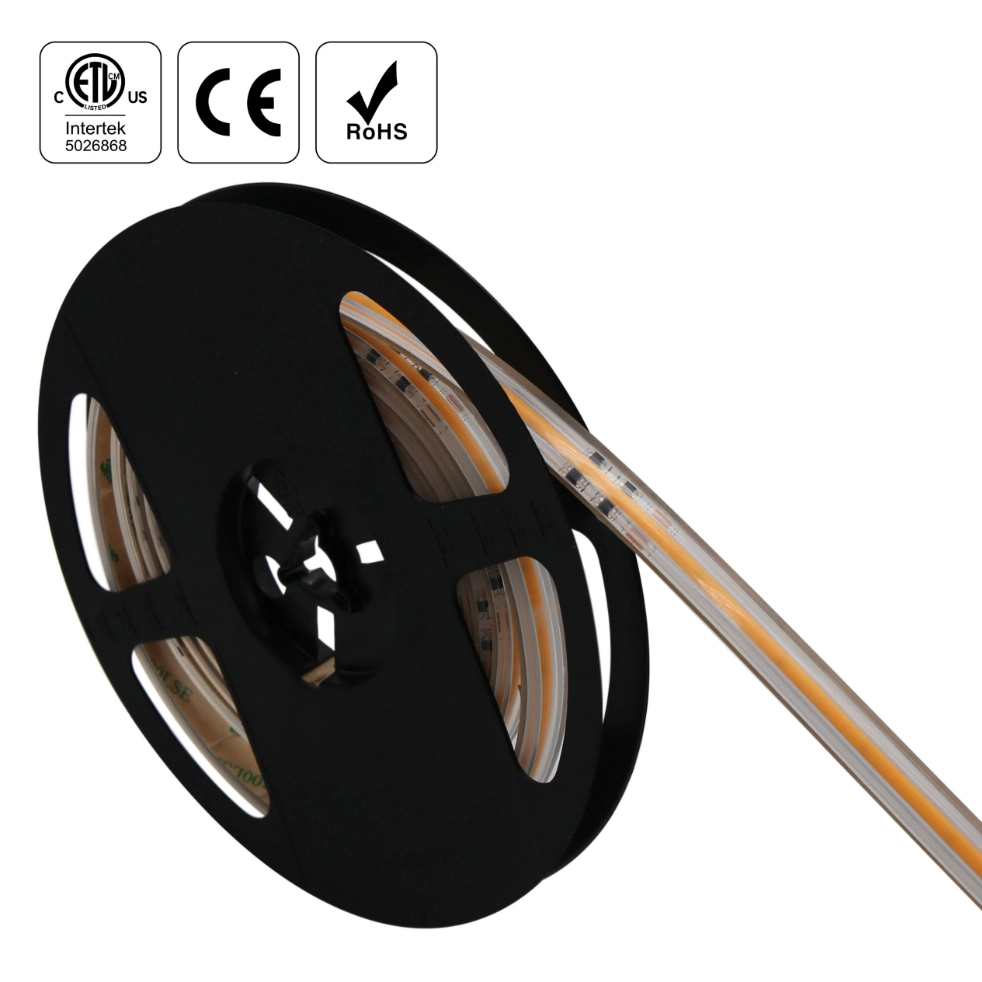
Which Raymates Products Fit Different Hardwired LED Strip Projects?
Raymates has a full accessory system around the strip itself, including power supplies, controllers, connectors, extension cables, mounting clips, aluminum channels, splitters, end caps, and remote controls. This helps buyers build the full installation package instead of ordering only the visible light strip.
Hot Selling COB Strip for Uniform Linear Lighting
The hot selling cob strip is a practical option for indoor fixed lighting where the buyer wants a clean light line. It fits cabinet lighting, display lighting, hotel decorative lines, and interior grooves. Pair it with the correct 12V or 24V driver, and plan driver access before installation. Hiding the driver completely with no service space may make later maintenance difficult.
Colorful COB Strip for Visual Atmosphere Projects
The colorful cob strip suits projects where lighting is part of the scene design. Entertainment venues, commercial backdrops, and decorative brand areas often need richer color effects. For these projects, confirm controller compatibility early. The strip, driver, controller, connector, and cable length should be treated as one system.
COB High Voltage Strip for Fewer Power Points
The cob high voltage strip is better for long runs where fewer power points can reduce wiring complexity. It is also useful when maintenance teams want fewer drivers hidden across the site. Still, high voltage projects should be planned with proper safety handling, waterproof details, and local electrical requirements.
How Can You Reduce Installation and Maintenance Problems?
Most hardwired lighting problems come from early planning gaps. Wrong driver size, weak connectors, poor heat handling, and unclear cutting plans can create issues after the project is already installed. For B2B buyers, a small check before order confirmation is much cheaper than reworking a finished site.
Correct Drivers, Connectors and Aluminum Profiles
Drivers, connectors, and aluminum profiles are not minor accessories. The driver controls electrical stability. Connectors affect contact reliability. Aluminum profiles help with mounting, protection, heat dissipation, and a cleaner finish. For a Hardwired LED Strip, the accessory list should be reviewed together with the strip quotation.
Waterproofing and Heat Management
Waterproofing is not only about choosing a waterproof strip. Cable exits, end caps, cutting points, and mounting surfaces also matter. Heat should also be considered, especially for enclosed spaces. A strip placed inside a tight cabinet or display slot may need better heat release than an open installation.
Raymates Service, Custom Solutions and Contact Support
Raymates can support installation guides, customized strip solutions, project communication, and accessory matching. For buyers comparing different wiring plans, the useful information to prepare includes run length, voltage preference, installation surface, indoor or outdoor location, dimming needs, and waterproof requirements.
If your project has mixed areas, such as indoor shelves plus outdoor signage, send the layout, voltage preference, and control needs through the Raymates contact page. A clearer bill of materials helps avoid mismatched drivers, missing connectors, and wrong strip types before production or shipment.
FAQ
Q: Can I hardwire LED strip lights without a power supply?
A: Only some high-voltage strip designs are made for direct high-voltage use. A low-voltage Hardwired LED Strip normally needs a matching LED driver. Always confirm the strip voltage before wiring.
Q: Is 12V or 24V better for a hardwired LED strip power supply?
A: Both can work. For shorter indoor runs, 12V may be enough. For longer indoor runs, 24V is often easier to manage because it can reduce voltage drop compared with a similar 12V layout. The final choice depends on length, wattage, and control needs.
Q: Which Raymates strip should I choose for a Hardwired LED Strip project?
A: Use hot selling cob strip for smooth indoor linear lighting, colorful cob strip for decorative color scenes, and cob high voltage strip for longer runs or outdoor projects where fewer power points are preferred.