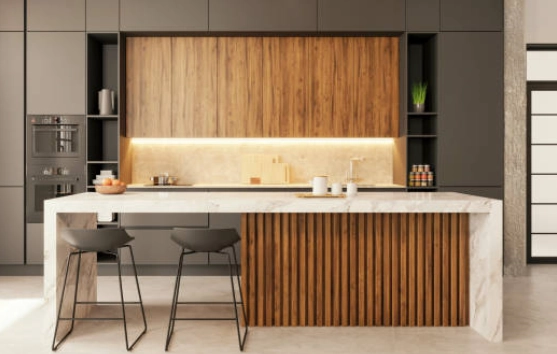
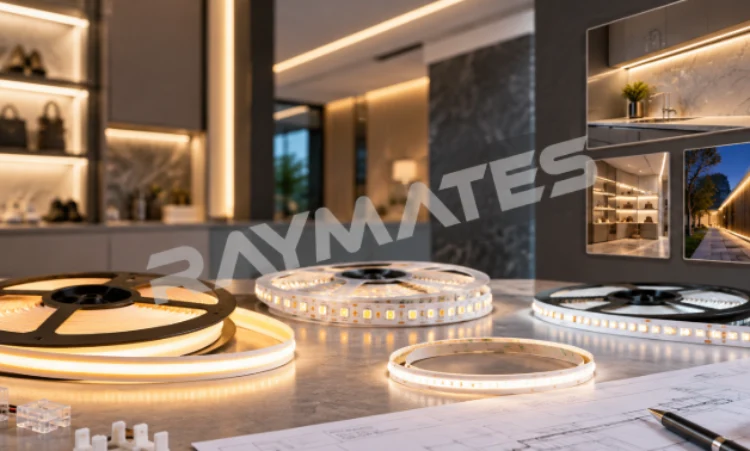
Good Kitchen LED Lighting should help people cook, clean, serve food, and enjoy the room without glare or dark corners. In 2026, many kitchen projects are moving away from one bright ceiling light. Buyers now look for layered light, slimmer installation, cleaner cabinet lines, and LED products that can fit both residential and commercial spaces.
Raymates works with LED strip, COB strip, LED sheet, and customized lighting solutions for different project needs. For kitchen projects, its COB strip range is useful because buyers often need smooth linear light, compact strip width, flexible installation, and suitable voltage options for different layouts. The right product is not only about brightness. It also depends on where the strip will be installed, how long the run is, how visible the LED dots are, and how much installation work the project can accept.
What Makes Kitchen LED Lighting More Important in 2026?
A modern kitchen is more than just a cooking space; it can be a food preparation area, feature an island, open shelving, a dining table and chairs, a pantry and decorative stone or wood surfaces. Each area of the kitchen needs to be lighted for a specific purpose, so first function then appearance when it comes to planning your Kitchen LED Lighting.
Functional Light for Cooking and Prep Areas
Areas on your countertops, in front of your sinks and stove such as cooking areas next to your stove benefit from direct light without any shadows. For these areas under cabinet LED lighting is typically used. Since these types of lights are usually mounted right up against the face of your work surface, you’ll want to avoid choosing a light that will display obvious light dots on highly polished stone or very glossy kitchen backsplashes. A COB LED strip for kitchen use is designed to minimize the appearance of obvious light dots, as opposed to low-density strip lights that have light-emitting surfaces that are spread out over a large area of tape.
Soft Ambient Light for Dining and Open Kitchens
Open kitchens often connect with living rooms or dining spaces. Bright task light may work during cooking, but it can feel too sharp during dinner. Soft indirect light under shelves, above cabinets, or around ceiling edges can make the room easier to use in the evening. This is where dimming control and warm white options become useful. The goal is not to make the kitchen look dramatic all the time. It is to let the same room switch between work light and relaxed light.
Accent Light That Defines Cabinets, Shelves and Islands
Accent lighting helps define shape. A cabinet edge, floating shelf, island base, or wine display can look more finished with a thin line of light. Hidden kitchen lighting ideas should still leave access for wiring, connectors, and later maintenance. A beautiful line on a drawing may fail on site if the groove is too narrow, the strip cannot bend cleanly, or the installer has no space to hide the power connection.
Where Should LED Strips Be Used in a Modern Kitchen?
LED strips work well when they are placed where linear light makes sense. They are not meant to replace every lamp in the kitchen. A good layout uses them to solve specific problems, such as shadow on a countertop, a dark shelf, or a heavy-looking island base.
Under Cabinet Lighting for Clear Countertop Visibility
The underside of wall cabinets is one of the most practical locations. The strip should be mounted far enough forward to light the worktop, but not so exposed that users see the LED line directly. An aluminum channel or diffuser can protect the strip and give the installer a cleaner finish. For rental apartments, retail kitchen displays, and compact home kitchens, this area gives a clear visual upgrade without changing the ceiling.
Cabinet and Shelf Lighting for Display Zones
Glass-front cabinets, open shelves, and pantry niches need controlled brightness. Too much light can wash out wood grain, ceramic surfaces, or food packaging. Too little light makes the feature useless. Kitchen cabinet accent lighting works better when the strip is narrow, easy to hide, and matched with the cabinet depth. Buyers should confirm strip width, cutting points, connector space, and whether the installation needs a visible channel.
Island and Toe Kick Lighting for a Floating Look
LED strip lighting for kitchen island edges and toe kick areas is often used to create a floating effect. This location needs careful fixing because feet, cleaning tools, and moisture from mopping may affect the strip over time. For home kitchens, low-voltage COB strips are often easier to manage around short runs and detailed edges. For longer commercial counters, voltage and wiring layout become more important.
Which COB Strip Works Best for Different Kitchen Spaces?
Different kitchen zones should not use one strip model by default. The visible result may look similar at first, but the installation width, run length, waterproof demand, and wiring method can change the right choice.
Hot Selling COB Strip for Smooth Under Cabinet Lines
Raymates hot selling cob strip is a practical option for under cabinets, shelves, display grooves, and island edges where the buyer wants a smoother light line. It is suitable for areas where light dots would be visible on stone, tile, metal, or glossy cabinet panels.
For a project buyer, this product fits common Kitchen LED Lighting needs because it supports clean linear illumination without turning the installation into a complicated custom fixture. It can be used in residential kitchens, showroom cabinets, hotel pantry areas, and display counters where the light line is part of the design.
Mini Size COB Strip for Narrow Grooves and Hidden Edges
Some kitchens have very little installation space. Cabinet makers may leave only a slim groove under a shelf, around a frame, or along a decorative edge. Raymates mini size cob strip is better suited to these narrow spaces than a wider strip.
This product is useful for hidden kitchen lighting ideas where the strip should not be seen from normal viewing angles. Buyers should still check the groove size, bending direction, wiring exit, and fixing method before ordering. A mini strip helps with compact installation, but it cannot solve poor cabinet preparation by itself.
COB High Voltage Strip for Long Commercial Kitchen Runs
Large restaurant counters, bakery display lines, hotel breakfast areas, and open commercial kitchens may need longer continuous runs. In these cases, Raymates cob high voltage strip can reduce the need for repeated power supply points compared with many short low-voltage sections.
A high voltage LED strip designed for a kitchen project as described above is suitable if the lighting is installed in a long line and you want this to remain whole and that the power supply can be simplified. Check the local requirements for electrical installation and the conditions in which the strip will be installed, the required degree of waterproofing and who will make the connection to the power supply. It is recommended to have this connected by a qualified electrician.
How Should Buyers Compare Voltage, Size and Installation Cost?
A lighting idea can look simple, but the cost often comes from wiring, drivers, channels, cutting, fixing, and rework. For Kitchen LED Lighting procurement, voltage and strip size should be checked before the sample order, not after the cabinet structure is finished.
Low Voltage Options for Compact Cabinet Details
Low-voltage strips are common for cabinets, shelves, drawers, and short decorative lines. They are easier to divide into small zones and pair with dimming control. For detailed kitchen cabinet accent lighting, buyers should confirm the driver position, cable length, controller access, and heat path. A strip hidden inside a sealed groove may look neat, but heat and repair access still matter.
High Voltage Options for Longer Linear Runs
High-voltage strips are more suitable for longer runs and larger project layouts. They can reduce the number of power injection points, which helps in commercial kitchen counters and long decorative edges. The trade-off is that electrical planning must be more careful. Buyers should not select high voltage only because the run is long. They also need to check safety standards, installation team capability, and site rules.
Accessories That Reduce Rework During Installation
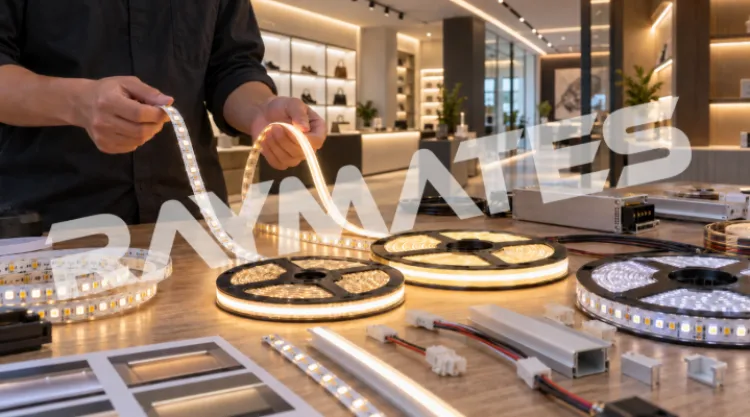
Accessories are not small details. Power supplies, controllers, connectors, extension cables, mounting clips, aluminum channels, splitters, end caps, and remote controls affect how clean the final installation looks. Many project problems come from mismatched accessories rather than the strip itself. Before purchasing, buyers should send drawings, photos, or cabinet section details so the supplier can match strip type with the right installation parts.
What Should You Confirm Before Ordering Kitchen LED Lighting?
Before placing an order, buyers should turn the design idea into a technical checklist. Kitchen LED Lighting needs to deal with surface color, heat, cleaning habits, cabinet material, power access, and later maintenance. A short confirmation at the start can prevent many site changes later.
Color Temperature and CRI for Food and Surface Colors
Kitchen light affects how food, stone, wood, and metal surfaces look. Warm white can make dining areas feel softer. Neutral white may suit prep areas and modern cabinets. A higher color rendering requirement is useful for food display, open shelves, and premium surface materials. Buyers should ask for samples when the kitchen uses marble, stainless steel, dark wood, or glossy lacquer panels.
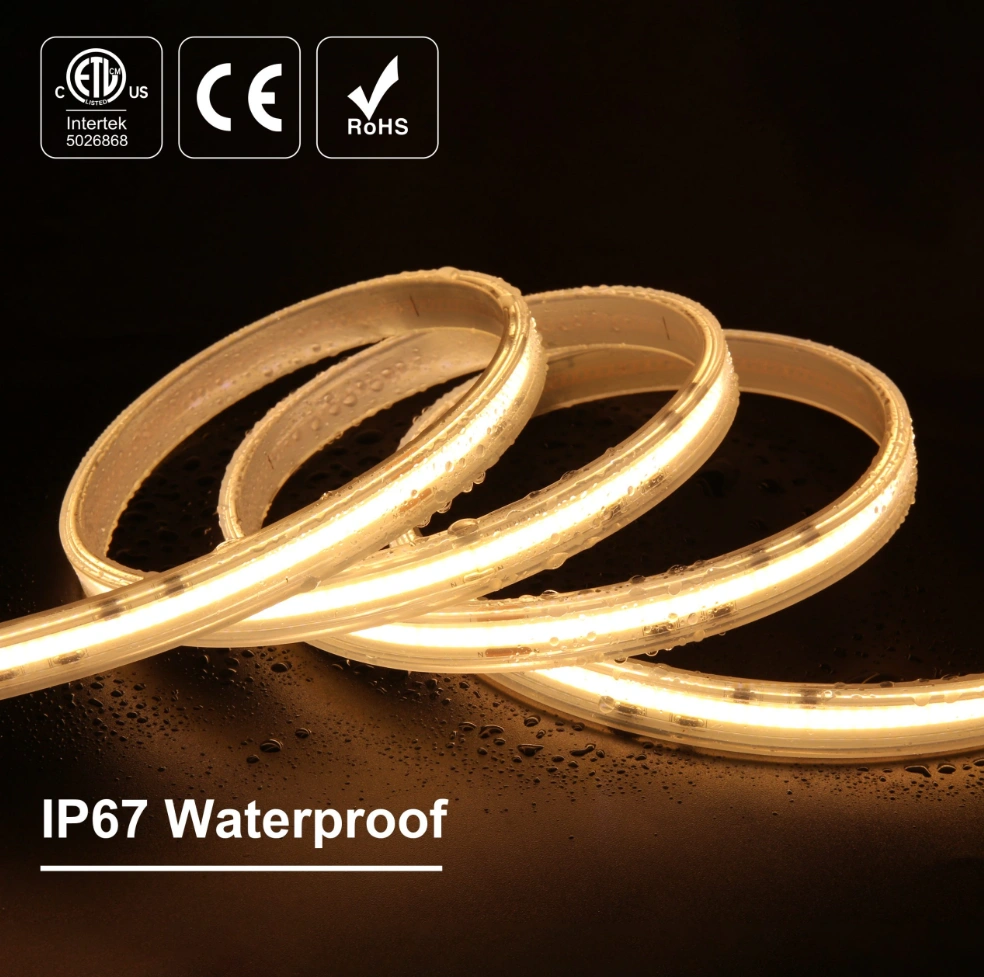
Waterproof Grade and Heat Dissipation for Kitchen Conditions
Kitchens are not the same as dry living rooms. Steam, cleaning spray, and oil mist may reach the strip depending on location. Areas near sinks, toe kicks, and commercial counters may need better protection than dry shelf lighting. Heat also needs attention. An aluminum channel can help protect the strip and support heat transfer, especially where the light runs for long hours.
Custom Service, Installation Guide and Contact Support
A kitchen project may involve cabinet makers, electricians, designers, and overseas buyers. Raymates can support customized strip products, installation guidance, project discussion, and related drawings based on site needs. If a buyer is comparing several strip types, the most useful information to prepare includes kitchen drawings, voltage preference, lighting position, required color tone, estimated run length, and installation photos.
Contact
If your project has mixed areas such as under cabinet lighting, island lighting, shelf lighting, and long counter runs, it is worth sorting the layout before choosing products. Share the drawings, installation position, preferred light effect, and voltage requirement through Raymates contact page. The discussion can focus on product matching, accessory preparation, cutting layout, and whether standard or customized strips are more suitable.
FAQ
Q: What Is the Best Kitchen LED Lighting for Under Cabinets?
A: For most under cabinet areas, a COB strip is a practical option because it gives a smoother linear effect than common dotted strips. The Raymates hot selling cob strip is suitable for countertop lighting, shelf edges, and cabinet bottoms where the strip may reflect on stone or tile surfaces.
Q: Are COB LED Strips Better for Modern Kitchens?
A: COB strips are often better for visible linear lighting because they reduce the dotted effect. They are useful for modern cabinets, islands, display shelves, and hidden grooves. Standard LED strips may still work for areas where the strip is fully diffused or not directly visible.
Q: How Do I Choose Between Low Voltage and High Voltage LED Strips for a Kitchen?
A: Low voltage is usually better for short cabinet details, small zones, and flexible control. High voltage is more suitable for longer continuous runs, especially in commercial or large open kitchen projects. The right choice depends on run length, power access, installation rules, and who will install the system.