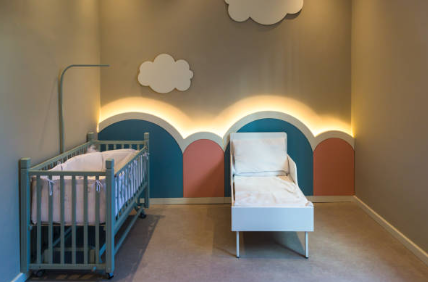
Do LED Lights Hurt babies’ eyes? This is a normal question now. LED strips are used around ceilings, wardrobes, shelves, beds, and night corners, so parents naturally worry about light shining near a baby.
The problem is usually not “LED” itself. More often, it is poor placement, too much brightness, exposed light dots, flicker, or a color that feels too cold at night. A baby room does not need strong decorative light. It needs soft light, hidden installation, steady dimming, and clean wiring.
For project buyers, contractors, and distributors, the same rule applies. Do not only ask for a strip price. Check the whole set: COB strip, LED driver, controller, connector, profile, fixing method, and final light direction. That is the part many people miss.
Do LED Lights Hurt Babies’ Eyes in Normal Home Use?
Before choosing lights for a nursery, separate the product from the way it is used. A good LED strip can still feel harsh if it is put in the wrong place. A simple indirect layout can work better than a bright, colorful design.
Normal Use Is Usually Not the Main Concern
In normal home use, quality LED lights are not usually the main concern. Parents search do LED lights hurt babies eyes because they see LED strips near beds or ceilings and want a straight answer. The more useful answer is this: look at brightness, position, flicker, and whether the baby can stare directly at the light source.
A strip hidden in a ceiling cove is different from an exposed strip beside a crib. One reflects soft light from the wall or ceiling. The other may shine straight into the eyes.
Brightness, Blue Light, and Direct Glare Matter More
A baby room needs lower brightness at night. Feeding and diaper changes need enough light, but not a sharp beam. Strong cool white light may work for daytime cleaning or storage areas, but it can feel too harsh during bedtime.
Warm indirect light is easier to manage. If the room needs dimming, test the lowest setting before final installation. Some cheap setups look fine at full brightness but flicker or become uneven when dimmed.
Medical Claims Should Be Avoided
This article is about lighting selection, not medical advice. If a baby has strong light sensitivity, unusual eye reaction, or repeated sleep disturbance, parents should ask a pediatrician or eye specialist. Lighting can reduce glare and improve comfort, but it is not a medical fix.
Are LED Strip Lights Safe for Babies When Installed Correctly?
Are LED strip lights safe for babies? They can be, if the strip is placed away from direct eye level, kept out of reach, and matched with the right driver and controller. The strip is only one part of the room.
Raymates supplies LED strip, COB strip, LED sheet, and aluminum profiles. For baby room projects, this is useful because the buyer can match the strip and accessories together instead of mixing parts from different sources and hoping they work well.
Safer Placement Away From Direct Eye Level
Do not put an exposed bright strip near a crib. Better positions include ceiling coves, shelf backs, wardrobe edges, high cabinet lines, or inside an aluminum profile with a diffuser. The light should wash the surface, not point at the baby’s face.
Before ordering, confirm voltage, driver matching, dimming method, connector type, profile size, and installation surface. One wrong driver can cause flicker. One poor fixing method can make the strip peel off later.
Hot Selling COB Strip for Soft and Uniform Home Lighting
Raymates hot selling cob strip is suitable for larger soft lighting areas, such as ceiling coves, wall edges, cabinet backs, and background lighting. The COB light effect looks more continuous than dotted strips, so the room does not feel visually messy.
For a nursery, this product makes sense when the goal is a clean light line, not a strong decorative effect. It is also easier for contractors to use in residential rooms, family hotel rooms, and care-related spaces where the final look needs to be tidy.
Mini Size COB Strip for Narrow Baby Room Details
Some rooms have very small installation gaps. Shelves, wardrobes, low cabinets, and slim grooves may not have enough space for a normal strip.
Raymates mini size cob strip is better for this type of narrow detail. It can be used where the light source should stay hidden, such as cabinet edges, shelf lines, or compact apartment nurseries. If the strip is too wide, the installation often looks unfinished.
What Color LED Lights Are Safe for Babies at Night?
Parents often ask what color LED lights are safe for babies because night lighting is different from daytime lighting. At night, the room should help parents move and check the baby without making the space feel too bright.
Warm White for Calmer Evening Lighting
Soft warm white is usually easier to use in the evening. It feels gentler than daylight white or cool white. For ceiling coves, bedside walls, or cabinet lighting, warm white at low brightness is usually enough.
If you are buying for a project, do not judge only from a product photo. Ask for samples or test the strip with the planned driver and controller. The real effect depends on the wall color, installation height, profile, and dimming range.
Avoid Overusing Blue or Cool White Light Before Sleep
Cool white light can help in wardrobes or daytime task areas. It is not ideal as the main night light near a sleeping area. Blue-rich light and bright cool white light should not shine toward the baby’s eyes.
A practical setup is simple: warm indirect light for night use, brighter task light for daytime use, and separate controls for each zone.
Colorful COB Strip for Occasional Mood Lighting, Not All-Night Use
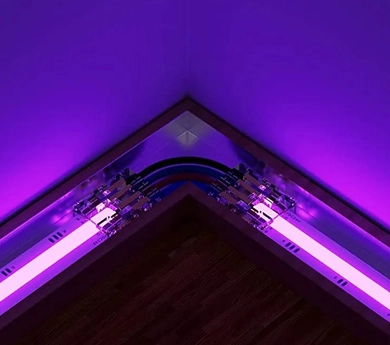
Raymates colorful cob strip can be used for parent-controlled accent lighting, wall details, display corners, or short decorative scenes. It should not become the main all-night light in a baby room.
For safe LED lights for baby room projects, colorful lighting should stay dim and controlled. Use it as decoration, not as the core sleep-area light.
| Area | Better Direction | Product Direction |
|---|---|---|
| Sleeping Area | Soft warm indirect light | hot selling cob strip |
| Cabinet or Shelf Area | Hidden narrow light | mini size cob strip |
| Decorative Corner | Low-brightness accent light | colorful cob strip |
Why Do Flickering LED Lights Affect Baby Eye Comfort?
Flicker is a small detail until the room is installed. Then it becomes a complaint. Some flicker is easy to see. Some is not obvious, but the light still feels unstable during feeding, diaper changes, or bedtime checks.
Flicker Often Comes From Low-Quality Drivers or Poor Dimming
Flickering LED lights may affect baby eye comfort when the driver, dimmer, or controller does not match the strip. The keyword flickering LED lights baby eyes sounds like a search term, but the real issue is simple: unstable light is not suitable for a baby room.
Poor drivers can cause flashing, shaking light, buzzing, or uneven brightness. That is why the driver and controller should be checked together with the strip.
Stable Drivers and Controllers Help Reduce Lighting Problems
Do LED Lights Hurt is not only about the strip. It is about the full lighting system. A good COB strip still needs the right power supply, connector, controller, and installation method.
For B2B buyers, this matters because one bad match can create after-sales trouble. For parents, it means the room may not feel as calm as expected.
Testing Before Final Installation
Test before fixing the strip permanently. Connect the strip with the actual driver and controller. Dim it from low to high. Check whether it flickers, buzzes, heats too much, or changes color.
This step is useful for nurseries, apartments, children’s care rooms, and family hotel rooms. It also helps buyers confirm which strip is right before a larger order.
How Can Buyers Choose Safe LED Lights for Baby Room Projects?
To choose lighting for a baby room, start from the room layout. The sleeping area, cabinet area, and decorative area do not need the same light. One strong ceiling light is rarely the best answer.
Product Selection Checklist for Parents and Buyers
Check these points before buying: soft light output, warm white option, dimming compatibility, stable LED driver, hidden installation, aluminum profile or diffuser if needed, low glare layout, safe wiring, firm fixing, and sample testing.
For home buyers, this prevents harsh light near the crib. For distributors and contractors, it reduces installation problems and return questions.
Common Mistakes Before Buying LED Baby Room Lights
| Common Choice | Possible Problem | Better Direction |
|---|---|---|
| Exposed bright strip near crib | Baby may stare into it | Use hidden cove lighting |
| One strong light for the room | Too bright at night | Use dimmable indirect light |
| Colorful light all night | Too visually busy | Use it only for short scenes |
| Strip without driver matching | Flicker or unstable brightness | Test strip, driver, and controller |
| Wide strip in narrow gaps | Hard to hide | Use mini size cob strip |
Which Raymates COB Strip Fits Each Baby Room Scenario?
Use hot selling cob strip for larger indirect areas. Use mini size cob strip for narrow furniture details. Use colorful cob strip for short decorative scenes.
This is the more useful answer to Do LED Lights Hurt. Do not avoid LED lighting blindly. Avoid glare, exposed bright lines, poor dimming, and mismatched accessories.
Project Support and Product Matching
If you are preparing lighting for a nursery, family hotel room, children’s care space, or residential project, prepare the room layout, installation position, preferred color temperature, voltage, and dimming needs first. Raymates can help match COB strips with drivers, controllers, connectors, and profiles, so the setup is easier to install and test before bulk use. Send project details through the Raymates contact page when you need product matching or sample confirmation.
FAQ
Q: Do LED Lights Hurt babies’ eyes?
A: Do LED Lights Hurt depends on brightness, placement, flicker, and direct glare. Soft indirect LED lighting is usually more comfortable than an exposed bright strip. Avoid strong light near the crib and test dimming before final use.
Q: Are LED strip lights safe for babies?
A: The answer to are LED strip lights safe for babies depends on installation. Keep strips out of reach, away from direct eye level, and match them with a stable driver and controller. COB strips are useful for hidden cove lighting because the light line looks smoother.
Q: What color LED lights are safe for babies?
A: Soft warm white is usually easier for night use. Bright cool white can work for daytime tasks, but it should not shine directly into the baby’s eyes. Colorful lighting should stay dim, short, and parent-controlled.