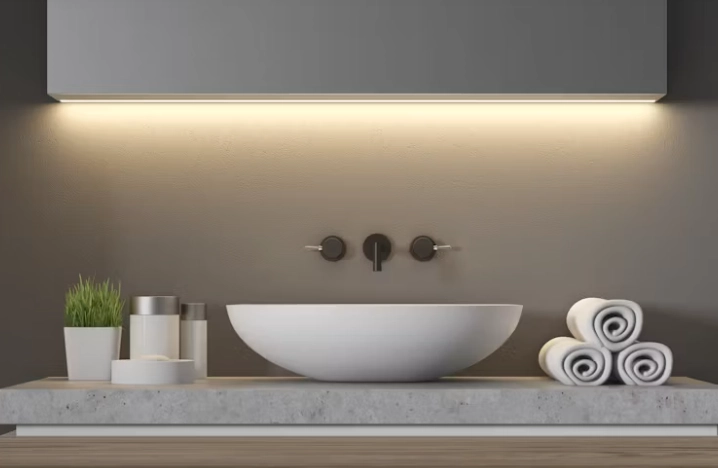
Many Hidden LED Strip Lighting projects look good in drawings, but fail after installation because the strip, wire, connector, or power supply is still visible. A clean lighting effect needs more than sticking a roll of LED tape under a shelf. You need the right light source, the right hiding position, and enough planning for wiring, heat, cutting, and later maintenance.
Raymates manufactures LED strip lights, COB LED strips, and related accessories for residential, commercial, and project-based lighting. For hidden linear lighting, Raymates COB products are especially useful because they help reduce visible light dots and create a softer continuous line. This guide focuses on practical selection: where to hide the strip, which COB strip fits the space, and what buyers should confirm before placing an order.
Why Does Hidden LED Strip Lighting Still Show Dots or Glare?
A hidden light source should produce light without showing the hardware. If the final effect still has visible dots, glare, or uneven edges, the problem is usually caused by strip type, mounting angle, or weak diffusion.
Direct LED Exposure From Poor Viewing Angles
Many installers place LED strips too close to the front edge of a cabinet, shelf, or ceiling groove. The light becomes bright, but the LED points are also exposed. For dot free LED strip lighting, the strip should be set back from the visible edge, so the light reflects onto a wall, cabinet surface, ceiling plane, or diffuser before reaching the eye.
This matters in hotels, retail shelves, kitchens, bars, and wardrobe projects. A few millimeters of wrong placement can make the whole installation look unfinished.
Weak Diffusion or Wrong Profile Depth
A shallow profile may not give enough distance between the LED strip and diffuser cover. The result is a line of dots, especially when standard SMD strips are used. An aluminum profile for LED strip installation can help protect the strip, hold the diffuser, improve the line shape, and support heat transfer.
For recessed LED strip lighting, profile depth, diffuser material, and groove position should be checked together. A narrow groove may need a smaller strip. A visible edge may need stronger diffusion.
SMD Dots Versus COB Continuous Light
Standard SMD strips place LED chips at intervals. Even with a diffuser, close-range viewing may still show light points. COB LED strip places chips more densely under a continuous phosphor layer, so the visual output is smoother.
That is why COB strips are often used for smooth linear lighting in cabinets, display shelves, ceiling coves, stair edges, and decorative grooves. For projects where the viewer may stand close to the light, COB is usually easier to hide cleanly.
Where Should You Install LED Strips for the Cleanest Hidden Effect?
Good placement turns the strip into an indirect light source. The aim is simple: the viewer should see the glow, not the LED tape.
Ceiling Coves and Shadow Gaps
Ceiling coves and shadow gaps are common positions for Hidden LED Strip Lighting because the strip can be hidden behind a lip or inside a recessed channel. The light washes across the ceiling or upper wall, so the room feels softer without direct glare.
For these runs, Raymates hot selling cob strip is a practical option. It is suitable for continuous linear effects in ceilings, commercial interiors, corridors, and wall accent areas. Buyers can choose voltage and waterproof versions according to indoor or semi-exposed conditions.
Cabinets Shelves and Display Cases
Cabinets and shelves need a tighter installation. The strip is often placed under a shelf lip, behind a front trim, or inside a small aluminum profile. In retail display cases, cosmetic counters, wine shelves, and kitchen cabinets, the lighting must show the product or surface clearly without exposing the light source.
For COB LED strip for cabinets, Raymates mini size cob strip fits narrow spaces better than wider strips. Its slim PCB options help installers place the strip inside small grooves, while the COB structure reduces visible dots at close viewing distance.
Stairs Furniture Edges and Small Grooves
Stairs, wardrobes, TV cabinets, bar counters, door frames, and furniture edges often leave very little room for lighting. In these places, a wide strip may bend poorly, sit too close to the edge, or make hidden LED strip wires harder to route.
A smaller strip gives more room for cable direction, adhesive contact, and profile placement. The lighting should be planned together with the carpenter or fixture supplier, especially if grooves are pre-cut before the LED products arrive.
Which Raymates COB Strip Should Buyers Choose for Hidden Lighting?
Product selection should follow the installation problem, not only the brightness request. The table below gives a simple way to match Raymates COB strips with common hidden lighting needs.
| Project Need | Recommended Product | Suitable Use |
|---|---|---|
| Short custom segments and detailed cuts | mini cut cob strip | Small furniture details, signage edges, compact grooves |
| Narrow spaces and close viewing | mini size cob strip | Cabinets, display cases, stairs, wardrobe edges |
| Longer general linear runs | hot selling cob strip | Ceiling coves, retail shelves, hotel corridors, wall accents |
Mini Cut COB Strip for Precise Short Runs
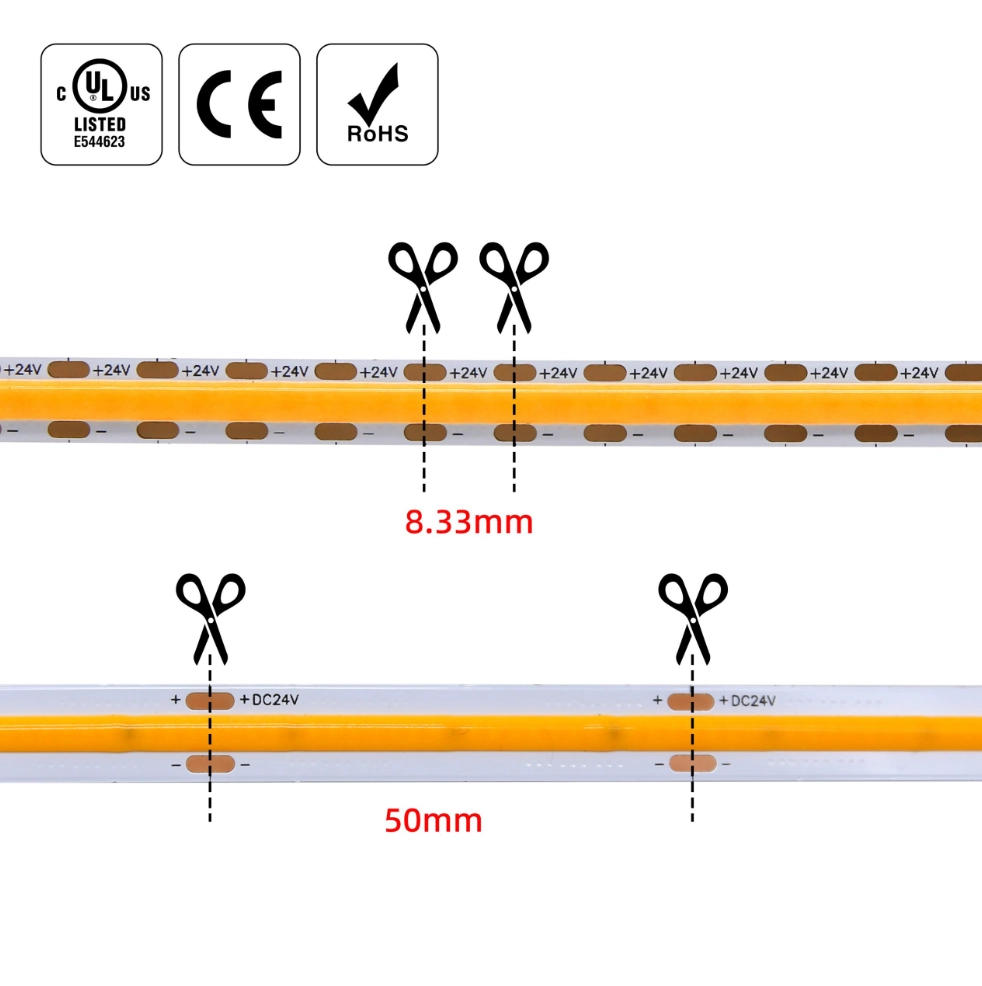
Raymates mini cut cob strip is suitable when the layout needs more precise length control. Some projects do not use long straight runs. They need short sections around a display frame, a cabinet corner, a small sign, or a shaped furniture detail.
For these cases, the buyer should confirm cutting points, soldering method, connector type, and whether the final piece needs extra protection. Precision matters because one poorly handled cut point can cause failure or dark sections.
Mini Size COB Strip for Narrow Spaces
mini size cob strip is useful when the installation space is limited. In a narrow shelf groove or stair detail, the strip must fit without pushing against the diffuser, cable, or fixing clip.
This product also helps when the designer wants the light to disappear into the structure. Instead of making the groove wider to fit the strip, buyers can choose a smaller COB strip and keep the furniture or ceiling line cleaner.
Hot Selling COB Strip for General Linear Projects
hot selling cob strip is better for longer, more standard hidden linear lighting. It can be used in ceiling coves, recessed profiles, commercial shelves, and interior decoration projects where the light line needs to stay consistent over a larger area.
For procurement, this product is easier to discuss when the project needs repeated runs, regular profiles, and stable visual output across several zones.
What Should You Plan Before Installing Hidden LED Strip Lighting?
The main risk in Hidden LED Strip Lighting is late planning. If the groove is already finished and the driver location is not reserved, even a good strip can become difficult to install or maintain.
Voltage Power and Driver Matching
Raymates supports low-voltage and high-voltage LED strip options, with voltage choices covering different project needs. For most indoor hidden COB lighting, buyers often discuss 12V or 24V layouts first, then match the driver capacity to total strip length and wattage.
Before ordering, confirm run length, dimming method, control type, driver location, and whether different zones need separate control. Do not hide the driver in a sealed place with no access.
Wire Connector and Controller Access
Clean lighting does not mean buried parts. Hidden LED strip wires, connectors, controllers, and power supplies should still be reachable. A service gap, removable panel, cabinet back space, or ceiling access point can save time later.
For commercial projects, this is more important. A store or hotel cannot afford to damage finished surfaces just to replace one driver or connector.
Aluminum Profile Adhesive and Heat Management
Adhesive alone is not always enough. Dust, paint texture, humidity, surface oil, and curved materials can reduce bonding strength. An aluminum profile gives the strip a straight base and helps create a better light line.
For recessed LED strip lighting, the profile also protects the COB strip during cleaning or later renovation work. If the project uses stone, metal, wood veneer, or painted panels, test the fixing method before bulk installation.
How Can Raymates Support Hidden LED Strip Lighting Projects?
Raymates is more useful for buyers who need project matching, not only standard rolls. Hidden lighting often involves different spaces, different groove widths, and different control needs in one order.
Custom Length Color Voltage and Packaging
Raymates can support customization in length, color, voltage, power, packaging, and related project needs. This helps distributors, furniture factories, cabinet makers, lighting contractors, and shopfitting companies reduce on-site adjustment.
For a smooth linear lighting project, buyers should share drawings, installation photos, profile size, preferred color temperature, and expected quantity before confirming the final strip type.
OEM ODM and Project-Based Guidance
For OEM/ODM orders, Raymates can help match product structure with real installation conditions. A cabinet lighting product and a ceiling cove product may both use COB strips, but their width, wire exit, waterproof level, adhesive method, and packaging may be different.
Project-based guidance helps reduce wrong stock, wrong voltage, and poor fit during installation.
Service Contact and Sample Discussion
Before placing a bulk order, prepare the groove size, run length, voltage plan, driver position, dimming method, and installation surface. These details help Raymates judge whether mini cut cob strip, mini size cob strip, or hot selling cob strip is more suitable. For drawings, samples, OEM/ODM details, or product matching, use the Raymates contact page to send project information clearly.
FAQ
Q: What Is the Best Strip Type for Hidden LED Strip Lighting?
A: COB LED strip is usually more suitable because it gives a smoother light line with fewer visible dots. For narrow grooves, mini size cob strip is easier to fit. For ceiling coves and longer runs, hot selling cob strip is more practical.
Q: How Can I Hide LED Strip Wires Without Making Maintenance Difficult?
A: Route the wires behind cabinet backs, shelf lips, ceiling access gaps, or removable panels. Keep the driver and controller accessible. Do not seal all electrical parts inside a finished wall or ceiling with no service opening.
Q: Do I Need an Aluminum Profile for a Dot Free Glow?
A: Not every project needs one, but an aluminum profile often improves the final result. It helps with mounting, protection, diffusion, and heat control. For visible-edge or recessed installations, it is usually safer than relying only on adhesive.