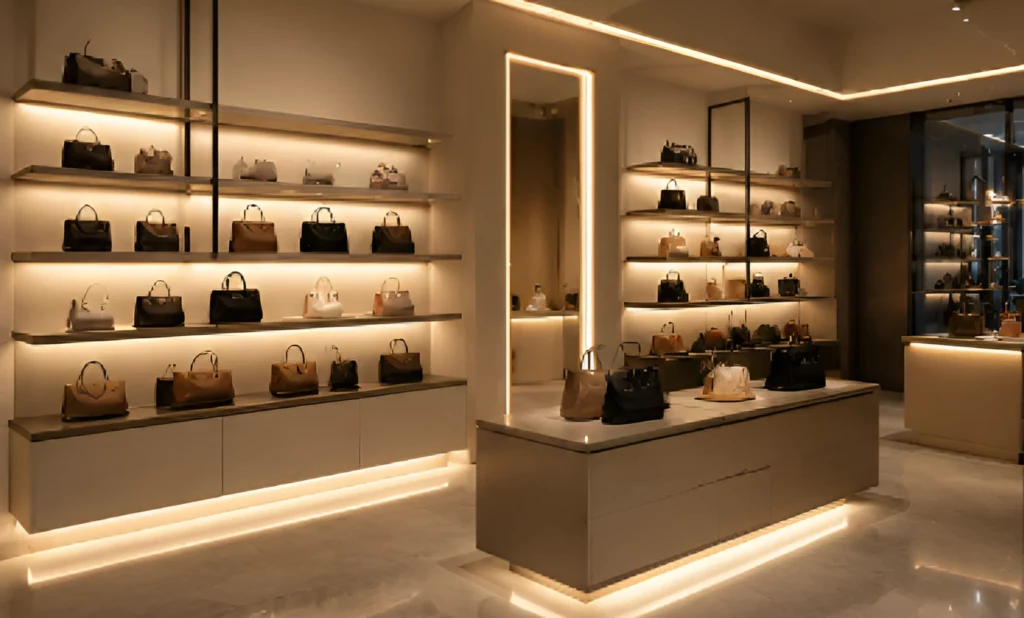
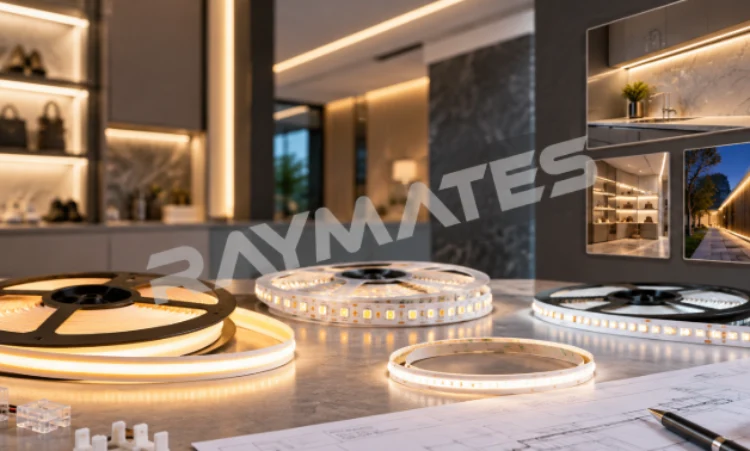
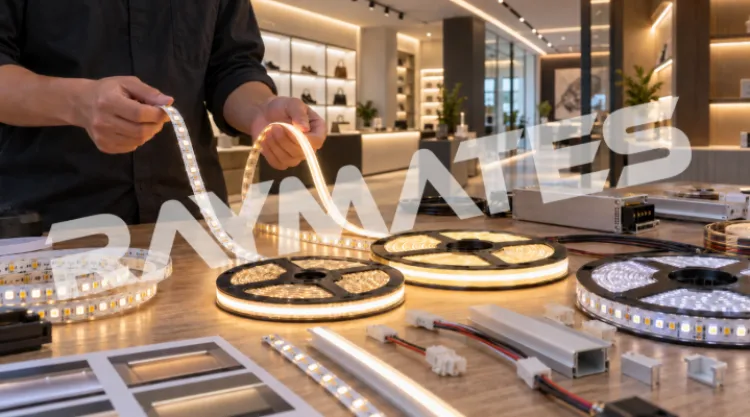
A High Efficiency LED Strip is not only about saving electricity. For commercial projects, it also affects power supply layout, heat control, light consistency, installation labor, and later maintenance. A strip that looks bright on a sample table may perform very differently after 30 meters, inside an aluminum profile, or in a humid outdoor area.
Raymates works with LED strip, COB strip, high voltage LED strip, LED sheet, and related accessories for commercial and project use. For buyers, the useful part is not just the product range, but the ability to match voltage, wattage, board width, waterproof treatment, control parts, and installation needs before bulk ordering. That matters when the project involves retail shelves, hotel corridors, facade lines, bar counters, warehouses, or public lighting.
What Makes a High Efficiency LED Strip Worth Choosing?
A buyer should not judge efficiency only by wattage. A lower-watt strip can still be a poor choice if it cannot deliver enough useful brightness, has weak color rendering, or needs too many power points. The real question is whether the strip gives stable light output with reasonable power use and a clean installation plan.
Luminous Efficiency and Real Brightness
For a High Efficiency LED Strip, luminous efficiency means how much visible light you get from the power consumed. In commercial LED strip lighting, this affects the electricity bill, driver load, and heat level. If two strips produce similar brightness but one uses less power, the project can reduce operating cost over long daily working hours.
Raymates’ cob high voltage strip is suitable when the buyer needs long linear lighting with efficient output and fewer visible light breaks. Its COB structure creates a continuous light line, so it works well in corridors, public areas, building outlines, and long commercial runs where dotted light would look cheap.
Power Density and Project Load
Power density decides how much power each meter will draw. This affects LED strip power supply matching, cable planning, heat, and total load. A commercial buyer should calculate by full installation length, not only by one reel. For example, a display wall, hotel ceiling line, or long shelf system can quickly increase total wattage once every section is added.
For indoor decorative zones, it is often better to use a balanced strip instead of pushing maximum brightness everywhere. In commercial projects, over-bright strips may create glare, add heat inside narrow profiles, and increase driver cost.
Color Rendering and Visual Quality
Efficiency should not damage visual quality. In retail, hotel, showroom, and display applications, the color of products, wall finishes, and materials must stay natural. This is why CRI, color temperature, and light uniformity need to be checked together.
For visible linear lighting, Raymates’ hot selling cob strip is a better fit than standard dotted strips. It is useful for cabinet edges, display counters, shelving lines, recessed profiles, and decorative indoor lighting where the strip may be seen directly or reflected on glossy surfaces.
Which Voltage Is Better for Commercial LED Strip Projects?
Voltage selection should follow the installation layout. Many failed LED strip projects do not fail because the strip is bad. They fail because the buyer chose the wrong voltage for the run length, power supply position, or site wiring condition.
Low Voltage for Detail Areas
Low voltage strips are easier to use in compact areas such as shelves, cabinets, stairs, furniture edges, signage interiors, and small cove lighting. They are also common in spaces where the installer needs shorter cutting sections and flexible routing.
For these areas, an indoor COB strip gives a cleaner result than standard point-light strips. If the lighting line is close to the viewer, a smooth COB effect helps reduce the “cheap dotted line” problem. This is why COB LED strip for retail displays is often used in cosmetics counters, jewelry shelves, clothing displays, and exhibition furniture.
High Voltage for Long Runs
A high voltage LED strip for long runs can reduce the number of power supplies and connection points. This is useful for long corridors, building edges, public spaces, outdoor outlines, warehouses, and large commercial ceilings. Fewer power points also means fewer places for wiring mistakes.
Raymates’ cob high voltage strip is especially relevant here because it is designed for long-distance lighting layouts. For a commercial buyer, the value is not only brightness. It can simplify installation planning when the site needs continuous lighting across a long distance.
Safer Specification Matching
High voltage strips must be selected carefully. Buyers should confirm the project country, input voltage, waterproof grade, plug type, cutting method, connector type, and installation environment. A product suitable for an indoor ceiling may not be suitable for outdoor signage or wet building edges.
For outdoor or semi-outdoor projects, waterproof treatment and end protection are not optional details. They affect safety, service life, and future repair cost. For long-run commercial projects, voltage drop control should be reviewed from the circuit board, not only from the driver. Before confirming a **High Efficiency LED Strip** order, buyers should ask the factory to check the current path on the FPC, copper distribution across the positive and negative circuits, solder pad layout, and how each cutting section carries load after extension. In higher-load or longer-distance layouts, a double-sided rolled-copper FPC structure may be considered because the current can move through a wider conductive path instead of being forced through a narrow single-side trace. This helps reduce heat concentration around solder joints, connector areas, and the first few meters after the power input. Driver matching should follow the same logic. The power supply needs enough load margin, the cable length should not add unnecessary resistance, and dimmers or controllers should be checked for current capacity before bulk production. These details are not obvious in a product photo, but they often decide whether the strip keeps stable brightness after installation.
How Should You Match LED Strip Type to Commercial Applications?
Different commercial spaces need different strip behavior. Some need soft decorative light. Some need longer runs. Some need color effects. Choosing one model for every area may lower purchase complexity, but it often creates installation and maintenance problems later.
Retail Displays and Product Shelves
Retail display lighting needs even light, clean color, and low visual noise. Dotted lighting can reflect badly on glass, metal, acrylic, and glossy packaging. For shelf lighting and display counters, Raymates hot selling cob strip is a practical option because the continuous COB light line helps products look cleaner.
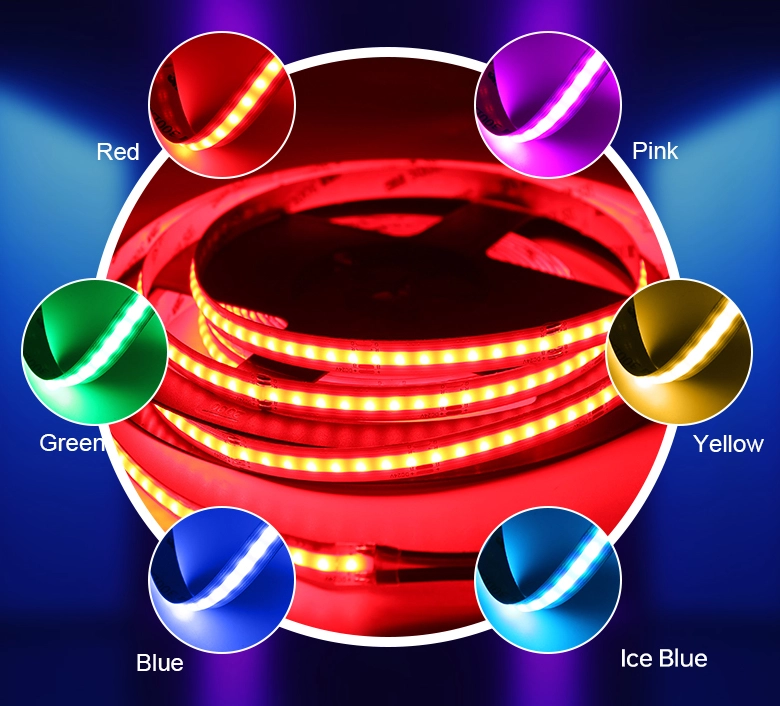
For stores that need decorative atmosphere or color zones, Raymates’ colorful cob strip can be used in brand walls, feature shelves, entertainment retail, bar areas, and themed commercial spaces. Color should be used carefully, especially near product display zones where accurate color is still needed.
Hotels, Offices, and Architectural Interiors
Hotels and offices usually need comfort more than dramatic brightness. Warm light can work for lounge areas and guest spaces, while natural white or daylight white may fit corridors, work areas, and service zones. A High Efficiency LED Strip in these projects should run quietly in the background, without flicker, harsh dots, or overheating inside narrow profiles.
For interior architectural lines, COB strip with aluminum channels gives a neater finish. The channel protects the strip, supports heat dissipation, and creates a more controlled light line.
Facades, Warehouses, and Large Public Areas
Facades, warehouses, bridges, and large public areas are less forgiving. Long operating hours, dust, humidity, and difficult maintenance access make product choice more serious. For these spaces, the cob high voltage strip is more suitable than short low-voltage strips because it supports longer lighting layouts with fewer power connection points.
A buyer should also confirm waterproof sealing, cable routing, mounting method, and replacement access before ordering. The cheapest strip per meter may become expensive if it needs frequent repair after installation.
What Installation Details Reduce Long-Term Maintenance Costs?
Maintenance cost is decided before installation starts. Wrong accessories, weak heat control, poor sealing, and mismatched drivers can create failures that look like product defects but actually come from system design.
Aluminum Channels and Heat Control
Aluminum channels are not only for appearance. They help protect the strip, guide the light, and support heat movement away from the LEDs. In long daily-use projects, heat control helps reduce brightness decay and keeps the lighting line more stable.
For recessed ceilings, shelves, and public areas, channels also make replacement easier. Installers can remove covers and access the strip without damaging surrounding materials.
Connectors, Dimmers, and Control Options
Connectors, controllers, dimmers, extension cables, and power supplies should be selected with the strip at the same time. If the buyer confirms these parts after receiving the strip, the project may face delayed installation or mismatched control behavior.
For color projects, the colorful cob strip should be matched with the correct controller and wiring method. For white-light commercial projects, dimming compatibility should be checked early, especially in hotels, offices, and display spaces where brightness levels may change during the day.
Waterproofing and End Protection
A waterproof LED strip for outdoor projects needs more than a waterproof body. The ends, cutting points, connectors, and cable exits must also be sealed correctly. Many outdoor failures start from the end cap or connector area, not the middle of the strip.
For long outdoor runs, buyers should ask how the strip is cut, sealed, fixed, and tested. This is especially important for facades, bridges, signs, and public-space outlines.
How Can Buyers Work with Raymates for a Better Commercial Lighting Solution?
A lighting supplier should help reduce project uncertainty before production. For commercial buyers, useful support includes product matching, technical confirmation, sample review, accessory selection, and installation guidance.
Specification Confirmation Before Bulk Orders
Before ordering a High Efficiency LED Strip, confirm voltage, wattage, color temperature, CRI, waterproof grade, roll length, cutting point, driver type, controller, profile, connector, and packaging. If the project includes several zones, list each area separately. A retail shelf, outdoor sign, and hotel corridor should not be treated as the same lighting condition.
Product Recommendation by Project Type
| Project Need | Raymates Product to Consider | Practical Reason |
|---|---|---|
| Long commercial runs, facades, warehouses, public lines | cob high voltage strip | Fewer power points and better fit for long-distance layouts |
| Retail shelves, hotel lines, cabinets, indoor profiles | hot selling cob strip | Smooth COB light effect for visible linear lighting |
| Brand walls, bars, entertainment venues, decorative color zones | colorful cob strip | Color effect for atmosphere and visual identity |
Service and Contact for Project Support
For a commercial project, send the supplier the installation length, drawing, voltage requirement, indoor or outdoor condition, target color temperature, dimming need, and quantity plan. Raymates can then help match the strip, accessories, and layout details before production.
If your project has long runs, mixed indoor and outdoor areas, uncertain voltage, or special control needs, share the drawing and key requirements through the Raymates contact page. Clear project information helps avoid wrong wattage, weak sealing, poor driver matching, and unnecessary rework after delivery.
FAQ
Q: What Is a High Efficiency LED Strip?
A: A High Efficiency LED Strip is an LED strip designed to deliver useful brightness with lower power waste. For commercial buyers, it should also have stable light output, suitable voltage, proper heat control, and reliable accessory matching.
Q: Is COB LED Strip Good for Retail and Hotel Projects?
A: Yes. COB LED strip is useful when the lighting line is visible or reflected on smooth surfaces. It gives a more continuous light effect than dotted strips, so it fits retail shelves, hotel corridors, counters, cabinets, and recessed profiles.
Q: Should I Choose High Voltage or Low Voltage LED Strip for a Commercial Project?
A: Choose high voltage for long runs, large public areas, facades, and places where fewer power points are useful. Choose low voltage for shelves, cabinets, furniture, small signs, and detailed indoor areas. The right choice depends on run length, voltage condition, installation access, and safety requirements.