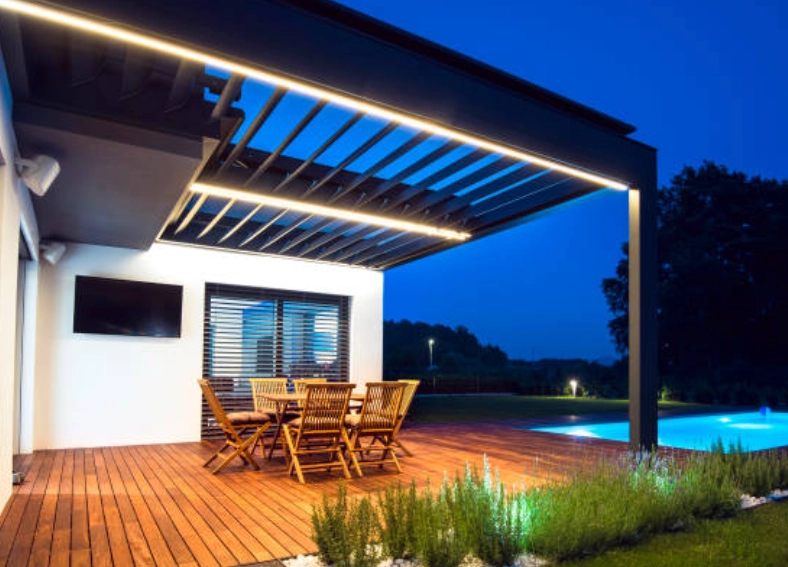
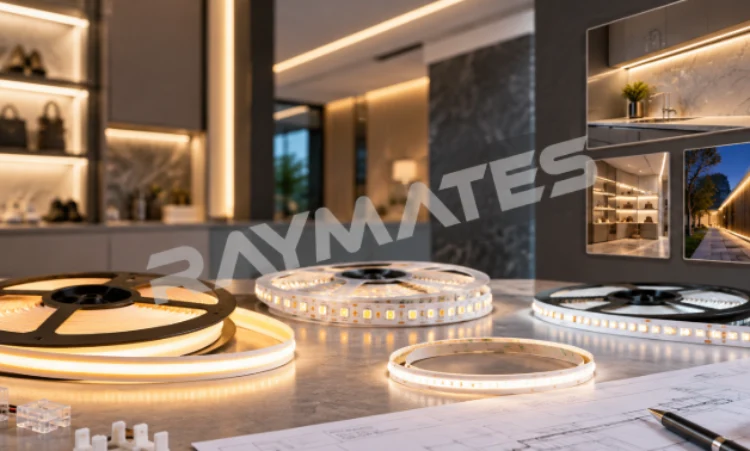
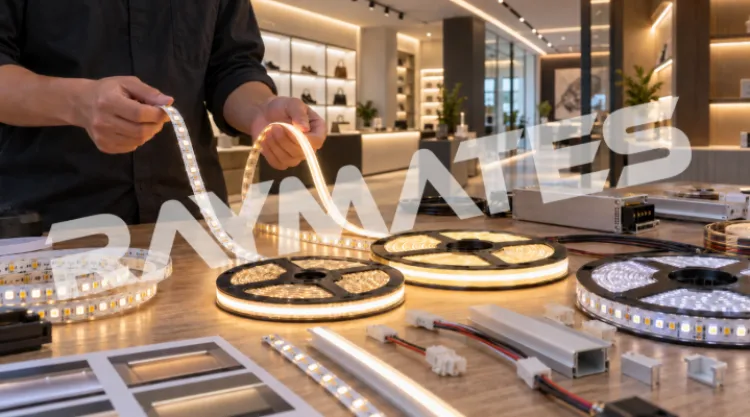
Outdoor LED strip lighting often fails at the weakest point, not always at the LED surface itself. Rain may enter from a cut end. Moisture may sit inside a connector. Condensation may form inside a sign box or under an eave. A Waterproof COB LED Strip is useful only when the strip body, sealing method, wiring route, and installation accessories work together.
Raymates supplies LED strip, COB LED strip, LED sheet, wall washer, and related accessories for decorative, commercial, and architectural lighting projects. For buyers, the value is not only choosing a strip model. The more practical question is whether the voltage, waterproof grade, connector system, mounting method, and service support match the job site.
Why Do Outdoor Projects Need Waterproof COB LED Strip Lights?
Outdoor lighting needs a different selection logic from indoor cabinet or shelf lighting. The strip may look similar, but the working environment is not the same. A storefront line, bridge outline, garden wall, terrace ceiling, or outdoor sign may face water, dust, temperature change, cable movement, and maintenance difficulty.
Rain, Moisture, and Condensation Risks
Rain is easy to notice. Condensation is easier to miss. In many outdoor and semi-outdoor projects, water does not always enter from direct rain. It can come from humid air, night temperature changes, poor drainage, or unsealed cable joints.
For this reason, buyers should not judge waterproof LED strip lights only by the surface coating. Check the cut points, power input side, end cap, connector, and mounting channel. If one section is left open, water may move along the sleeve or cable path and cause failure after installation.
Seamless COB Light Output for Visible Outdoor Lines
COB strip is often selected because it gives a more continuous light line than common dotted strip designs. This matters for visible outdoor edges, building contours, signage outlines, balcony lines, and landscape borders. In those applications, the light is not hidden deep inside a cabinet. People may see the strip line directly or from a short distance.
A Waterproof COB LED Strip helps combine a cleaner visual line with better moisture protection. It is especially useful where the lighting itself becomes part of the design, not just a hidden light source.
Lower Maintenance Demand for Commercial Installations
Outdoor maintenance costs are not limited to replacing the strip. Workers may need ladders, lifts, site shutdown time, cable checks, and resealing work. In commercial lighting projects, poor waterproof planning can make a low initial purchase price expensive later.
A better approach is to choose the strip and accessory package together. For exposed outdoor runs, Raymates’ COB High Voltage Strip is a more suitable direction because it is made for long lighting runs and outdoor-style project needs. For protected long linear lighting, another option can be considered, but it needs a different installation environment.
Which Waterproofing Method Should You Choose for LED Strip Lights?
There are several ways to protect LED strip lights from water, but they do not solve the same problem. Some methods protect the strip body. Some protect cut ends. Some protect the wiring and mounting area. In real projects, these methods are often combined.
Factory-Waterproofed LED Strips for Direct Outdoor Use
For outdoor projects, factory-waterproofed strips should be the first option. The waterproof layer is applied during production, so the strip is more consistent than a strip that is sealed only after installation. This is useful for long runs, repeated orders, and projects where every section needs similar protection.
A Waterproof COB LED Strip used outdoors should be selected by installation position. Exposed walls, signs, railings, and façade lines need stronger protection than indoor ceilings or dry display shelves.
Silicone Sealing for Cut Ends and Connection Points
Even if the strip body is waterproof, cutting changes the protection structure. The cut end should be sealed before power-on. The same rule applies to soldered joints, cable exit points, and places where the waterproof sleeve is opened.
Silicone sealing is not just “adding glue.” The surface should be clean, dry, and stable. The installer should leave enough curing time before placing the strip into a wet or dusty environment. If the seal is thin, uneven, or pulled during installation, water can still enter.
Waterproof Connectors, End Caps, and Sleeves
Connectors and end caps are small parts, but they often decide whether the installation survives outdoor use. Raymates provides common LED strip accessories such as power supplies, controllers, connectors, extension cables, mounting clips, aluminum channels, splitters, end caps, silicone, waterproof sleeves, and heat shrink tube. These parts help buyers build a complete waterproof LED strip installation instead of only buying the strip roll.
For batch projects, confirm these accessories before ordering. If the strip arrives without matching end caps or connector options, the installer may use temporary parts on site. That is where many waterproof failures begin.
How Should You Choose Between High Voltage and Low Voltage COB Strips?
Voltage selection affects wiring distance, power point planning, installation cost, and maintenance access. High voltage and low voltage strips are not used for the same type of project, so buyers should match them to the site instead of comparing them only by appearance.
High Voltage COB Strip for Long Outdoor Runs
High voltage COB strip is usually more practical for long outdoor lines because it can reduce the need for frequent power feed points. This helps in building outlines, long signage edges, bridge lines, and commercial exterior lighting where extra drivers and cable joints increase installation work.
For exposed or large outdoor layouts, the COB High Voltage Strip from Raymates is the stronger product direction. It fits projects that need long continuous lighting and fewer power connection areas. Fewer connection areas also mean fewer places that need waterproof sealing.
Super Long COB Strip for Protected Long Linear Lighting
Raymates’ Super Long COB Strip is better viewed as a long linear lighting option for protected positions, such as recessed channels, indoor light coves, display structures, furniture lines, or covered commercial spaces. It is useful when the buyer needs a longer seamless light run but does not want to add many power points.
If the project is humid, semi-outdoor, or exposed to splashing water, buyers should not assume the strip alone is enough. Add structural protection, channels, end sealing, and cable protection based on the real installation site.
Voltage Drop, Wiring Cost, and Power Point Planning
Long strip runs may suffer from brightness change if the power plan is weak. Low voltage systems often need more careful power injection and wire sizing. High voltage systems can reduce some of that complexity in long outdoor applications, but they require proper electrical handling and suitable project design.
Before purchase, prepare the run length, installation drawing, input voltage, required color, control method, and environment details. This allows the supplier to suggest a safer layout and avoid mismatch between the strip, driver, connector, and cable plan.
What Installation Details Prevent Water Damage After Purchase?
A Waterproof COB LED Strip still needs correct installation. Many failures happen after the product leaves the factory, especially when installers cut, bend, pull, or connect the strip without rebuilding the waterproof barrier.
Seal Every Cut Point Before Power-On
Every cut point should be treated as an open edge. Do not test the strip in a damp area before sealing it. The cut surface, copper pad area, solder point, and end cap position should be closed properly. If the strip is shortened on site, prepare enough sealing material before installation starts.
For field sealing, material compatibility matters as much as the sealing thickness. The installer should avoid solvent-heavy glue or acid-cure silicone around the LED package, copper pads, and solder joints, because chemical vapor may remain inside the end cap and attack the phosphor layer, silicone encapsulation, or exposed metal surface over time. A safer workflow is to clean the cut end, keep the copper pads dry, solder the cable with minimum exposed conductor, apply compatible neutral sealing material, fill the end cap without leaving air pockets, and allow the seal to cure before bending, mounting, or powering the strip. Heat shrink tube can be added over the cable exit area for strain relief, but it should not replace the inner seal. This small step reduces the risk of hidden moisture paths, especially in outdoor COB strip installations where nighttime condensation can repeatedly stress the same cut point.
Use Aluminum Channels for Protection and Heat Dissipation
Aluminum channels are not only for a cleaner look. They help fix the strip, protect it from direct impact, guide the light line, and support heat control. In outdoor and commercial work, a channel also helps reduce peeling, cable movement, and uneven mounting pressure.
For waterproof projects, the channel should not trap standing water. Leave a path for drainage where needed. A strip sealed inside a poorly drained channel may still face moisture stress.
Keep Drivers, Controllers, and Cable Joints Protected
The strip may be waterproof, but the power supply, controller, dimmer, and cable joint may not be suitable for exposure. Place these parts in protected positions or sealed electrical boxes. Cable entries should face downward where possible, so water does not run directly into the connection area.
This is where procurement and installation teams need to communicate early. A good strip cannot correct a weak electrical layout after everything is mounted.
How Can Buyers Reduce Long-Term Cost in Waterproof COB LED Strip Projects?
Cost control should start before the order is placed. The cheapest strip is not always cheaper after installation, resealing, repair, and replacement work are counted. A project buyer should compare the whole system.
Fewer Power Points for Large Outdoor Layouts
For large outdoor layouts, fewer power points can reduce cable runs, connection joints, driver positions, and sealing work. That is why high voltage COB strip is often considered for long façade lines and exterior outlines.
A Waterproof COB LED Strip used in this type of project should be selected with the full wiring plan. If the lighting line is long and exposed, COB High Voltage Strip is usually easier to manage than a layout that needs many separate power feeds.
Certified Products for Export and Commercial Projects
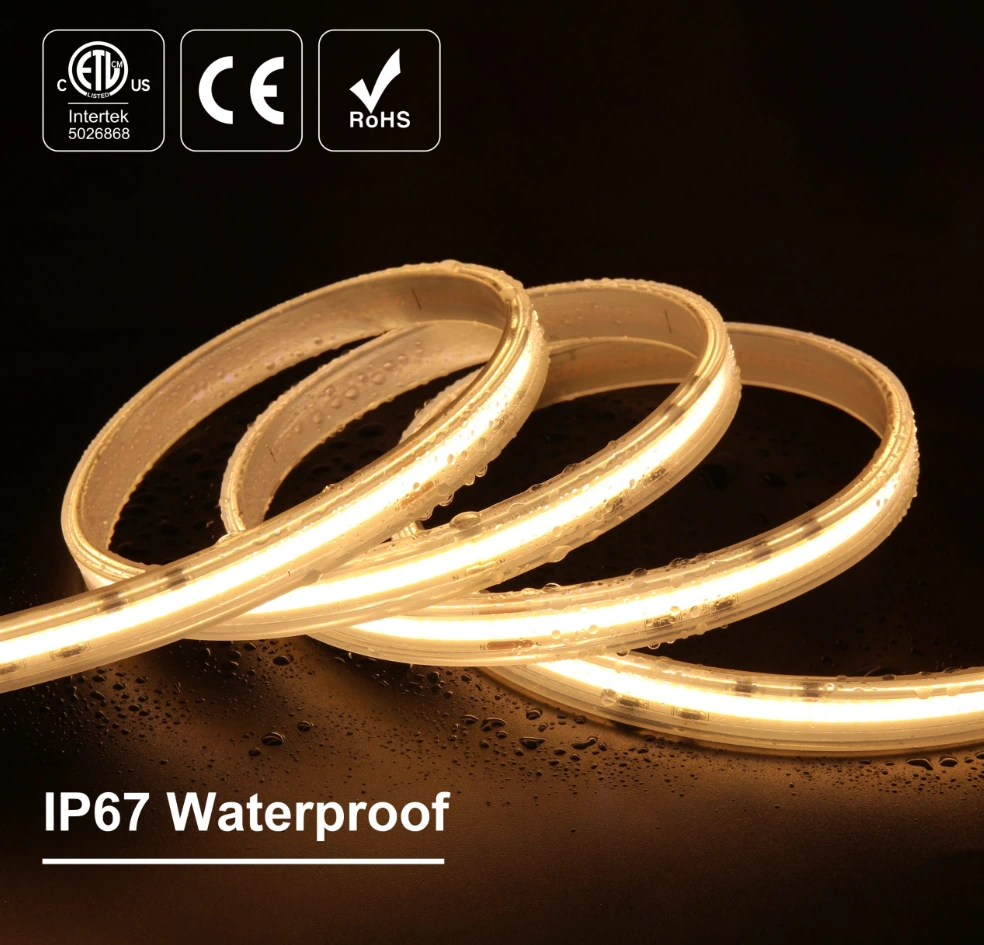
For export orders and commercial installation, certification and production control matter. Raymates has experience with international markets and product compliance, including certifications such as UL, ETL, CE, RoHS, and TUV in its company materials. This does not replace project-specific approval checks, but it gives buyers a clearer starting point for market entry and documentation review.
For Waterproof COB LED Strip orders, also confirm packaging, batch consistency, accessories, voltage, and waterproof requirements before mass production. These details affect installation speed and later maintenance.
Service, Customization, and Contact Support
Different projects need different answers. A hotel exterior line, bridge outline, retail sign, garden wall, and covered ceiling cove should not use the same waterproof plan. Raymates can support project-based selection for voltage, strip type, color effect, power layout, accessories, and installation drawings.
If your project has long runs, exposed edges, difficult maintenance access, or mixed indoor and outdoor areas, share the layout, voltage, installation surface, moisture condition, and required light effect through contact. These details help narrow the choice before sampling or bulk ordering.
A Waterproof COB LED Strip works well only when the strip, sealing method, wiring plan, and installation structure are chosen together. For exposed long outdoor lighting, choose a waterproof high voltage COB direction. For protected long linear lighting, Super Long COB Strip can be considered with proper structural protection. Good waterproof work is less about one coating step and more about removing weak points before they become service issues.
FAQ
Q: Can a Waterproof COB LED Strip be cut for outdoor use?
A: Yes, but the cut point must be resealed before use. The exposed copper pad, solder joint, end cap, and cable exit area need protection. If the strip is cut on site and left open, water can enter even when the original strip body is waterproof.
Q: Is high voltage COB strip better for outdoor lighting?
A: It is often better for long outdoor runs because it can reduce the number of power feed points and connection areas. This is useful for façades, signs, bridge outlines, and long commercial edges. For smaller or protected areas, low voltage COB strip may still be suitable.
Q: Why does a waterproof LED strip still fail outdoors?
A: Common reasons include unsealed cut ends, unsuitable connectors, exposed drivers, water trapped inside channels, poor cable routing, or using a strip series that does not match the real environment. Waterproofing should cover the whole installation system, not only the strip surface.